📊 Series 65
Unlock the full Series 65 question bank — 34,700 questions across all units and difficulty tiers.
Series 65 — Uniform Investment Adviser Law Exam
The license that lets you give investment advice for a fee. Here's what it is, who needs it, and how to get it.
What Is the Series 65?
A NASAA exam (administered by FINRA) that qualifies you to register as an Investment Adviser Representative (IAR). Unlike Series 6/7/63, it does not require sponsorship by a broker-dealer — you can register and pay for it yourself.
Who Needs It?
Anyone giving investment advice for compensation — fee-based financial planners, RIA employees, and insurance agents who want to add fee-based advisory services alongside life/annuity sales. It's also a common next step for active securities representatives who already hold a Series 6 (and Series 63, if their state requires it) and want to offer advisory accounts — many advisory platforms set a minimum investment (e.g., $25,000) for these clients.
Exam Format
130 scored questions + 10 unscored pretest questions mixed in randomly (you can't tell which is which), 180 minutes, passing score ~70.8% (92/130 correct). There's no penalty for guessing, so answer every question. Exam fee is $187. No prerequisite exams — you can take it with no prior securities license.
Afterward you'll get either a pass notification (no score shown) or, if you don't pass, a printout breaking down your performance by function area.
If you already hold a Series 7, most states let you take the Series 66 instead — it combines the law content of the 65 with the state-agent portion of the Series 63 in a shorter exam. If you don't hold a Series 7, the Series 65 is your path.
Create a FINRA account and enroll in the Series 65 directly at finra.org — no firm sponsorship needed. Pay the exam fee (~$187) and you'll get a 120-day window to schedule and sit for the exam.
Topics include economic factors, investment vehicles, portfolio management, securities regulations, and ethics. Most candidates spend 60–100 hours preparing with a dedicated Series 65 course.
The Series 65 is administered at Prometric testing centers. Bring a valid government-issued photo ID; no other materials are allowed in the testing room.
Passing the exam alone doesn't let you practice — you (or your firm) must register as an Investment Adviser Representative with your state securities regulator through the IARD system.
Many states have adopted the NASAA IAR CE model rule, requiring 6 hours of ethics/professional responsibility and 6 hours of products/practices CE each year. Check your state's specific requirement.
🤖 This is everything on the exam, mapped out for you. Tap a domain to dig in!
The official NASAA Series 65 Test Specifications (effective June 12, 2023) — 130 scored questions across 4 domains. Tap a domain to see everything it covers.
A. Basic Economic Concepts
- Business cycles; monetary & fiscal policy
- Global factors: currency valuation & effective exchange rates, sovereign debt, geopolitical risk
- Inflation / deflation; interest rates, yield curves, credit spreads
- Economic indicators: GDP, employment indicators, trade deficit, CPI
B. Financial Reporting
- Financial reports: income statement, balance sheet, statement of cash flow, auditor disclosures (qualified vs. unqualified), SEC filings, annual reports
- Accounting fundamentals: audited vs. unaudited, cash vs. accrual accounting
C. Analytical Methods
- Time value of money: IRR, NPV, future value
- Descriptive statistics: mean, median, mode, range, standard deviation, Alpha, Beta, Sharpe ratio, correlation
- Financial ratios: current ratio, quick ratio, debt-to-equity
- Valuation factors: price-to-earnings, price-to-book
D. Types of Risk
- Systematic risk (interest rate, sector, geopolitical) vs. unsystematic risk (credit, legal/regulatory, financial, issuer-specific)
- Opportunity cost
- Capital structure & liquidation priority (debt, preferred stock, common stock)
A–C. Cash Equivalents & Fixed Income
- Insured deposits (demand deposits, CDs); money market instruments (commercial paper, T-bills)
- U.S. government securities (Bills/Notes/Bonds, TIPS); asset-backed securities; corporate bonds; municipal bonds (GO, revenue, insured, tax treatment); foreign-issued bonds
- Fixed income characteristics: tax implications, bond ratings, liquidity, liquidation preference, call features, coupon vs. zero-coupon, duration, pricing (par/premium/discount), yield
- Valuation factors: duration, maturity, yield to call, yield to maturity, coupon, conversion valuation, credit spread, discounted cash flow
D–G. Equity Securities
- Common stock (domestic, foreign, ADR); preferred, convertible preferred, floating rate preferred
- Shareholder rights: voting, antidilution/preemptive right, liquidation preference; restricted stock; dividends; ISOs vs. NSOs
- Valuation methods: technical analysis, fundamental analysis, dividend discount, discounted cash flow
- Public offerings: IPO, secondary offering, SPACs/blind pools/blank checks
H–L. Pooled Investments, Derivatives & Alternatives
- Mutual funds (open-end, closed-end); hedge funds, private equity, venture capital; UITs; ETFs; REITs (liquid & non-liquid)
- Share classes, liquidity, tax implications, fee structures, NAV pricing, discount/premium, benchmarks, manager tenure, style
- Options, warrants, and futures — costs, benefits, and risks
- Limited partnerships, exchange-traded notes, leveraged/inverse funds, structured products
M–N. Insurance-Based Products & Other Assets
- Annuities: variable, fixed, indexed
- Life insurance: whole, term, universal, variable
- Commodities & precious metals; digital assets
A–C. Clients & Capital Market Theory
- Client types: individuals, sole proprietorships, partnerships, LLCs, C/S-corps, trusts & estates, foundations & charities
- Client profile: goals, cash flow/balance sheet, risk tolerance, ESG/behavioral factors, time horizon, data gathering
- Capital Asset Pricing Model (CAPM), Modern Portfolio Theory, Efficient Market Hypothesis
D–E. Portfolio Strategy & Taxes
- Strategic vs. tactical allocation; active/passive, growth/value/income/capital-appreciation styles
- Techniques: diversification, sector rotation, dollar-cost averaging, options, leveraging, volatility management
- Individual tax fundamentals: capital gains, qualified dividends, basis, marginal bracket, AMT, RMDs, IRMAA
- Corporate/trust/passthrough taxation; estate & gift tax fundamentals (exemptions, unified credit, portability)
F–H. Retirement Plans & Special Accounts
- IRAs (traditional & Roth), Solo 401(k), qualified plans (DB/DC, 401(k), 403(b), 457, SIMPLE IRA, SEP), nonqualified plans
- ERISA fiduciary issues, QDIA, investment policy statements, prohibited transactions
- 529s, Coverdell IRAs, UTMA/UGMA, HSAs
I–K. Ownership, Trading & Performance
- JTWROS, TIC, TBE, CPWROS; TOD/POD; beneficiary designations (per stirpes); QDROs; donor advised funds
- Trading terminology: bids/offers, market/limit/stop orders, short sales, cash vs. margin accounts, commissions/markups/spread, best execution
- Performance measures: risk-adjusted, time-weighted, dollar-weighted, annualized, total, holding period, IRR, after-tax returns, benchmarks
A–D. Regulation of Advisers, IARs & Broker-Dealers
- Definitions of Investment Adviser & Exempt Reporting Adviser; notice filing; books & records; registration maintenance & IAR continuing education
- Definition of an Investment Adviser Representative; activities requiring registration; exclusions & registration authority
- Definitions of Broker-Dealers and their Agents
E–F. Securities, Issuers & Enforcement
- Securities definitions; state registration/post-registration; exemptions & exclusions
- Issuer definitions, registration of issuer Agents, finders; state antifraud authority
- Authority of the state securities Administrator; administrative actions; penalties & liabilities
G. Communication with Clients & Prospects
- Required disclosures; unlawful representations concerning registration; performance guarantee prohibition; client contracts
- Correspondence & advertising: social media, email/digital messaging, website communications
H. Ethical Practices & Fiduciary Obligations
- Compensation: fees, commissions, performance-based fees, soft dollars, disclosure of compensation
- Custody, discretion, trading authorization, standard of care, anti-money laundering (AML)
- Conflicts of interest: loans to/from customers, sharing in profits/losses, client confidentiality, insider trading, selling away, market manipulation, personal securities transactions, political contributions, excessive trading, exploitation of vulnerable adults
- Cybersecurity/privacy/data protection; business continuity & succession planning
🤖 Follow this game plan and you'll walk into test day ready. I believe in you!
Based on guidance from major Series 65 prep providers (Kaplan, ExamFX, STC, Kitces, and other exam-prep research) — the Series 65 has roughly a 60–70% first-time pass rate, so how you study matters.
Recommended Study Order
Start with Investment Vehicles to build product knowledge, then Economic Factors to connect those products to the broader market. Tackle Client Recommendations next since it requires applying products to real scenarios. Save Laws & Ethics for last and closest to test day — it's the most memorization-heavy domain and fades fastest if studied too early.
⏱️ Budget 80–100 Study Hours
Candidates with a finance background typically need 80–90 hours; beginners often need 100+. Spread this over several weeks rather than cramming.
📝 Drill by Domain, Then Full Exams
After finishing each domain, work 50–75 practice questions on just that topic. Review every wrong answer and write down why you missed it before moving on.
⚖️ Weight Your Time to Match the Exam
Laws & Ethics and Client Recommendations are each 30% of the real exam — but Laws & Ethics is disproportionately time-consuming to learn well, so give it extra study hours even though it's not worth extra points.
🎯 Hit 78%+ Before Test Day
Once you're consistently scoring 78% or higher on full 130-question timed practice exams, you're in good shape to sit for the real thing.
🔑 Master Exclusions vs. Exemptions
One of the most common ways candidates lose points: an exclusion means something doesn't meet the definition in the first place (e.g., a bank isn't a "broker-dealer"). An exemption means it meets the definition but is released from certain requirements (e.g., an exempt security still IS a security, just not subject to registration). Keep a separate flashcard deck just for these.
🧠 Understand, Don't Just Memorize
Client Recommendations questions test application, not recall — you have to combine a client's age, risk tolerance, tax situation, and time horizon at once. Practice working full scenarios, not just isolated facts.
✏️ Answer Every Question
There's no penalty for guessing on the Series 65, and the 10 unscored pretest questions are mixed in randomly with no way to tell which ones they are — so never leave a question blank, even if you're unsure.
🗓️ Build a Study Calendar
Map out which units and domains you'll cover on which days rather than leaving it open-ended. A fixed day-by-day plan tied to your test date keeps you from procrastinating or running out of runway.
📊 Track Your Score Trajectory
Scores in the mid-to-high 60s are normal during your first pass through a topic — don't panic. If you score under 60% on a topic quiz, redo another quiz on that same topic before moving on. By the time you're taking full, timed practice exams, you should be consistently hitting 80%+.
🔍 Review Every Explanation
Early on, review the explanation for each practice question right after you answer it — right or wrong — so the concept sticks. Later, switch to full timed exams and save your review for the end. Practice tools often scramble the order of answer choices between attempts, so focus on understanding why an answer is correct rather than memorizing its position.
🐢 Keep a Steady Pace
Don't let one difficult unit stall your momentum. If a topic isn't clicking, note it, move on to keep covering material, and circle back to it later with fresh eyes.
🤖 Don't worry about memorizing every formula — focus on knowing which one to use and why.
The Series 65 includes roughly 10–15 math-based questions, but they mostly test whether you know which formula to use and how to interpret the result — not heavy calculation. Only a basic four-function calculator is provided at the testing center.
Stock Yield
Bond Yield Formulas
Risk-Adjusted Return Measures
Tax Calculations
Mutual Fund Pricing
Time Value of Money
Hearing this material explained out loud, in a different voice than your own textbook, genuinely helps it stick. These are real, currently-available videos from two established Series 65/66 exam-prep instructors — not affiliated with this course.
05-fact-check-corrections.md in the cheat sheet). Always double-check specific dollar amounts, ages, and thresholds against this course's mastersheets.Ken Finnen — "Series 7 Whisperer"
A Wall Street-veteran-turned-tutor with a full Series 65/66 crash course plus short, focused topic videos.






Examzone
Focused on breaking down tricky exam questions step by step, in plain English.

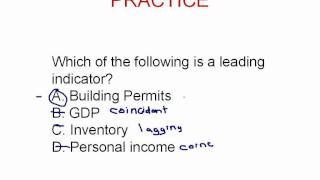

Topic-Specific Videos
These are also linked directly inside their matching Study Unit (Units 2, 4, 9, 21, 23), so you don't have to come back here to find them.



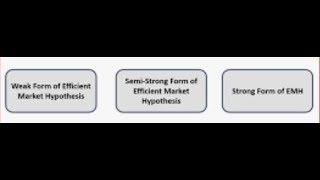
Kaplan — Practice Test Walkthroughs
Live, unscripted explications of full practice tests — good for the "hit pause, answer, hit play" study method.



Series 65 Study Units
A textbook-style unit-by-unit breakdown, all 24 units outlined below. Each ends with a quick recall-and-practice widget so you can drill it before moving on.
These 24 units don't follow the exam's four function-area order (Economic Factors → Investment Vehicles → Client Recommendations → Laws & Ethics) — they're resequenced into the order that's easiest to learn in, and every topic still gets covered. Each unit is made up of one or more lessons, each lesson maps back to one of the four official function areas being tested, and each lesson breaks down into specific learning objectives so you can study one manageable piece at a time.
🗺️ How the 24 units fit together
The exam itself is organized into four function areas — grouped below by their real exam weight — plus the specific ways units lean on each other, since NASAA's own Mastery-tier questions constantly draw on more than one unit at once. Tap any unit to jump straight to it.
🔗 Real connections between units
- 1 ↔ 2 — equity vs. debt, the two core security types the rest of the course keeps contrasting
- 1, 15 — Unit 1's stock basis rules feed directly into Unit 15's capital gains tax treatment
- 2 → 6 — Unit 6's economic forces (rates, inflation) are why Unit 2's bond prices move at all
- 2 → 15 — the tax-equivalent yield concept introduced in Unit 2 reappears in Unit 15
- 3 → 5 — Unit 5's alternative investments extend Unit 3's pooled-investment concepts into less liquid territory
- 1–6 → 14 — Unit 14's ethics rules govern every product introduced back in Units 1–6
- 1–6 → 19 — Unit 19's risk categories apply back across every vehicle type from Units 1–6
- 7 → 20 — knowing what the financial statements measure (7) makes the ratios in Unit 20 click instead of just being memorized
- 8 → 9, 10, 11, 12, 13 — Unit 8's registration/exemption concepts recur through the entire regulatory cluster
- 9 ↔ 10 ↔ 11 — the same registration structure, applied first to advisers, then IARs, then broker-dealers/agents
- 12 — the enforcement capstone for what happens when the rules in Units 8–11 and 13–14 get broken
- 13 ↔ 14 — communication rules (13) lean directly on the ethics standards defined in Unit 14
- 14 ↔ 16 — ethics violations are ultimately graded against the client relationship built in Unit 16
- 15, 16–17 → 18 — tax treatment (15) plus the client picture (16–17) combine into retirement/education planning (18)
- 16 ↔ 17 — first who the client is, then what they actually need
- 20 → 21 → 22 — the analytical toolkit (20) gets applied to building (21), then grading (22), a portfolio
Hi, I'm your study buddy! 🤖 Let's work through Unit 1 together — I'll point out the key exam tips along the way.
Learning Objectives — by the end of this unit, you should be able to:
- Distinguish equity securities from debt securities
- Explain what common stock ownership represents and the rights it carries
- Compare common stock to preferred stock, including dividend and liquidation priority
- Explain stock dividends and stock splits, including their effect on price and taxation
- Identify stockholder rights: voting, preemptive rights, record date, annual reports, and free transferability
- Explain limited liability and identify the benefits and risks of owning common and preferred stock
- Recognize the different types of preferred stock (straight, cumulative, callable, convertible, adjustable-rate) and match each to the right investor need
- Describe how incentive stock options (ISOs) differ from nonqualified stock options (NSOs) in tax treatment
- Contrast restricted stock and control (affiliate) stock, and describe the role of SEC Rule 144 / Form 144
- Identify the unique features and risks of American Depositary Receipts (ADRs)
- Distinguish emerging markets from developed markets and identify the added risks of investing abroad
Equity securities represent ownership in a company, unlike debt securities, which represent a loan to the issuer. This unit covers the two core types of equity — common and preferred stock — plus the special and foreign equity securities in Lessons 1.2 and 1.3.
Lesson 1.1: Equity Securities
A security is an investment representing either an ownership stake (equity) or a debt stake. Buying stock makes you a part owner of a corporation. Buying a bond makes you a creditor — you're owed interest and repayment of principal at maturity, but you don't gain any ownership.
Stockholders benefit from a company's success two ways: dividends (a share of earnings paid out) and price appreciation (the stock becoming more valuable). Ownership is proportional to shares held — if a company has 1,000 shares outstanding, owning 10 of them means owning 1% of the company.
There are two types of stock:
- Common stock — the "default" type. Gives a proportional claim on earnings and, typically, one vote per share to elect the board of directors, who oversee (but don't run day-to-day) the company.
- Preferred stock — also ownership, but usually no voting rights and less room for the price to appreciate. Pays a fixed dividend (usually quarterly) that must be paid before common shareholders get anything, and preferred holders have first claim on remaining assets if the company is liquidated.
Keep the payment order straight: bond interest is always paid before any dividend (it's a contractual debt obligation, not a discretionary payout), then preferred dividends, then common dividends last.
Even though preferred stock is equity, it behaves a bit like a bond: because its dividend is fixed, its price tends to move with interest rates rather than with the company's business prospects — this is sometimes called interest rate (or "money rate") risk.
🤖 Key exam point: owner vs. creditor
All stockholders — common and preferred — are owners of the corporation. Anyone holding a bond, no matter who they are (an individual, a corporation, even another government), is a creditor, because a bond is always a debt security.
Common stock's other big draw is capital appreciation — growth in the stock's market price over time. Historically, common stock returns have outpaced inflation over the long run, which is why long-term investors often hold it as an inflation hedge — though prices can still decline, especially in the short run.
Dividends & Stockholder Rights
Dividends aren't guaranteed. Unlike bond interest, a company's board of directors decides whether to pay a dividend and how much — including paying nothing at all. Most dividends are cash, but a company can instead pay a stock dividend (extra shares) or a property dividend (assets like shares of a subsidiary or company products). Common or preferred, stock can be freely transferred to anyone without the company's permission, and common stockholders vote for the board of directors at the annual meeting.
Stock Dividends vs. Stock Splits
A stock dividend gives shareholders extra shares instead of cash. Since the company takes in no new money, the price adjusts down proportionally so total value is unchanged — e.g., an investor with 200 shares at $30 ($6,000 total) who receives a 10% stock dividend ends up with 220 shares at roughly $27.27 each — still about $6,000. Stock dividends aren't taxed when received; they simply lower your cost basis per share until you sell.
A stock split is different — it's an accounting change to the number of shares outstanding, with no dividend involved. In a 2-for-1 split, you'd end up with twice as many shares worth half as much each — like trading a $20 bill for two $10 bills. Either way, no real value is created or lost.
🤖 Key exam point: unrealized vs. realized gains
A stock's price increase is only a paper (unrealized) gain until you sell — at that point it becomes a realized gain, which is when capital gains tax applies. No matter how large a paper gain grows, it isn't taxed until it's realized.
More Stockholder Rights
Shareholders are entitled to an annual report of audited financial statements. Selling shares routes through the issuer's transfer agent (usually a bank, registered with the SEC), which reissues the certificate to the new owner — conceptually the same as transferring the title on a car. To vote or receive a declared dividend, you must be the owner of record by the company's record date.
🤖 Key exam point: preemptive rights
Common stockholders generally have preemptive rights — the right to buy newly issued shares first, to maintain their proportional ownership. Preferred stockholders do not get preemptive rights; instead, they get priority on dividends and in liquidation.
Liquidity & Limited Liability
Common and preferred stock are both generally freely transferable — no permission needed from the issuer to sell in the open market. (One exception: restricted stock, which is subject to SEC Rule 144.) Stock ownership also comes with limited liability: if the company goes bankrupt, you can lose what you invested, but your personal assets are never at risk. That's different from a sole proprietorship or general partnership, where the owner's personal assets can be on the hook for business debts.
Benefits & Risks of Owning Common Stock
Why hold common stock in a portfolio? Potential capital appreciation, dividend income, and an inflation hedge. The trade-off is real risk:
- Market risk — the stock's price can decline as perceptions of the business change, with no guarantee you'll recover your investment.
- Business risk — a decline in the company's earnings can reduce or eliminate its dividend.
- Low priority at dissolution — bonds and preferred stock are "senior securities" paid first in bankruptcy; common stockholders only have a residual claim on whatever is left.
One common misconception: simply becoming a shareholder doesn't give you access to insider information — and even if you somehow obtained material nonpublic information, trading on it is illegal (see insider trading in Domain IV).
Benefits & Risks of Owning Preferred Stock
Why hold preferred stock instead? Fixed dividend income, a priority claim ahead of common stock, and — for convertible preferred — the option to trade some of that income for potential appreciation. The risks:
- Market risk — in a downturn, fear that the company can't sustain its dividend will push the price down.
- Purchasing power (inflation) risk — a fixed dividend loses value over time as prices rise.
- Interest rate risk — since the dividend is fixed, the price moves opposite to interest rates, just like a bond.
- Business risk — financial trouble can reduce or eliminate the dividend, and bankruptcy can mean losing the principal entirely.
🤖 Key exam point: preferred stock never matures
Even though it's treated as a fixed-income holding, preferred stock — unlike a bond — usually has no maturity date and no scheduled redemption. It's a perpetual security unless the issuer calls it.
🧠 Quick check: If you buy a corporate bond, are you an owner or a creditor of the company — and what about preferred stock? Tap to reveal ▸
A bond makes you a creditor — you're owed interest and repayment of principal, but you own nothing. Preferred stock is still equity, so you're an owner, even though it behaves a bit like a bond by paying a fixed amount.
Lesson 1.2: Special Types of Equity Securities
All preferred stock starts from a base case — straight preferred — and gains extra features as adjectives get added, but every type still ranks ahead of common stock. Dividends are stated either as a flat dollar amount ($6 preferred) or as a percentage of par value ($100 par at 6% = $6/year), and — with one exception below — they're fixed, which is why many advisors treat preferred stock as a fixed-income holding for asset allocation purposes.
- Straight (noncumulative) — no extra features. If a dividend is missed, it's gone for good; the company owes nothing extra later.
- Cumulative preferred — missed dividends accumulate as "dividends in arrears." Before common stockholders can be paid anything, the company must pay all arrears plus the current dividend to cumulative preferred holders.
- Callable (redeemable) preferred — the company can buy the shares back at a stated price after a set date, letting it replace a high fixed dividend with a cheaper one when rates fall (like refinancing a mortgage). The investor then faces reinvestment risk — having to reinvest the proceeds at a lower rate. Companies compensate for this with a call premium (e.g., a $103 call price on $100 par) and a somewhat higher dividend rate.
- Convertible preferred — exchangeable for a fixed number of common shares, so its price tends to track the common stock. Usually carries a lower stated dividend than non-convertible preferred of similar quality, since the conversion feature adds upside potential.
- Adjustable-rate (floating-rate) preferred — the dividend resets periodically against a benchmark (like T-bill rates), so the stock's price stays comparatively stable since the payment moves with the market.
🤖 Key exam point: best vs. worst for steady income
Cumulative preferred is generally the best choice for an investor who wants reliable income, since missed dividends are protected as arrears. Adjustable-rate preferred is generally the worst choice for that same goal, since the dividend can fluctuate.
A single preferred stock can combine features — cumulative and callable, callable and convertible, and so on. If no adjectives are mentioned, assume it's straight preferred. And because income is the main reason to buy preferred stock, the most important thing to evaluate for any specific issue is the company's ability to keep paying its dividend.
Employee Stock Options
Some equity questions on the exam deal with stock employees buy directly from their employer through a stock option grant, rather than stock purchased on the open market. An option gives the employee the right to buy a set number of employer shares at a stated strike price (usually the market price on the grant date) during a set window, often after a minimum vesting period. There are two types, each with very different tax treatment: nonqualified stock options (NSOs) and incentive stock options (ISOs). (Don't confuse these with publicly traded puts and calls — these options are only available to employees of the issuing company.)
- NSOs — the more common type. Treated as compensation: at exercise, the "bargain element" (market price minus strike price) is taxed as ordinary income (and subject to payroll tax) to the employee, while the employer gets a matching salary-expense deduction. Example: exercising at a $52 strike when the market price is $66.50 creates a $14.50/share bargain element — on 100 shares, that's $1,450 of ordinary income; going forward, the employee's cost basis is the strike price plus that already-taxed amount.
- ISOs — no tax consequence to the employer. No income at grant, no regular tax due at exercise. If the shares are held at least 2 years from the grant date and 1 year from the exercise date (with a 10-year maximum to exercise), the eventual profit is taxed as a long-term capital gain — otherwise it's taxed like an NSO. The catch: the bargain element at exercise is still an add-back item for the alternative minimum tax (AMT), even though no regular tax is due yet.
🤖 Key exam point: NSO vs. ISO taxation
NSO bargain element = ordinary income (and payroll tax) at exercise. ISO = no regular tax at exercise, but it's an AMT preference item, and profit only becomes long-term capital gain if the 2-year/1-year holding rule is met.
Restricted Stock & Control Stock
Stock is normally freely transferable, but there are two testable exceptions:
- Restricted stock — shares acquired through a private placement (an offering exempt from full SEC registration). Investors generally can't resell them until a holding period has passed (commonly six months), and affiliates of the issuer also face volume limits on how much can be resold.
- Control stock — stock owned by a control person: a director, officer, large stockholder, or immediate family sharing their home. It's control stock because of who owns it, not how it was acquired. Purchases and sales must be reported to the SEC, and volume limits always apply.
🤖 Key exam point: what counts as "control," and who files
For exam purposes, owning 10% or more of a company's voting stock counts as control. Both restricted and control stock are resold under SEC Rule 144 (Securities Act of 1933), filing Form 144, which lets sellers avoid a full, costly registration statement. One nuance worth remembering: a control person's spouse living in the same home is generally also treated as a control person — but only whoever is actually selling shares has to file the Form 144.
The restricted-stock holding period is six months, not one year. Once it's passed, non-affiliated holders have no further resale restrictions — but affiliates (control persons) still face an ongoing volume limit on top of the holding period.
Lesson 1.3: Foreign Equity Securities
Foreign stocks can be hard for U.S. investors to trade directly — different currency, language, and settlement systems. American Depositary Receipts (ADRs), also called American Depositary Shares (ADSs), solve this.
An ADR is a negotiable security representing a receipt for shares of a non-U.S. company, traded on U.S. exchanges just like a domestic stock — priced in U.S. dollars, with dividends paid in U.S. dollars, and all paperwork in English.
One ADR doesn't always equal one underlying share. Depending on the company, an ADR might represent one share, several shares, or a fraction of a share. This ratio (the participation rate) is set so the ADR trades at a price that looks typical for the U.S. market, even if the underlying foreign share trades at a very different price. (Example: at a 1:5 ratio, one ADR equals five underlying shares — the exact math isn't tested, just the concept that ratios other than 1:1 exist.)
Rights & Risks of ADRs
ADR owners get most of the same rights as regular common stockholders, including dividends, and sometimes — but not always — voting rights. For exam purposes, ADRs never carry preemptive rights.
Beyond the usual risks of owning stock, ADR investors also take on currency risk — the foreign currency the underlying shares are denominated in could weaken against the U.S. dollar, reducing the ADR's value even if the foreign stock itself performs fine.
🤖 Key exam point: ADRs still carry currency risk
Even though ADRs trade in U.S. dollars and are issued by domestic branches of U.S. banks, they still carry currency risk. The bank collects the foreign dividend, converts it to USD, and withholds any required foreign tax — the ADR owner can then claim a U.S. tax credit for that withholding.
On the flip side, because most ADRs trade on U.S. exchanges, liquidity risk is generally low, and since an ADR represents equity, it can still serve as a reasonable inflation hedge like other stocks. Currency risk and market risk are the two main concerns for an ADR holder — not liquidity or purchasing power.
Emerging vs. Developed Markets
Foreign markets fall into two broad categories:
- Emerging markets — less-developed countries with low income (GDP) and equity capitalization, shaky liquidity, possible currency-conversion restrictions, high volatility, higher taxes/commissions, ownership restrictions, and weaker regulation and transparency. The upside: strong growth potential often attracts investors from slower-growing developed markets. (An even riskier tier, "frontier markets," sits below emerging markets, though it's not yet a major exam topic.)
- Developed markets — stable, established economies with large equity capitalization, low commissions, few currency restrictions, highly liquid markets, and well-defined regulation with transparency comparable to U.S. markets.
Why add foreign securities to a portfolio at all? They expand the investable universe (more diversification), can outperform domestic securities, and tend to have lower correlation with domestic securities, which reduces overall portfolio risk.
That said, foreign investing — emerging or developed — carries risks domestic investing doesn't:
- Country risk — a composite of political risk (revolutions, coups), structural risk (a government seizing profits, capital gains, or dividends), and economic risk (interest rates, inflation, policy shifts).
- Exchange controls — government restrictions on converting or moving currency across borders.
- Currency risk — the foreign currency weakening against the U.S. dollar.
- Withholding, fees, and taxes — some countries withhold part of dividends or capital gains for tax, and foreign investing can carry heavier fees, taxes, and brokerage commissions than domestic investing.
Hi, I'm your study buddy! 🤖 Let's work through Unit 2 together — I'll point out the key exam tips along the way.
Learning Objectives — by the end of this unit, you should be able to:
- Explain what a bond represents and how it differs from stock ownership
- Identify the types of U.S. government securities (Treasury Bills, Notes, Bonds, TIPS) and their characteristics
- Distinguish corporate bonds from municipal bonds, including secured vs. unsecured corporate debt
- Compare general obligation bonds to revenue bonds, including which requires voter approval
- Explain the federal, state, and local tax treatment of each bond type
- Describe the inverse price/yield relationship and rank coupon, current yield, YTM, and YTC for discount and premium bonds
- Explain duration as a measure of interest-rate sensitivity
- Explain zero-coupon bond taxation ("phantom income") and identify which zero-coupon bonds carry credit risk
- Contrast callable and convertible bonds, including who benefits from each feature
- Identify the unique payment structure of CMOs and mortgage pass-through securities
Not affiliated with this course. See the Overview tab's video section for the full list and an important accuracy note.
A bond represents a loan to the issuer, not ownership — the flip side of Unit 1's equity securities. This unit covers government, corporate, and municipal bonds in Lessons 2.1–2.2, then bond pricing, yield, and special structures in Lesson 2.3.
Lesson 2.1: Bond Basics & U.S. Government Securities
A bond is a loan: the issuer borrows money from investors and promises to pay it back. The bondholder is a creditor, not an owner — no voting rights, no dividend, just a contractual right to interest and principal. Every bond has a par (face) value (almost always $1,000), a coupon rate (the fixed annual interest rate, stated as a % of par), and a maturity date (when the issuer repays the par value in full).
Most bonds pay interest semiannually — half the annual coupon every six months. A $1,000 par bond with a 6% coupon pays $60/year, or $30 every six months. (There's an important exception to this semiannual rule — covered in Lesson 2.3.)
U.S. Treasury Securities
- Treasury Bills (T-Bills) — maturities of 1 year or less. Sold at a discount to par with no stated coupon; the investor's return is simply the difference between the discounted purchase price and the $1,000 received at maturity.
- Treasury Notes (T-Notes) — maturities of 1–10 years, pay a fixed coupon semiannually.
- Treasury Bonds (T-Bonds) — maturities of 20–30 years, also pay a fixed coupon semiannually.
- TIPS (Treasury Inflation-Protected Securities) — the principal adjusts up or down with the Consumer Price Index (CPI), and the fixed coupon rate is then applied to that adjusted principal, so the actual interest payment rises with inflation. At maturity, an investor is repaid the greater of the inflation-adjusted principal or the original par value — deflation can't reduce their principal below the starting $1,000.
$1,000 par, 3% fixed coupon rate.
All Treasury securities are taxable at the federal level but exempt from state and local tax — the reverse of how municipal bonds are typically treated (Lesson 2.2).
🤖 Key exam point: T-Bills don't have a "coupon rate"
A common trap: T-Bills are always sold at a discount to face value with no stated interest rate — an exam question describing a Treasury security with "no coupon, matures in 6 months" is describing a T-Bill, not a T-Note or T-Bond.
🧠 Quick check: A T-Bill and a T-Note both come from the U.S. Treasury — what's the key difference in how each pays you? Tap to reveal ▸
A T-Bill has no stated coupon — it's sold at a discount, and your return is just the difference between what you paid and the $1,000 you get at maturity. A T-Note pays a fixed coupon semiannually along the way.
Lesson 2.2: Corporate & Municipal Bonds
Corporate Bonds
Corporate bonds are fully taxable — federal, state, and local. They can be secured (backed by specific collateral, like a mortgage bond backed by real property or an equipment trust certificate backed by equipment) or unsecured (a debenture, backed only by the issuer's general creditworthiness). Independent rating agencies (Moody's, S&P, Fitch) grade corporate (and municipal) bonds by default risk — investment grade (BBB-/Baa3 and above) versus high-yield/"junk" (below that threshold), which must offer a higher yield to compensate for the added risk.
Municipal Bonds
- General obligation (GO) bonds — backed by the issuer's full faith, credit, and taxing power. Because they pledge tax revenue, GO bonds typically require voter approval.
- Revenue bonds — backed only by the income generated by the specific project being financed (a toll road, a stadium, a water utility). Since no tax dollars are pledged, revenue bonds generally do not require voter approval — instead, a feasibility study is used to project whether the project will generate enough revenue to cover the debt.
Municipal bond interest is exempt from federal tax, and typically also exempt from state and local tax if the investor lives in the issuing state (sometimes called "double exempt," or "triple exempt" when local tax is also avoided). An insured municipal bond carries a guarantee from a bond insurer that principal and interest will be paid even if the issuer defaults — investors accept a somewhat lower yield in exchange for that added safety.
Foreign-issued bonds (sovereign/government debt or foreign corporate debt) work on the same basic principles, with the added factor of currency risk if payments are made in a foreign currency.
🤖 Key exam point: GO vs. revenue — who has to vote
The single most-tested muni distinction: GO bonds pledge taxing power and generally need voter approval; revenue bonds are self-supporting from project income and generally don't. If a question mentions taxpayers voting on a bond measure, it's describing a GO bond.
Lesson 2.3: Bond Pricing, Yield & Special Structures
Bond price and yield move in opposite directions — this is the single most useful relationship in the whole unit. Picture a seesaw with a fixed pivot at the coupon rate (which never changes for the life of the bond): when price drops below par (a discount bond), the yield side rises, and the order from lowest to highest is always coupon → current yield → YTM (yield to maturity) → YTC (yield to call). When price rises above par (a premium bond), that order flips completely.
Duration measures how sensitive a bond's price is to interest-rate changes — the longer the duration (generally tied to longer maturities and lower coupons), the more the price swings for a given rate change.
Zero-Coupon Bonds
A zero-coupon bond pays no periodic interest at all — it's purchased at a deep discount and grows to full face value at maturity. Even though no cash changes hands along the way, the IRS requires the holder to report a portion of that built-in growth as taxable "phantom income" every single year. Treasury zero-coupons (STRIPS) carry zero credit risk since the U.S. government backs them; municipal and corporate zero-coupons still carry real credit/default risk.
Callable & Convertible Bonds
A callable bond gives the issuer the right to redeem it early (usually when rates have fallen, so they can refinance more cheaply) — because this exposes the investor to reinvestment risk, callable bonds typically carry a higher coupon. A convertible bond gives the investor the right to exchange it for a set number of common shares — because this adds upside potential for the investor, convertible bonds typically carry a lower coupon. Same logic as callable vs. convertible preferred stock in Unit 1, just applied to debt.
CMOs, Mortgage Pass-Throughs & Asset-Backed Securities
CMOs (Collateralized Mortgage Obligations) and mortgage pass-through securities (like Ginnie Mae/GNMA) are backed by pools of mortgages — and unlike regular bonds, they pay monthly, not semiannually, with each payment including both interest and a partial return of principal. Asset-backed securities apply the same pooling-and-securitizing concept to other debt, like auto loans or credit card receivables, rather than mortgages.
🤖 Key exam point: the monthly-payment trap
This is one of the most reliable trap setups on the exam: an answer choice claims "all bonds pay interest semiannually," and the correct response is that CMOs and mortgage pass-throughs are the exception — they pay monthly, and part of each payment is a return of principal, not pure interest.
Hi, I'm your study buddy! 🤖 Let's work through Unit 3 together — I'll point out the key exam tips along the way.
Learning Objectives — by the end of this unit, you should be able to:
- Distinguish open-end (mutual) funds from closed-end funds, including how each is priced and traded
- Explain forward pricing and NAV calculation
- Distinguish ETFs from mutual funds, including trading, margin, and short-sale differences
- Explain what a UIT is and how it differs from an actively managed fund
- Identify hedge funds, private equity, and venture capital as private, less-liquid pooled vehicles
- State the REIT 3-part test (75% assets, 75% income, 90% distribution) from memory
- Explain why a REIT does not pass through losses, unlike a direct participation program (DPP)
- Identify the factors used to compare pooled investments (benchmarks, manager tenure, style, fees)
This unit covers every major way investors pool money together to invest collectively — mutual funds and ETFs in Lesson 3.1–3.2, then the less-liquid alternatives (hedge funds, REITs, DPPs) in Lesson 3.3.
Lesson 3.1: Open-End vs. Closed-End Funds
An open-end fund (the traditional "mutual fund") continuously issues new shares as investors buy in and redeems shares as investors sell — there's no fixed share count. It can only issue common stock, is priced once per day after the market closes, and always transacts at that day's Net Asset Value (NAV) — (fund assets − liabilities) ÷ shares outstanding.
A closed-end fund raises money once through an IPO, issuing a fixed number of shares, then trades on an exchange all day just like a stock. Because its price is set by supply and demand rather than a formula, a closed-end fund can trade at a premium or discount to its NAV. Unlike an open-end fund, a closed-end fund can also issue bonds and preferred stock to add leverage.
🤖 Key exam point: forward pricing
Mutual fund orders always execute at the next NAV calculated after the order is received, never a prior or same-moment price — this "forward pricing" rule exists specifically to prevent investors from trading on stale, already-known price information.
🧠 Quick check: An open-end fund and a closed-end fund are both “funds” — but only one can trade at a premium or discount to its NAV. Which one, and why? Tap to reveal ▸
A closed-end fund. It issues a fixed number of shares that then trade on an exchange, so its price is set by supply and demand — it can drift above or below NAV. An open-end fund always transacts exactly at NAV, once a day.
Lesson 3.2: ETFs, UITs & Private Funds
An ETF (exchange-traded fund) trades throughout the day on an exchange, just like a closed-end fund — but unlike a closed-end fund, an ETF's structure (in-kind creation and redemption by large institutional players) keeps its market price closely tethered to its NAV. ETFs can be bought on margin and sold short, and generally carry lower expense ratios than actively managed mutual funds. A regular open-end mutual fund can do none of those things — no margin, no short selling, priced only once a day.
A UIT (Unit Investment Trust) holds a fixed, unmanaged portfolio (no buying or selling of holdings after formation) and has a set termination date, unlike an actively managed fund with an ongoing portfolio manager.
Private funds — hedge funds, private equity, and venture capital — are sold only to accredited/qualified investors, face far less regulatory oversight than mutual funds, and can freely use leverage, short-selling, and derivatives. In exchange for that flexibility, they're typically illiquid, often locking up investor money for extended periods.
🤖 Key exam point: ETF vs. mutual fund, side by side
ETF: trades all day, marginable, shortable. Mutual fund: priced once daily, not marginable, not shortable. A question describing intraday price swings or margin trading in a "fund" is describing an ETF, not a traditional open-end mutual fund.
Lesson 3.3: REITs, DPPs & Comparing Pooled Investments
A REIT (Real Estate Investment Trust) must satisfy a 3-part test to keep its favorable tax status: at least 75% of assets in real estate (plus cash), at least 75% of gross income from real estate sources, and it must distribute at least 90% of its taxable income to shareholders. REITs can be liquid (publicly traded, like a stock) or non-liquid/non-traded (much harder to sell). Despite the high distribution requirement, a REIT does not pass through losses to investors — only income.
A direct participation program (DPP), such as a real estate limited partnership (RELP), is the opposite on that one point: a DPP passes through both income and losses to its investors, which is exactly why an investor specifically seeking passive losses to offset other income would choose a DPP over a REIT. DPPs are generally illiquid, with a general partner (GP) bearing unlimited liability and limited partners (LPs) risking only their investment.
When comparing any two pooled investments, the standard factors are: benchmarks (has the fund tracked or beaten its relevant index?), manager tenure (how long has the current manager been running it?), style (growth vs. value vs. income), and fee structure (expense ratio, loads, 12b-1 fees).
🤖 Key exam point: REIT vs. DPP loss pass-through
Most students remember the REIT's 90% distribution rule but forget the two 75% tests — and more importantly, forget that REITs don't pass through losses while DPPs do. That contrast is one of the most frequently tested points in this entire unit.
Hi, I'm your study buddy! 🤖 Let's work through Unit 4 together — I'll point out the key exam tips along the way. Good news: this is the lightest-tested unit on the whole exam, so this one goes quick.
Learning Objectives — by the end of this unit, you should be able to:
- Distinguish a call option from a put option, and identify "in the money" for each
- Explain the buyer's capped loss vs. an uncovered seller's unlimited loss
- Distinguish a warrant from an option, including which one dilutes existing shareholders
- Explain a futures contract as a two-sided obligation, unlike an option's one-sided right
- Identify hedging, speculation, and income generation as reasons to use derivatives
Not affiliated with this course. See the Overview tab's video section for the full list and an important accuracy note.
NASAA tests options mostly at a basic-definitions level on this exam (unlike the Series 7), so this unit stays intentionally lean — know the mechanics below cold, but don't over-invest study time expecting this unit to carry much exam weight.
Lesson 4.1: Options Basics
A call option gives its buyer the right (not obligation) to buy a stock at a set strike price; a put option gives the right to sell at that strike price. Think "call up" (in the money when the stock price is above the strike) and "put down" (in the money when the stock price is below the strike).
Buying an option caps the maximum loss at the premium paid, no matter how far the trade moves against the buyer. Selling an uncovered (naked) option is the opposite: since the stock's price has no ceiling, a naked call seller's potential loss is unlimited.
🤖 Key exam point: buyer's loss is always capped
No matter which option a buyer purchases, their maximum possible loss is the premium paid — nothing more. It's only the uncovered seller side of the trade that carries open-ended risk.
🧠 Quick check: Why is a call option buyer's maximum possible loss capped, while an uncovered (naked) call seller's maximum loss is unlimited? Tap to reveal ▸
The buyer can only lose what they paid for the option (the premium) — worst case, it just expires worthless. The uncovered seller must deliver the stock at the strike price no matter how high the market price climbs, and a stock's price has no ceiling.
Lesson 4.2: Warrants & Futures
A warrant looks like a long-term option but is issued directly by the company itself, often attached to a bond or preferred stock offering as a "sweetener." Exercising a warrant creates brand-new shares — which dilutes existing shareholders. Exercising a regular exchange-traded option, by contrast, simply transfers existing shares between two investors and creates no dilution at all.
A futures contract obligates both parties — one to buy, one to sell — a specific asset at a set price on a future date. Unlike an option (a one-sided right that the buyer can simply let expire), a futures contract is a firm obligation for both sides, and positions are marked-to-market daily.
🤖 Key exam point: warrant = new (dilutive) shares
If a question describes new shares being created and existing shareholders' ownership being diluted, it's describing a warrant exercise, not a standard option exercise.
Lesson 4.3: Why Investors Use Derivatives
Three common uses: hedging (buying a put to protect a stock position already owned), speculation (a leveraged directional bet with a relatively small premium outlay), and income generation (writing a covered call against stock already owned — collecting the premium as income, with the "cost" being a cap on further upside if the stock is called away).
🤖 Key exam point: covered vs. naked changes the risk entirely
Writing a covered call (already own the stock) is a relatively conservative income strategy. Writing a naked call (don't own the stock) exposes the writer to unlimited risk for the same premium — the word "covered" is doing all the risk-reducing work.
Hi, I'm your study buddy! 🤖 Let's work through Unit 5 together — I'll point out the key exam tips along the way.
Learning Objectives — by the end of this unit, you should be able to:
- Explain a direct participation program (DPP)/limited partnership's loss pass-through, contrasted with a REIT
- Explain a structured product's basic combination of debt and derivative features
- Explain why an ETN carries the issuing bank's credit risk, unlike an ETF
- Explain why leveraged and inverse funds aren't buy-and-hold vehicles
- Identify commodities, precious metals, and digital assets as alternative asset classes
This unit rounds out the investment-vehicle lineup with the less mainstream options — connects directly back to Unit 3's pooled investments and Unit 16's business-entity structures.
Lesson 5.1: Limited Partnerships & Structured Products
A direct participation program (DPP) — commonly structured as a limited partnership investing in real estate, oil and gas, or equipment leasing — passes through both income and losses to its investors, unlike a REIT (Unit 3), which passes through income only. The general partner bears unlimited liability; limited partners risk only their investment.
A structured product combines a bond with a derivative, offering returns tied to an underlying index or asset, sometimes with a degree of principal protection. These products are typically complex, often illiquid, and carry a real risk that investors don't fully understand what they've actually bought.
🤖 Key exam point: DPP passes through losses, REIT does not
This exact contrast is one of the more frequently tested points across the whole course — see Unit 3 for the fuller comparison.
🧠 Quick check: A DPP (limited partnership) and a REIT are both pooled real-estate-type vehicles — but only one passes through losses to investors. Which one? Tap to reveal ▸
The DPP. A REIT passes through income only, never losses — that's the single biggest exam distinction between the two.
Lesson 5.2: Exchange-Traded Notes, Leveraged & Inverse Funds
An ETN (Exchange-Traded Note) looks similar to an ETF but is structurally very different: it's an unsecured debt obligation of the issuing bank that promises to track an index's return — meaning an ETN holder carries the issuer's credit risk. If the issuing bank defaults, ETN holders could lose money regardless of how the underlying index performed. A regular ETF, by contrast, actually holds the underlying assets, so it doesn't carry this same issuer credit risk.
Leveraged funds use derivatives and borrowing to amplify daily returns (2x or 3x an index); inverse funds are built to move opposite an index. Both rebalance daily, so due to compounding effects, their returns over weeks or months can diverge significantly from a simple multiple of the index's return — these are short-term trading tools, not long-term buy-and-hold investments.
🤖 Key exam point: ETN risk is the issuer, not the market
The single most-tested ETN fact: it's a debt instrument, so its unique risk is the issuing bank's creditworthiness — a risk an ETF investor never has, since an ETF owns real underlying assets.
Lesson 5.3: Commodities, Precious Metals & Digital Assets
Commodities and precious metals (gold, oil, agricultural products) can be accessed through futures contracts, ETFs, or direct physical ownership, and are often used as an inflation hedge or portfolio diversifier due to historically low correlation with stocks and bonds. Digital assets (cryptocurrencies and related instruments) are a newer, highly volatile category — whether a specific digital asset counts as a security, a currency, or something else is determined case by case based on its actual characteristics, not automatically one way or the other.
🤖 Key exam point: digital asset status isn't automatic
There's no blanket rule that "crypto is/isn't a security" — each digital asset's classification depends on its specific facts and structure, similar in spirit to how "is this an investment contract" gets evaluated generally.
Hi, I'm your study buddy! 🤖 Let's work through Unit 6 together — I'll point out the key exam tips along the way.
Learning Objectives — by the end of this unit, you should be able to:
- Identify the phases of the business cycle
- Distinguish monetary policy (the Federal Reserve) from fiscal policy (Congress/the President)
- Explain how the Fed's tools (fed funds rate, open market operations, reserve requirements) affect the economy
- Interpret a normal vs. an inverted yield curve, and explain what an inverted curve tends to signal
- Explain credit spreads and what a widening spread indicates about investor risk appetite
- Distinguish inflation from deflation and identify CPI as the standard inflation gauge
- Explain how currency valuation affects importers, exporters, and foreign investment
- Identify GDP, employment indicators, and the trade deficit as key economic indicators
This unit is the macro backdrop behind why bond prices move (Unit 2) and why some assets carry more risk than others (Unit 19) — it's less about memorizing definitions and more about understanding cause and effect.
Lesson 6.1: Business Cycles & Monetary/Fiscal Policy
The economy moves through a repeating business cycle: expansion (growth, rising employment) → peak → contraction (a sustained decline, a recession if severe/prolonged enough) → trough → back to expansion. Different asset classes and sectors tend to perform differently at each phase, which is the foundation for sector-rotation strategies covered later in the course.
Two distinct levers influence the economy, and mixing them up is a common exam trap:
- Monetary policy — set by the Federal Reserve (the Fed), an independent central bank, using tools like the fed funds rate (the rate banks charge each other overnight), open market operations (buying Treasury securities to add money to the system and lower rates, or selling them to remove money and raise rates), and reserve requirements.
- Fiscal policy — set by Congress and the President through taxation and government spending decisions, not the Fed.
Expansionary policy (lower rates, more spending, tax cuts) aims to stimulate a slowing economy; contractionary policy (higher rates, less spending, tax increases) aims to cool down an overheating one, usually to fight inflation.
🤖 Key exam point: monetary ≠ fiscal
If a question mentions the Federal Reserve, interest rates, or open market operations, it's monetary policy. If it mentions Congress, taxes, or government spending, it's fiscal policy. These are controlled by entirely different parts of government.
🧠 Quick check: The Fed cuts interest rates and Congress cuts taxes in the same year — which action is monetary policy, and which is fiscal? Tap to reveal ▸
The Fed's rate cut is monetary policy (set by the Federal Reserve, an independent central bank). Congress's tax cut is fiscal policy (spending/taxation decisions) — the Fed has nothing to do with fiscal policy.
Lesson 6.2: Interest Rates, Yield Curves & Inflation
A yield curve plots interest rates across different maturities at a point in time. A normal yield curve slopes upward — longer maturities pay more, since investors demand extra compensation for tying up money longer. An inverted yield curve is the opposite: short-term rates exceed long-term rates, and it's widely watched as one of the more reliable warning signs of a coming recession, since it suggests investors expect rates (and growth) to fall.
A credit spread is the yield gap between a corporate bond and a Treasury of the same maturity. Spreads widen when investors grow nervous about credit risk (demanding more extra yield to hold corporate debt) and narrow when confidence is high.
Inflation (rising prices, measured primarily by the Consumer Price Index, CPI) erodes purchasing power over time — this is the same concept behind the "real rate of return" calculation (nominal return minus inflation). Deflation (falling prices) sounds appealing but usually signals serious economic weakness, since it often comes with falling wages and demand.
🤖 Key exam point: inverted curve = recession signal
Remember the direction: normal = long-term rates higher (the usual state). Inverted = short-term rates higher — this is the unusual, recession-associated state, not the default.
Lesson 6.3: Global Factors & Economic Indicators
A strong (appreciating) dollar makes imports cheaper for U.S. consumers but makes U.S. exports more expensive for foreign buyers, hurting exporters. A weak (depreciating) dollar does the reverse — it helps exporters but makes imports more expensive. Sovereign debt levels and geopolitical instability abroad can also ripple into U.S. markets through trade and currency effects.
Key economic indicators to recognize:
- GDP (Gross Domestic Product) — the total value of goods and services produced; the headline measure of economic growth. Two consecutive quarters of GDP decline is a commonly cited (though informal) definition of a recession.
- Employment indicators — the unemployment rate and jobless claims signal labor-market health.
- Trade deficit — occurs when a country imports more than it exports.
- CPI — the standard measure of inflation, already introduced in Lesson 6.2.
🤖 Key exam point: strong dollar hurts exporters, not importers
A strong dollar is good news for anyone buying foreign goods (imports get cheaper) but bad news for domestic companies selling abroad (their goods get relatively more expensive to foreign buyers). Keep the direction straight — it's a frequent source of reversed-logic wrong answers.
Hi, I'm your study buddy! 🤖 Let's work through Unit 7 together — I'll point out the key exam tips along the way.
Learning Objectives — by the end of this unit, you should be able to:
- Identify the purpose of the income statement, balance sheet, and statement of cash flows
- Distinguish a "point in time" financial statement from a "period of time" statement
- Distinguish cash-basis accounting from accrual-basis accounting
- Distinguish an unqualified ("clean") audit opinion from a qualified one
- Identify the purpose of a 10-K, 10-Q, 8-K, and the annual report to shareholders
This unit is the foundation Unit 20's ratio analysis builds on — knowing what each financial statement actually measures makes the ratios in that unit much easier to interpret rather than just memorize.
Lesson 7.1: The Three Core Financial Statements
- Income statement — revenue minus expenses equals net income, covering a specific period of time (a quarter or a year).
- Balance sheet — assets = liabilities + equity, a snapshot at one single point in time (not a period).
- Statement of cash flows — tracks actual cash moving in and out across operating, investing, and financing activities, over a period of time.
🤖 Key exam point: snapshot vs. period
The balance sheet is the one exception — it's a snapshot as of one date, while the income statement and cash flow statement both cover a stretch of time. A question describing "as of December 31" is describing a balance sheet.
🧠 Quick check: Which of the three core financial statements is a single-point-in-time snapshot, rather than covering a period of time? Tap to reveal ▸
The balance sheet (assets = liabilities + equity, as of one specific date). The income statement and the statement of cash flows both cover a period of time, like a quarter or a year.
Lesson 7.2: Accounting Fundamentals & Auditor Opinions
Cash-basis accounting records a transaction only when cash actually changes hands. Accrual-basis accounting (used by virtually all public companies) records revenue when it's earned and expenses when they're incurred, regardless of when the cash actually moves — which is exactly why a company's reported net income and its actual cash position can diverge, and why the cash flow statement exists as a separate check.
Audited financial statements have been independently examined by an outside accounting firm; unaudited statements haven't, and carry far less assurance. An auditor's opinion on audited statements comes in two common flavors: an unqualified opinion ("clean" — no material issues found) and a qualified opinion (the auditor is flagging some specific exception or limitation).
🤖 Key exam point: "qualified" is the bad one
Counterintuitively, "unqualified" is the good opinion (clean, no exceptions) and "qualified" is the one flagging a problem — the everyday meaning of these words is almost the reverse of their accounting meaning, which makes this a common trap.
Lesson 7.3: SEC Filings & Annual Reports
Public companies file several standard reports with the SEC: the 10-K (comprehensive annual report, audited), the 10-Q (quarterly update, unaudited), and the 8-K (filed promptly whenever a major event occurs — a merger, executive departure, bankruptcy, etc.). The annual report to shareholders also contains audited financials, but is typically more narrative and shareholder-facing than the denser, more standardized 10-K.
🤖 Key exam point: 10-K is audited, 10-Q is not
The annual filing (10-K) requires an audit; the quarterly filing (10-Q) does not — a meaningful distinction if a question is testing whether a specific filing carries an auditor's opinion.
Hi, I'm your study buddy! 🤖 Let's work through Unit 8 together — I'll point out the key exam tips along the way.
Learning Objectives — by the end of this unit, you should be able to:
- Identify what qualifies as a "security" under state law
- Distinguish the three state securities registration methods: notification, coordination, and qualification
- Distinguish an excluded security/person from an exempt one
- Identify commonly exempt securities and exempt transactions
- Explain the requirements and contents of a registration statement
- Explain the scope of the state Administrator's antifraud authority
This unit opens the regulatory cluster of the course — the registration and exemption concepts here get reused constantly in Units 9–14.
Lesson 8.1: What Counts as a Security & Registration Methods
The legal definition of a security is intentionally broad — far beyond just stocks and bonds, it includes investment contracts (any arrangement where someone invests money in a common enterprise expecting profit primarily from the efforts of others), among many other instruments.
Securities can register at the state level three ways:
- Notification — a streamlined method available only to well-established issuers that already meet specific track-record requirements.
- Coordination — used when an issuer is simultaneously registering the same offering with the SEC at the federal level; the state registration becomes effective in coordination with the federal one.
- Qualification — the state's own full, independent review, generally used by smaller or first-time issuers who aren't eligible for the other two methods.
🤖 Key exam point: coordination = state + federal together
If a question describes an issuer registering with the SEC and a state at the same time, that's registration by coordination — the name itself is the clue.
🧠 Quick check: An issuer is registering the same securities offering with the SEC and a state at the same time — which of the three state registration methods is this? Tap to reveal ▸
Registration by coordination — the name is the clue: the state registration becomes effective in coordination with the simultaneous federal registration.
Lesson 8.2: Exclusions & Exemptions
Two very different concepts, constantly tested against each other: excluded means something never meets the definition in the first place; exempt means it meets the definition but is specifically excused from the registration requirement only.
Commonly exempt securities include U.S. government and municipal securities, bank and savings-and-loan stock, non-variable insurance/annuity contracts, and qualifying commercial paper (270-day maximum maturity, top-3 credit rating, $50,000+ minimum denomination). Commonly exempt transactions include private placements to accredited investors, intrastate offerings under Rule 147 (resales restricted to in-state residents for 6 months), isolated non-issuer transactions, unsolicited orders, and transactions by a fiduciary (executor, trustee, guardian) acting within their official duties.
🤖 Key exam point: neither one excuses fraud
Exclusion, exemption, and full registration all have exactly the same relationship to antifraud liability: none of it matters if actual fraud occurs. Antifraud rules apply universally, regardless of registration status.
Lesson 8.3: Issuers, Registration Statements & Enforcement
The issuer is the entity offering the security for sale, and its own selling agents must separately register. A finder merely makes an introduction between an issuer and potential investors without handling the transaction itself — but finders who are compensated based on whether a transaction closes generally still trigger registration requirements as though they were a regular agent.
A registration statement must be signed by the CEO, the CFO, and a majority of the board — three separate signature requirements — and must include a balance sheet, three years of earnings statements, the purpose of the offering, an anticipated price range, and the names/addresses/bios of officers, directors, and 10%+ owners.
The state Administrator's antifraud and enforcement authority reaches any person or transaction suspected of fraud — registered or not, exempt or not — reinforcing that registration status and antifraud liability are entirely separate tracks.
🤖 Key exam point: three signatures, not one
A registration statement needs sign-off from the CEO, CFO, and a majority of the board — not just the CEO alone. Questions sometimes test whether a single officer's signature is sufficient; it isn't.
Hi, I'm your study buddy! 🤖 Let's work through Unit 9 together — I'll point out the key exam tips along the way.
Learning Objectives — by the end of this unit, you should be able to:
- Distinguish a state-registered adviser from a federally covered (SEC-registered) adviser by AUM
- State the $90M/$100M/$110M AUM thresholds and what each one triggers
- Explain the de minimis exemption and who it does and doesn't apply to
- Explain an Exempt Reporting Adviser (ERA)
- Recite the $10,000/$35,000 net worth requirements and the net worth deficiency sequence
- Explain notice filing and how it differs from full registration
- Explain an adviser firm's obligation to supervise its representatives
Not affiliated with this course. From Solomon Exam Prep. See the Overview tab's video section for the full list and an important accuracy note.
This unit continues the regulatory cluster started in Unit 8, applying registration concepts specifically to investment adviser firms.
Lesson 9.1: Who Must Register as an Investment Adviser
An investment adviser is anyone giving investment advice for compensation as a regular part of their business. Depending on assets under management (AUM), an adviser registers either with the state or with the SEC (a "federally covered" adviser):
- Below $90M AUM — must register with the state.
- $100M–$110M — the "choice zone": the adviser may register with the SEC instead of the state, but isn't required to yet.
- $110M and above — SEC registration becomes mandatory.
The de minimis exemption excuses an adviser from state registration if they have 5 or fewer clients in that state and no place of business there — but this exemption applies only to investment advisers and IARs, never to broker-dealers or their agents, who must register regardless of client count.
An Exempt Reporting Adviser (ERA) advises only private funds (like venture capital funds) below certain size thresholds — exempt from full registration, but still required to file basic reports with regulators.
🤖 Key exam point: $100M ≠ "must register"
Reaching exactly $100M AUM only opens the option to register with the SEC — it's not required yet. A common trap answer implies "must register" at $100M when it should read "may register." Only $110M triggers a mandatory switch.
🧠 Quick check: An adviser has exactly $100M in AUM. Are they required to register with the SEC? Tap to reveal ▸
No — $100M only opens the option to register with the SEC; it isn't required yet. SEC registration only becomes mandatory at $110M.
Lesson 9.2: Net Worth Requirements & Registration Maintenance
State-registered advisers face minimum net worth requirements: $10,000 if they have discretion but not custody, and $35,000 if they have custody of client funds/securities. If net worth falls below the required minimum, the exact sequence is: (1) notify the Administrator by close of business the next business day, (2) file a detailed financial report the day after that, and (3) obtain a bond equal to the deficiency, rounded up to the nearest $5,000.
Adviser and IAR registrations expire every December 31, regardless of when during the year they originally registered — someone registering in November still owes the full year's fee and re-registers just weeks later.
🤖 Key exam point: the net worth deficiency sequence, in order
Notify by the next business day, file the report the day after that, then post a bond rounded up to the nearest $5,000. Exam questions often test whether you have this exact order memorized, not just the concept.
Lesson 9.3: Notice Filing & Supervision
A federally covered adviser doing business in a state doesn't register there — instead, it simply completes a notice filing (paying fees and providing paperwork copies) so the state knows the adviser is operating within its borders. Notice filing is not registration, and the state Administrator's power over a notice-filed adviser is limited mainly to collecting fees, absent actual fraud.
An advisory firm has an ongoing obligation to supervise its investment adviser representatives — reviewing their communications, monitoring for compliance issues, and maintaining adequate written supervisory procedures.
🤖 Key exam point: notice filing ≠ registration
A federally covered adviser filing notice in a state hasn't "registered" there in the traditional sense — the state's authority over that adviser is much narrower than it would be over a state-registered adviser.
Hi, I'm your study buddy! 🤖 Let's work through Unit 10 together — I'll point out the key exam tips along the way.
Learning Objectives — by the end of this unit, you should be able to:
- Define an Investment Adviser Representative (IAR) by function, not title
- Identify which activities trigger IAR registration and which are excluded
- Explain ongoing IAR registration maintenance requirements
A shorter unit that continues the regulatory cluster started in Units 8–9, applied specifically to the individuals working for an advisory firm.
Lesson 10.1: Who Is an IAR & What Triggers Registration
An Investment Adviser Representative (IAR) is an individual associated with an investment adviser who makes recommendations, manages client accounts, solicits advisory business, or supervises those who do any of the above. What matters is the actual function performed, not the person's job title — someone with a fancy title but purely clerical duties (data entry, scheduling) is generally not an IAR, while someone titled "assistant" who actively gives investment advice is.
🤖 Key exam point: function, not title, determines status
Watch for exam scenarios where a job title seems to imply IAR status but the actual described duties are purely administrative — or the reverse, an unassuming title paired with actual advice-giving or solicitation. The rule always follows the function.
🧠 Quick check: Someone has the title “Senior Associate” but only does data entry and scheduling — are they an IAR? Tap to reveal ▸
No — IAR status is determined by actual function (giving advice, managing accounts, soliciting, or supervising), not job title. Purely clerical duties don't make someone an IAR, no matter how senior the title sounds.
Lesson 10.2: Registration Maintenance
Once registered, an IAR has ongoing obligations: promptly updating Form U4 for material changes (like a change of address or a new disciplinary event), satisfying applicable continuing education requirements, and disclosing reportable events (disciplinary actions, bankruptcies, and similar disclosures) as they occur — not just at the initial registration.
🤖 Key exam point: registration isn't "set it and forget it"
Just like the December 31 expiration date from Unit 9, an IAR's obligations continue well past the initial registration — updates and disclosures are ongoing duties, not one-time paperwork.
Hi, I'm your study buddy! 🤖 Let's work through Unit 11 together — I'll point out the key exam tips along the way.
Learning Objectives — by the end of this unit, you should be able to:
- Define a broker-dealer and an agent of a broker-dealer
- Explain why broker-dealers and agents have no de minimis exemption, unlike investment advisers
- Identify common exclusions from the broker-dealer and agent definitions
A short unit that mirrors Units 9–10's structure, but applied to the broker-dealer side rather than the investment adviser side — the contrast between the two is exactly what the exam likes to test.
Lesson 11.1: Broker-Dealer & Agent Definitions
A broker-dealer is a firm in the business of effecting securities transactions for others (acting as a broker) or for its own account (acting as a dealer) — the same broker/dealer capacity distinction from Unit 23. An agent is the individual who represents a broker-dealer in those transactions (also called a "registered representative").
Unlike investment advisers and IARs, broker-dealers and agents have no de minimis exemption. A broker-dealer or agent with even a single retail client in a state, or any office there at all, must register — there's no minimum-client pass available to them the way there is for advisers.
🤖 Key exam point: no de minimis for BDs/agents, ever
This is a direct, frequently tested contrast with Unit 9's investment adviser de minimis exemption (5 or fewer clients). That exemption never extends to broker-dealers or their agents — a single client is enough to require registration.
🧠 Quick check: An investment adviser with only 3 clients in a state can skip state registration under the de minimis exemption. Can a broker-dealer with 3 clients in that state do the same? Tap to reveal ▸
No — broker-dealers and their agents have no de minimis exemption at all. Even a single retail client or any office in the state requires registration.
Lesson 11.2: Exclusions from the Definitions
Banks and savings institutions are typically excluded from the broker-dealer definition entirely. Certain individuals who transact only for the issuer's own account, without transaction-based compensation, may also fall outside the "agent" definition. As with Unit 8's securities exclusions, an exclusion here means the person or firm never meets the definition in the first place — a separate question entirely from whether an exemption from registration might apply to someone who does meet the definition.
🤖 Key exam point: exclusion vs. exemption applies here too
The same exclusion/exemption distinction from Unit 8 governs here — a bank excluded from the broker-dealer definition was never a broker-dealer to begin with, which is a stronger, different status than merely being exempt from registering as one.
Hi, I'm your study buddy! 🤖 Let's work through Unit 12 together — this is the last unit, and it closes out the regulatory cluster nicely. You've got this!
Learning Objectives — by the end of this unit, you should be able to:
- List what a state securities Administrator can and cannot do
- Explain why an injunction requires going to court
- Distinguish civil, criminal, and administrative remedies by trigger, statute of limitations, and penalty
- Explain why all three enforcement tracks can apply to the same act simultaneously
- Explain the "actual knowledge" requirement for criminal imprisonment
The capstone of the regulatory cluster — this unit covers what actually happens when the rules from Units 8–11 and 13–14 get broken.
Lesson 12.1: The Administrator's Powers
A state securities Administrator can: deny, suspend, revoke, or bar a registration (within their own state only); subpoena documents and testimony; investigate anyone suspected of a violation — registered or not, even before any investor has actually lost money; issue cease-and-desist and stop orders; and publish information about violations.
The Administrator cannot personally issue an injunction — that requires going to an actual court, where the Administrator can only ask a judge for one. The Administrator also cannot amend federal statutes, and generally cannot deny a federal covered security's notice filing absent fraud.
Regulators never say "approved." The standard language is that a filing simply hasn't been found deficient — never that it's been blessed as a good investment. A firm marketing itself as "SEC-approved" is always making a false, misleading claim, regardless of its actual registration status.
🤖 Key exam point: injunctions require a court, not the Administrator
The Administrator has broad investigative and disciplinary power, but an injunction is the one remedy that's outside their own direct authority — they must petition a court for it, just like any other party.
🧠 Quick check: Can a state securities Administrator personally issue an injunction against a bad actor? Tap to reveal ▸
No — an injunction requires going to an actual court. The Administrator has broad powers (deny, suspend, revoke, investigate, subpoena) but must ask a judge for an injunction, just like anyone else.
Lesson 12.2: Civil, Criminal & Administrative Remedies
Three independent enforcement tracks exist for the same underlying misconduct:
- Civil — triggered by unethical/unintentional conduct; statute of limitations is the earlier of 3 years from the sale or 2 years from discovery; the remedy is rescission (money back plus interest).
- Criminal — triggered by willful, intentional, or fraudulent conduct; a 5-year statute of limitations; penalties up to a set number of years and a dollar fine (state or federal).
- Administrative — triggered by any violation of the Uniform Securities Act; no fixed statute of limitations; penalty is deny/suspend/revoke/bar.
These three tracks are not mutually exclusive — a single bad act (say, an unregistered agent selling fraudulent securities) can trigger administrative action, a criminal prosecution, and a civil lawsuit from the harmed investor, all independently and simultaneously.
Notably, imprisonment specifically requires actual knowledge of the specific rule or order violated — a person can't be jailed for violating a rule they had no way of knowing existed. A good-faith, reasonable misunderstanding of the law generally doesn't meet the willfulness bar required for criminal liability.
🤖 Key exam point: all three tracks can apply to one act
Don't assume that once one enforcement track (say, administrative) has acted, the other two are somehow "used up" or excused. Civil, criminal, and administrative remedies run on entirely separate rails, even when they arise from the exact same conduct.
Hi, I'm your study buddy! 🤖 Let's work through Unit 13 together — I'll point out the key exam tips along the way.
Learning Objectives — by the end of this unit, you should be able to:
- Explain required disclosures to clients, including the Form ADV brochure
- Identify the requirements and restrictions on advisory contracts
- Identify unlawful representations concerning registration or government approval
- Explain why "cherry-picking" in advertising is a violation even when every number shown is accurate
- Explain how advertising rules apply equally to social media, email, and websites
This unit builds directly on Unit 8's registration concepts and Unit 14's ethics rules, applying them specifically to how an adviser communicates with clients and prospects.
Lesson 13.1: Required Disclosures & Client Contracts
Advisers must deliver their Form ADV Part 2 (the "brochure") to clients, disclosing fees, conflicts of interest, and disciplinary history. Advisory contracts must generally be in writing, and two provisions are specifically prohibited: the contract cannot be assigned to another party without the client's consent, and it cannot contain a hedge clause waiving the adviser's liability for their own negligence or misconduct — clients can't be asked to sign away that protection.
🤖 Key exam point: no assignment without consent
An advisory contract is non-assignable without the client's consent — this matters most when an advisory firm is sold or merges, since the new firm can't simply inherit existing client contracts automatically.
🧠 Quick check: Can an advisory firm add a clause to its contract waiving its own liability for negligence? Tap to reveal ▸
No — that's a prohibited hedge clause. Advisory contracts also can't be assigned to another party without the client's consent.
Lesson 13.2: Unlawful Representations & Guarantees
Claiming government approval or endorsement is always false and always a violation — regulators never "approve" a security or an adviser's merit, they simply don't find a filing deficient. A firm advertising itself as "SEC-approved" is misrepresenting its status regardless of its actual registration standing.
The never-guarantee-performance rule (covered fully in Unit 14) applies directly to communications too — and so does "cherry-picking": showing only an adviser's winning trades in an advertisement while omitting the losers. Even if every individual number displayed is accurate, the overall misleading impression is itself the violation.
🤖 Key exam point: true facts can still be a misleading violation
Cherry-picking is the clearest example in this unit of a violation based on overall impression, not on any single false statement — every number shown might be 100% accurate, and it's still a violation.
Lesson 13.3: Advertising & Digital Communications
"Advertising" is defined broadly — it covers traditional print and media, but just as fully covers social media posts, email, and website content. The same disclosure and anti-fraud standards apply regardless of the medium; a misleading claim doesn't become acceptable just because it was posted on social media instead of printed in a brochure. Firms must also maintain proper recordkeeping for electronic communications, just as they would for paper correspondence.
🤖 Key exam point: the medium never changes the rule
A guarantee, cherry-picked result, or false registration claim is a violation whether it appears in a printed brochure, an email, or a tweet. Don't assume digital communications get looser treatment.
Hi, I'm your study buddy! 🤖 This is the single highest-weighted unit on the whole exam — let's make sure it sticks.
Learning Objectives — by the end of this unit, you should be able to:
- Distinguish duty of care (competence) violations from duty of loyalty (conflicts) violations
- Identify permissible vs. prohibited compensation arrangements, including soft dollars
- Explain why custody triggers heightened regulatory obligations
- State the "never guarantee performance" rule and its one narrow exception
- Identify commingling, unauthorized borrowing, and breakpoint sale violations
- Identify insider trading, market manipulation, selling away, and churning as prohibited practices
- Explain baseline AML, cybersecurity, and business continuity obligations
This is the single highest-weighted unit on the real exam — worth deliberately saving for last in your Top 9 study path, since every rule here lands harder once you've seen the products (Units 1–6) and clients (Unit 16) it actually governs.
Lesson 14.1: Fiduciary Duty — Care & Loyalty
An investment adviser is a fiduciary — held to the highest legal standard of care, obligated to act in the client's best interest above their own. That obligation splits into two distinct duties, and telling them apart is a frequently tested skill:
- Duty of Care (competence) — recommending unsuitable investments, ignoring stated risk tolerance, recommending without adequate research, failing to update clients on material changes, or not gathering enough client financial information.
- Duty of Loyalty (conflicts) — failing to disclose conflicts of interest, recommending products that benefit the adviser more than the client, front-running client trades, charging undisclosed excess fees, or churning an account.
🤖 Key exam point: is it about skill, or about a conflict?
A suitable recommendation with an undisclosed conflict is a duty of loyalty violation. An unsuitable recommendation made without any conflict at all — just poor judgment or research — is a duty of care violation. The recommendation's actual suitability and the presence of a conflict are two separate questions.
🧠 Quick check: An adviser recommends a suitable investment but doesn't disclose it pays them a higher commission than alternatives. Is that a duty of care violation or a duty of loyalty violation? Tap to reveal ▸
Duty of loyalty — the recommendation itself was suitable, but the undisclosed conflict of interest is what makes it a violation. Duty of care violations involve actual unsuitability or poor research, not conflicts.
Lesson 14.2: Compensation, Custody & Discretion
Advisers can be compensated through fees (flat, hourly, or AUM-based), commissions, or (for qualified/high-net-worth clients only) performance-based fees — but however they're paid, all compensation arrangements must be disclosed to the client. Soft dollars — research or services received from a broker-dealer in exchange for directing client brokerage business there — are permitted only if they genuinely benefit the client and are properly disclosed, never as an undisclosed personal perk to the adviser.
An adviser who has custody — direct access to or control over client funds/securities — faces materially stricter oversight than one who doesn't, including surprise audits and asset-segregation requirements, precisely because the opportunity for misuse is so much greater.
Discretionary authority requires the client's prior written authorization and lets the adviser decide what, whether, and how much to trade without asking each time — distinct from the narrower "time and price only" discretion covered in Unit 23.
🤖 Key exam point: custody = more scrutiny, always
Any time a question describes an adviser holding, safekeeping, or having withdrawal access to client assets, that's custody — and custody always triggers the heaviest set of regulatory safeguards in this unit.
Lesson 14.3: The Never-Guarantee Rule & Prohibited Practices
The single most-repeated absolute in the entire course: an adviser can never promise a client they won't lose money, or promise a specific return, on anything tied to the market. The violation happens the instant the statement is made — it doesn't matter if the adviser believed it, if it later turned out true, or if the client was never actually harmed. The one narrow exception: accurately describing something actually, contractually guaranteed (FDIC insurance, a fixed annuity's guaranteed minimum rate) is simply telling the truth, not a market-performance guarantee.
Other bright-line prohibited practices: commingling client funds with the adviser's own money (a violation the instant it happens, even if reversed later); borrowing from a client (unless that client is a genuine lending institution); a breakpoint sale violation (failing to tell a client they're close to a quantity discount, or deliberately structuring a sale to dodge that disclosure); insider trading; market manipulation; selling away (selling products outside the firm without authorization); and churning (excessive trading to generate commissions rather than serve the client).
🤖 Key exam point: the violation is the statement, not the outcome
"This bond fund can't lose money" is a violation the moment it's said — full stop — even if that fund genuinely never has lost money. Never evaluate one of these rules by asking "but was anyone actually hurt?"
Lesson 14.4: AML, Cybersecurity & Business Continuity
Advisers must maintain baseline protections beyond client-specific conduct rules: anti-money laundering (AML) awareness (recognizing and reporting suspicious transaction patterns), cybersecurity and data privacy safeguards for client information, and a written business continuity plan covering both disaster recovery (keeping the business operating through a disruption) and succession planning (what happens to client accounts if the adviser can no longer serve them).
🤖 Key exam point: these are firm-level obligations
AML, cybersecurity, and business continuity requirements apply at the firm level, independent of any single client interaction — they exist regardless of whether any specific misconduct ever occurs.
Hi, I'm your study buddy! 🤖 Let's work through Unit 15 together — I'll point out the key exam tips along the way.
Learning Objectives — by the end of this unit, you should be able to:
- Distinguish short-term from long-term capital gains and their tax treatment
- Distinguish qualified from nonqualified dividends
- Explain tax basis, marginal tax bracket, and the Alternative Minimum Tax (AMT)
- Explain RMDs and IRMAA at a conceptual level
- Distinguish C-corp double taxation from pass-through taxation
- Explain the annual gift tax exclusion vs. the lifetime unified estate/gift exemption
- Explain portability between spouses
Tax treatment quietly drives a huge share of suitability analysis in this course — this unit is the reference point behind the tax-equivalent yield formula (Unit 2) and the gift/inheritance basis rules (Unit 1).
Lesson 15.1: Individual Income Tax Basics
A capital gain is short-term if the asset was held one year or less (taxed as ordinary income) and long-term if held more than one year (taxed at generally lower, preferential rates). Qualified dividends get that same preferential long-term rate; nonqualified (ordinary) dividends are taxed as ordinary income instead.
Tax basis is what determines gain or loss when an asset is sold — sale price minus basis. A marginal tax bracket is the rate applied only to the last dollar earned, not the taxpayer's entire income. The Alternative Minimum Tax (AMT) is a parallel tax calculation that adds back certain preference items (like the bargain element on an incentive stock option at exercise, from Unit 1) that regular tax rules would otherwise exclude.
RMDs (required minimum distributions) force withdrawals from most tax-deferred retirement accounts starting at a specific age. IRMAA (income-related monthly adjustment amount) raises Medicare premiums for higher-income retirees.
🤖 Key exam point: the one-year line is exact
Held exactly one year or less = short-term. More than one year = long-term. This cutoff is a frequent source of "off by one day" style trap questions.
🧠 Quick check: An investor sells a stock exactly one year after buying it. Is that gain short-term or long-term? Tap to reveal ▸
Short-term. The cutoff is exact: held one year or less is short-term (ordinary income rates); more than one year is long-term (preferential rates).
Lesson 15.2: Business & Trust Taxation
Recall from Unit 16: a C-corporation faces double taxation — the company pays tax on its profits, then shareholders pay tax again on dividends received. Pass-through entities — partnerships, LLCs, S-corporations, and structures like REITs and MLPs (master limited partnerships) — avoid that entity-level tax entirely, passing income straight through to be taxed once, on the owners' personal returns.
🤖 Key exam point: "pass-through" always means one layer of tax
Whenever a question describes an entity as "pass-through," that's the signal there's only one layer of taxation (at the owner level) — the opposite of a C-corp's two layers.
Lesson 15.3: Wealth Transfer — Estate & Gift Tax
Each year, an individual can give up to the annual gift tax exclusion amount to as many recipients as they like, completely tax-free and without even needing to file a gift tax return. Gifts beyond that annual amount reduce the giver's lifetime unified credit/exemption — a single combined exemption that applies across both lifetime gifts and the taxable estate at death. Portability allows a surviving spouse to add any unused portion of their deceased spouse's exemption to their own.
Recall the basis rules that connect directly to this topic: gifted assets carry over the giver's original cost basis, while inherited assets step up to the date-of-death value (with the narrow exception that inherited annuities do not get that step-up).
🤖 Key exam point: annual exclusion and lifetime exemption are separate
The annual gift exclusion (per recipient, per year) and the lifetime unified exemption (one combined lifetime total) are two entirely different numbers serving two different purposes — mixing them up is a common error.
Hi, I'm your study buddy! 🤖 Let's work through Unit 16 together — I'll point out the key exam tips along the way.
Learning Objectives — by the end of this unit, you should be able to:
- Identify individual, sole proprietorship, and business-entity client types
- Compare general partnerships, limited partnerships, LLCs, and C/S-corporations by liability and taxation
- Distinguish JTWROS, tenants in common, tenancy by the entirety, and community property
- Explain which account types avoid probate and which don't
- Explain UGMA/UTMA irrevocability and custodian restrictions
- Explain why an unfunded trust fails to avoid probate
- Explain how beneficiary designations interact with a will
Every recommendation in this course eventually depends on knowing exactly who the client is and how the account is titled — this unit is that foundation.
Lesson 16.1: Individual & Entity Clients
The simplest client is an individual (natural person) or a sole proprietorship — one person, unlimited personal liability for any business debts. Beyond that, business entities differ sharply in liability and taxation:
- General partnership — unlimited liability for all partners; pass-through taxation.
- Limited partnership — the general partner(s) have unlimited liability, limited partners' liability is capped at their investment; pass-through taxation.
- LLC (Limited Liability Company) — limited liability for all members, combined with pass-through taxation — the best of both worlds structurally.
- C-corporation — limited liability, but double taxation (the corporation pays tax on profits, then shareholders pay tax again on dividends).
- S-corporation — limited liability with pass-through taxation, but capped at 100 U.S. shareholders.
Trusts, estates, foundations, and charities are also common advisory clients, each with their own governing documents dictating how the account must be managed.
🤖 Key exam point: LLC = limited liability + pass-through
The LLC is the one structure that combines limited liability (like a corporation) with pass-through taxation (like a partnership) — a distinguishing feature that shows up often in "which structure offers both X and Y" questions.
🧠 Quick check: Which business entity combines limited liability (like a corporation) with pass-through taxation (like a partnership)? Tap to reveal ▸
The LLC — the one structure offering both at once. A C-corp has limited liability but double taxation; a general partnership has pass-through taxation but unlimited liability.
Lesson 16.2: Account Ownership Types
- Individual — one owner, one tax ID.
- JTWROS (Joint Tenants with Rights of Survivorship) — two or more owners; when one dies, their share automatically passes to the surviving owner(s), avoiding probate.
- Tenants in Common (TIC) — fractional ownership; when one dies, their share goes to their own estate, not automatically to the other owner(s) — this does not avoid probate.
- Tenancy by the Entirety — available only to married couples, similar survivorship effect to JTWROS.
- Community property — property acquired during the marriage is jointly owned regardless of whose name appears on the title.
- TOD/POD (Transfer/Payable on Death) — names a beneficiary who has no control over the account until the owner's death, and avoids probate.
A beneficiary designation always overrides a will for that specific asset (retirement accounts, life insurance, TOD/POD accounts). A valid will, by itself, does not avoid probate — only trusts, JTWROS, TOD/POD, and beneficiary designations accomplish that.
🤖 Key exam point: JTWROS avoids probate, TIC does not
This is the single most-tested contrast in this lesson — the difference is entirely about where a deceased owner's share goes: automatically to the co-owner (JTWROS) versus into the deceased's own estate (TIC).
Lesson 16.3: Special Accounts & Estate Planning
A UGMA/UTMA custodial account holds an irrevocable gift to a minor — even the donor, if also acting as custodian, can never reclaim the assets. Rules: one custodian, one minor, per account; no margin trading; and the custodian must manage the account exclusively for the minor's benefit.
A trust only accomplishes its purpose for assets that are actually funded into it — signing the trust document alone does nothing. An unfunded trust leaves those un-transferred assets to pass through probate (or intestacy) exactly as if the trust never existed.
🤖 Key exam point: an unfunded trust protects nothing
Example: a grantor sets up a revocable living trust specifically to avoid probate, but never retitles their brokerage account into the trust's name. When they die, that account still goes through probate — the trust document alone did nothing for that specific asset.
Hi, I'm your study buddy! 🤖 Let's work through Unit 17 together — I'll point out the key exam tips along the way.
Learning Objectives — by the end of this unit, you should be able to:
- Identify the components of a client's current and future financial situation
- Distinguish risk tolerance (willingness) from risk capacity (financial ability)
- Explain how time horizon shapes an appropriate recommendation
- Identify nonfinancial considerations (values, life stage, behavioral biases) relevant to suitability
- Explain why adequate client data gathering is a precondition for any suitable recommendation
Direct continuation of Unit 16 — where that unit covered account types, this one covers the actual person behind the account, and the information needed to serve them properly.
Lesson 17.1: Financial Goals, Situation & Risk Tolerance
Every recommendation starts with understanding a client's financial goals (retirement, education funding, wealth preservation, etc.) and their current and future financial situation: cash flow (income vs. expenses), a personal balance sheet (assets, liabilities, net worth), existing investments, tax situation, and any Social Security or pension income already expected.
Risk tolerance (the client's psychological willingness to accept volatility) and risk capacity (their financial ability to withstand a loss without jeopardizing their goals) are two genuinely different things — a client might feel comfortable with aggressive investments (high tolerance) while having very little actual room to absorb a loss (low capacity), or vice versa.
🤖 Key exam point: willing ≠ able
A client saying they're comfortable with risk (tolerance) doesn't override the fact that they may not financially withstand a big loss (capacity). A suitable recommendation has to respect both.
🧠 Quick check: A client says they're comfortable with aggressive investments, but their finances leave little room to absorb a loss. Which factor is “high” here, and which is “low”? Tap to reveal ▸
Risk tolerance (psychological willingness) is high; risk capacity (financial ability to withstand a loss) is low. A suitable recommendation has to respect both, not just what the client says they're comfortable with.
Lesson 17.2: Time Horizon & Nonfinancial Considerations
Time horizon — how long until the funds are actually needed — directly shapes what level of risk and liquidity is appropriate; a goal 25 years away tolerates more volatility than one needing funding next year.
Beyond the numbers, nonfinancial considerations genuinely matter to suitability: values-based investing (ESG or religious criteria), the client's own investment experience, and life stage/life events (a young family building wealth vs. someone already in retirement drawing it down). Behavioral finance concepts — loss aversion, overconfidence, anchoring — describe predictable ways clients' emotions can distort their own decision-making, which an adviser should recognize and account for.
🤖 Key exam point: suitability is never a yes/no question
"Is this investment suitable?" is incomplete on its own — suitability always depends on for whom. A 25-year-old, a retiree, and a corporation could get three different correct answers to an otherwise identical scenario.
Lesson 17.3: Client Data Gathering
Advisers gather the information above through client identification procedures, structured questionnaires, and direct interviews. This isn't paperwork for its own sake — the entire suitability obligation depends on it. An adviser simply cannot make a suitable recommendation without first gathering enough information to know what "suitable" even means for that specific client.
🤖 Key exam point: skipping data gathering is itself a violation
Recall from Unit 14: "not gathering enough client financial information" is explicitly listed as a duty of care violation. Inadequate data gathering isn't a separate, lesser issue — it's a fiduciary breach in its own right.
Hi, I'm your study buddy! 🤖 Let's work through Unit 18 together — I'll point out the key exam tips along the way.
Learning Objectives — by the end of this unit, you should be able to:
- Distinguish a traditional IRA from a Roth IRA
- Distinguish defined benefit from defined contribution qualified plans
- Identify SIMPLE IRA, SEP, and Solo 401(k) as small-business/self-employed options
- Explain ERISA's fiduciary standard, QDIA, and prohibited transactions
- Distinguish a 529 plan from a Coverdell ESA
- Explain nonqualified deferred compensation at a conceptual level
Builds directly on Unit 15's tax concepts and Units 16–17's client picture — retirement and education planning is where tax treatment and client circumstances come together in a single recommendation.
Lesson 18.1: IRAs & Qualified Retirement Plans
A traditional IRA is generally funded with pre-tax (deductible) contributions, grows tax-deferred, and is taxed as ordinary income on withdrawal. A Roth IRA flips that: contributions are after-tax (no upfront deduction), but qualified withdrawals in retirement are completely tax-free.
Employer-sponsored qualified plans split into two structures: a defined benefit plan promises a specific payout formula at retirement (the employer bears the investment risk), while a defined contribution plan (401(k), 403(b), 457) only defines what goes in each period — the eventual payout depends entirely on how those contributions perform. SIMPLE IRAs and SEPs are simplified plans aimed at small businesses, and a Solo 401(k) serves a self-employed individual with no other employees.
🤖 Key exam point: tax break now vs. tax break later
Traditional = deduction now, taxed on withdrawal later. Roth = no deduction now, tax-free withdrawal later. Nearly every traditional-vs-Roth exam question reduces to this single timing distinction.
🧠 Quick check: A traditional IRA gives a tax deduction now and taxes withdrawals later. What does a Roth IRA do instead? Tap to reveal ▸
The opposite — no deduction now (contributions are after-tax), but qualified withdrawals in retirement are completely tax-free. Nearly every traditional-vs-Roth question comes down to this timing difference.
Lesson 18.2: ERISA & Fiduciary Obligations
ERISA (the Employee Retirement Income Security Act) governs employer-sponsored retirement plans and holds plan fiduciaries to a strict duty to act solely in participants' interest. A QDIA (Qualified Default Investment Alternative) is the default investment a participant's contributions go into if they never make an active investment choice of their own. Plans operate under a written investment policy statement governing how assets are managed, and ERISA specifically bars certain prohibited transactions — such as self-dealing with plan assets or other conflicts of interest involving the people who control the plan.
🤖 Key exam point: ERISA fiduciary duty parallels adviser fiduciary duty
The strict "act solely in the client's interest" standard here echoes the investment adviser fiduciary duty from Unit 14 — same underlying principle, applied specifically to employer retirement plans.
Lesson 18.3: Education Funding & Nonqualified Plans
A 529 plan offers tax-free growth and tax-free withdrawals for qualified education expenses, generally with high contribution limits and the flexibility to change the named beneficiary. A Coverdell ESA offers similar tax-free treatment for education expenses (K-12 and college) but comes with much lower contribution limits and income-based eligibility phase-outs.
Nonqualified deferred compensation plans let select employees (typically executives) defer income to a future date without the contribution caps that apply to qualified plans — but in exchange, these plans lack the same creditor protections, and the employer generally can't take a tax deduction until the compensation is actually paid out.
🤖 Key exam point: 529 vs. Coverdell, the practical difference
If a question emphasizes higher contribution limits, it's describing a 529. If it emphasizes K-12 flexibility with a low contribution cap and income limits, it's describing a Coverdell ESA.
Hi, I'm your study buddy! 🤖 Let's work through Unit 19 together — I'll point out the key exam tips along the way.
Learning Objectives — by the end of this unit, you should be able to:
- Distinguish systematic (market) risk from unsystematic (specific) risk
- Explain why diversification only addresses unsystematic risk
- Explain opportunity cost
- Recite the capital structure/liquidation priority hierarchy
- Name and match specific risk types (interest rate, credit, reinvestment, inflation, liquidity) to a scenario
This unit is easiest to absorb now, after Units 1–6 have already introduced every vehicle type these risk labels actually apply to.
Lesson 19.1: Systematic vs. Unsystematic Risk
Systematic (market) risk affects virtually every investment to some degree — interest rate risk, broad sector risk, geopolitical risk — and cannot be diversified away, since it's baked into the market as a whole. Unsystematic (specific) risk — credit risk, legal/regulatory risk, financial risk, issuer-specific risk — is tied to one particular company or issuer, and can be reduced through diversification across many holdings (Unit 21).
🤖 Key exam point: diversification's real limit
Diversification is often oversold as eliminating risk generally — it only eliminates the unsystematic portion. Even a perfectly diversified portfolio still fully bears systematic/market risk.
🧠 Quick check: Can diversification eliminate systematic (market) risk the way it can reduce unsystematic (company-specific) risk? Tap to reveal ▸
No — systematic risk affects virtually every investment and is baked into the market as a whole. Even a perfectly diversified portfolio still fully bears it; diversification only reduces unsystematic risk.
Lesson 19.2: Opportunity Cost & Capital Structure Risk
Opportunity cost is the return given up by choosing one investment over the next-best available alternative — it's a real cost even though no cash actually leaves anyone's pocket.
A company's capital structure determines risk hierarchy in the event of trouble: secured debt → unsecured debt → preferred stock → common stock, from most senior (paid first, lowest risk) to most junior (paid last, highest risk). This is the same liquidation order established in Unit 2.
🤖 Key exam point: lower in the structure, higher the risk
Position in the capital structure directly maps to risk level — common stockholders take on the most risk precisely because they're paid last (and often nothing at all) if the company fails.
Lesson 19.3: Naming the Specific Risk Types
Several named risks recur throughout the course, and exam questions often expect you to match a scenario to the correct name:
- Interest rate risk — bond prices move opposite interest rates (the seesaw, Unit 2).
- Credit/default risk — the issuer fails to make interest or principal payments.
- Reinvestment risk — having to reinvest proceeds (like a called bond, Unit 2) at a lower prevailing rate.
- Inflation/purchasing power risk — fixed-income investments are especially vulnerable, since a fixed payment buys less over time.
- Liquidity risk — the inability to sell an investment quickly without accepting an unfavorable price.
🤖 Key exam point: this is a common Roman-numeral setup
These specific risk names are a favorite source of Roman-numeral questions (file 01's strategy method applies directly) — find one risk type you're certain about, and use it to eliminate answer choices before working through the rest.
Hi, I'm your study buddy! 🤖 Let's work through Unit 20 together — I'll point out the key exam tips along the way.
Learning Objectives — by the end of this unit, you should be able to:
- Explain NPV, IRR, and future value as time-value-of-money concepts
- Explain standard deviation as a measure of total risk/volatility
- Explain correlation and how it drives the benefit of diversification
- Distinguish beta (systematic risk) from alpha (risk-adjusted excess return)
- State the Sharpe ratio and Treynor ratio formulas and when to use each
- Calculate and interpret the current ratio, quick ratio, and debt-to-equity ratio
- Interpret P/E and P/B ratios as valuation measures
This is a "reading test wearing a math costume" unit — the exam cares far more about knowing which tool answers which question than about executing precise calculations by hand.
Lesson 20.1: Time Value of Money
Future Value (FV) answers "what will a sum grow to?" — the logic behind the Rule of 72 shortcut (72 ÷ rate ≈ years to double). Net Present Value (NPV) works in reverse: it discounts a stream of expected future cash flows back to today's dollars using a required rate of return, then subtracts the initial cost. A positive NPV means the investment is expected to earn more than the required rate — generally a "go" signal; a negative NPV suggests passing on it.
Internal Rate of Return (IRR) is the specific discount rate that makes an investment's NPV exactly zero — in effect, the investment's own break-even rate of return. Comparing an investment's IRR to a required rate of return is another way of asking the same NPV question.
🤖 Key exam point: higher discount rate, lower NPV
NPV and the discount rate used to calculate it move in opposite directions — raise the required rate of return, and the present value of the same future cash flows drops.
🧠 Quick check: If the required rate of return (discount rate) used in an NPV calculation goes up, does the resulting NPV go up or down? Tap to reveal ▸
Down. NPV and the discount rate move in opposite directions — a higher required rate of return reduces the present value of the same future cash flows.
Lesson 20.2: Descriptive Statistics & Risk-Adjusted Returns
Standard deviation measures how much an investment's returns bounce around its own average — the higher the standard deviation, the more volatile (risky) the investment. Correlation (ranging from −1 to +1) measures how two investments move relative to each other; the closer to −1, the more they move in opposite directions, and pairing negatively- or low-correlated assets is exactly what makes diversification reduce risk.
Beta measures an investment's systematic (market) risk — a beta of 1.0 moves in line with the market, not "no risk." Alpha measures performance relative to what the Capital Asset Pricing Model (CAPM) predicted for that level of risk — a portfolio can gain 12% and still show negative alpha if the model predicted 15% given its beta.
Both the Sharpe ratio and Treynor ratio divide a portfolio's excess return over the risk-free rate by a measure of risk — Sharpe uses standard deviation (total risk), appropriate for evaluating a standalone portfolio; Treynor uses beta (systematic risk only), appropriate for evaluating one holding being added to an already-diversified portfolio, since unsystematic risk gets diversified away at that point.
🤖 Key exam point: correlation of −1 is the diversification ideal
Two assets with a correlation of exactly −1 move in perfectly opposite directions — pairing them provides the maximum possible diversification benefit. A correlation of +1 provides none at all, since the assets move in lockstep.
Lesson 20.3: Financial Ratios & Valuation
Two liquidity ratios test a company's ability to cover short-term obligations: the current ratio (current assets ÷ current liabilities) and the stricter quick ratio ("acid test"), which excludes inventory — the least liquid current asset — from the numerator. The debt-to-equity ratio measures leverage: how much of the company is financed by debt versus shareholder equity.
Two valuation ratios compare a stock's price to its fundamentals: P/E (price-to-earnings) shows how much investors are paying per dollar of current earnings — a higher P/E often signals higher growth expectations. P/B (price-to-book) compares price to the company's net asset value per share.
🤖 Key exam point: quick ratio is the stricter test
If a question emphasizes excluding inventory from a liquidity measure, it's describing the quick ratio, not the current ratio — inventory is the least liquid current asset, and the quick ratio deliberately leaves it out to give a more conservative liquidity picture.
Hi, I'm your study buddy! 🤖 Let's work through Unit 21 together — I'll point out the key exam tips along the way.
Learning Objectives — by the end of this unit, you should be able to:
- Explain CAPM, Modern Portfolio Theory, and the Efficient Market Hypothesis (all three forms)
- Distinguish strategic asset allocation from tactical asset allocation
- Distinguish active vs. passive, and growth vs. value vs. income investment styles
- Explain diversification, sector rotation, and dollar-cost averaging
- Explain the effects of leveraging and the special risks of leveraged/inverse funds
Not affiliated with this course. Per the video's own timestamps: CAPM at 1:20, MPT at 4:06, EMH at 7:04. See the Overview tab's video section for the full list and an important accuracy note.
This unit builds directly on Unit 20's analytical tools (beta, correlation, standard deviation) and applies them to how a portfolio is actually constructed and managed.
Lesson 21.1: Capital Market Theories
The Capital Asset Pricing Model (CAPM) relates an investment's expected return to its systematic risk (beta): expected return = risk-free rate + beta × (market return − risk-free rate). It's the model used to derive the "expected" return that alpha (Unit 20) measures performance against.
Modern Portfolio Theory (MPT) holds that combining assets with low or negative correlation can reduce a portfolio's overall risk without necessarily sacrificing expected return — the "efficient frontier" is the set of portfolios offering the highest expected return for each level of risk.
The Efficient Market Hypothesis (EMH) comes in three forms, each claiming prices already reflect a different scope of information:
- Weak form — prices reflect all past price and volume data, so technical analysis can't provide an edge (fundamental analysis still might).
- Semi-strong form — prices reflect all publicly available information, so neither technical nor fundamental analysis of public information can provide an edge.
- Strong form — prices reflect literally all information, public or private, meaning not even insider information could produce a consistent edge.
🤖 Key exam point: which analysis "stops working" at each EMH form
Weak form kills technical analysis only. Semi-strong form kills both technical and fundamental analysis of public information. Strong form says even insider information can't help. Each stronger form is a superset of the one before it.
🧠 Quick check: Under the semi-strong form of the Efficient Market Hypothesis, can fundamental analysis of public information give an investor an edge? Tap to reveal ▸
No — semi-strong form says prices already reflect all publicly available information, so neither technical nor fundamental analysis of public data can produce a consistent edge. Only strong form goes further and rules out insider information too.
Lesson 21.2: Asset Allocation & Investment Styles
Strategic asset allocation sets a long-term target mix (e.g., 60% stocks/40% bonds) and periodically rebalances back to it. Tactical asset allocation deliberately deviates from that long-term target for shorter stretches to try to exploit a perceived short-term market opportunity.
Investment styles come in contrasting pairs: active management tries to beat a benchmark through manager skill (higher fees); passive management simply tracks an index (lower fees). Growth investing targets companies with above-average expected earnings growth (often at a higher P/E); value investing targets companies that appear underpriced relative to their fundamentals (often a lower P/E). Income style emphasizes dividends/interest; capital appreciation style emphasizes price growth instead.
🤖 Key exam point: passive ≠ risk-free, just lower-cost
Passive/index investing generally carries lower fees than active management — that's a cost advantage, not a claim that passive investing eliminates market risk.
Lesson 21.3: Portfolio Techniques
Diversification — spreading investments across assets that don't move in lockstep — reduces unsystematic (company/sector-specific) risk. It cannot eliminate systematic (market-wide) risk, which affects virtually everything to some degree. Sector rotation shifts allocations among sectors based on where the economy sits in the business cycle (Unit 6).
Dollar-cost averaging — investing a fixed dollar amount at regular intervals — automatically buys more shares when the price is low and fewer when it's high, lowering the average cost per share over time. It does not guarantee a profit or protect against loss in a continuously declining market.
Leveraging (using borrowed money) amplifies both gains and losses. Leveraged and inverse funds are designed to move at a multiple of, or opposite to, an index — but due to daily rebalancing and compounding effects, they're built for short-term/day-trading use, not long-term buy-and-hold.
🤖 Key exam point: diversification's real limit
Diversification is often oversold as "eliminating risk" — it only eliminates the unsystematic portion. A well-diversified portfolio still fully bears systematic/market risk.
Hi, I'm your study buddy! 🤖 Let's work through Unit 22 together — I'll point out the key exam tips along the way.
Learning Objectives — by the end of this unit, you should be able to:
- Distinguish time-weighted return from dollar-weighted return, and know which applies to whom
- Calculate total return and explain holding period return
- Explain annualizing, inflation-adjusted (real), and after-tax return
- Distinguish current yield from a bond's coupon rate
- Explain what makes a benchmark appropriate for a given portfolio
This unit is a direct extension of Unit 20's analytical toolkit, applied specifically to measuring how an investment or portfolio actually performed.
Lesson 22.1: Time-Weighted vs. Dollar-Weighted Return
Time-weighted return measures a manager's stock-picking skill in isolation — it assumes a single lump sum invested at the start of the period, held with no additions or withdrawals, so investor behavior can't distort the number. This is the figure reported in fund fact sheets and financial media. Dollar-weighted return (an internal-rate-of-return calculation) instead reflects what a specific investor actually experienced, factoring in the exact size and timing of their own deposits and withdrawals — a fund can post a strong time-weighted return for the year while an investor who bought near a peak and sold near a trough sees a far worse, even negative, personal return.
🤖 Key exam point: "manager → time-weighted, client → dollar-weighted"
If a question asks how to grade a portfolio manager or compare two funds' strategies, the answer is time-weighted. If it asks about one specific investor's actual experience, or explicitly mentions their deposits/withdrawals, the answer is dollar-weighted.
🧠 Quick check: A question asks you to grade a portfolio manager's stock-picking skill for the year. Should you use time-weighted or dollar-weighted return? Tap to reveal ▸
Time-weighted — it assumes a single lump sum with no additions or withdrawals, so it isolates manager skill from investor behavior. Dollar-weighted return is for one specific investor's actual experience, given their deposit/withdrawal timing.
Lesson 22.2: Other Return Measures
Total return = (dividends + interest + capital gains − capital losses) ÷ original cost — capturing both of the only two ways an investment makes money: income and price appreciation. Holding period return is simply the return earned over the specific length of time an investment was actually held, without annualizing it. To compare returns from different time periods on equal footing, you annualize a partial-period return by scaling it to a full year.
Inflation-adjusted (real) return = nominal return − inflation rate (CPI) — the number that reflects an actual gain in purchasing power. After-tax return further subtracts the investor's tax cost. Current yield = annual income ÷ current market price — notably different from a bond's fixed coupon rate, since current yield moves as the bond's price moves even though the coupon never changes.
🤖 Key exam point: current yield uses today's price, not the coupon
A bond's coupon rate is fixed forever at issuance. Its current yield recalculates constantly based on the bond's current market price — which is exactly why current yield sits between coupon and YTM/YTC on the bond seesaw from Unit 2.
Lesson 22.3: Risk-Adjusted Returns & Benchmarks
A risk-adjusted return measure — the Sharpe ratio and Treynor ratio from Unit 20 — answers "how much return did this investment earn per unit of risk taken," rather than just looking at raw return in isolation. Two portfolios with identical returns aren't necessarily equally good if one took on much more risk to get there.
Comparing a portfolio to a benchmark only means something if the benchmark actually matches the portfolio's asset class and style — a large-cap U.S. stock fund should be measured against a large-cap U.S. stock index, not against a bond index or a small-cap index. An irrelevant benchmark makes any performance comparison meaningless.
🤖 Key exam point: the benchmark has to match the strategy
Watch for exam scenarios comparing a fund's performance to a mismatched benchmark (e.g., a small-cap growth fund measured against a broad bond index) — that comparison is invalid regardless of the actual numbers shown.
Hi, I'm your study buddy! 🤖 Let's work through Unit 23 together — I'll point out the key exam tips along the way.
Learning Objectives — by the end of this unit, you should be able to:
- Define bid and offer/ask, and identify the spread between them
- State what each order type (market, limit, stop, stop-limit) does and doesn't guarantee
- Explain AON, IOC, and FOK order qualifiers
- Distinguish cash accounts from margin accounts, and explain short selling's unique risk
- Distinguish full discretionary authority from time-and-price discretion
- Explain the roles of introducing broker-dealers, clearing broker-dealers/custodians, market makers, and exchanges
- Distinguish agent/broker (commission) capacity from dealer/principal (markup/markdown) capacity
- Explain the best execution obligation and payment for order flow
Not affiliated with this course. See the Overview tab's video section for the full list and an important accuracy note.
This unit covers the actual mechanics of getting a trade done — the order types and account rules in Lessons 23.1–23.2, then who's involved in executing a trade and how they get paid in Lesson 23.3.
Lesson 23.1: Bids, Offers & Order Types
The bid is the highest price a buyer is currently willing to pay; the offer (ask) is the lowest price a seller is currently willing to accept. The gap between them is the spread.
Four order types, and what each one guarantees:
- Market order — no price specified. Guarantees execution, not price.
- Limit order — one price specified. Guarantees price (or better), not execution — it may never fill if the market doesn't reach that price.
- Stop order — one price specified (the "stop price"). Once the market reaches it, the order becomes a market order and executes at whatever the next available price is.
- Stop-limit order — two prices specified. Once triggered, it becomes a limit order instead of a market order — meaning it could still fail to execute even after triggering.
Order qualifiers add extra conditions: AON (All-or-None) can wait indefinitely but won't accept a partial fill; IOC (Immediate-or-Cancel) won't wait but accepts a partial fill; FOK (Fill-or-Kill) combines both restrictions — it must fill completely, immediately, or it's cancelled entirely.
🤖 Key exam point: market vs. limit are opposite guarantees
A market order never guarantees price. A limit order never guarantees execution. Reversing these two is one of the most common, most avoidable wrong answers on the exam.
🧠 Quick check: Does a market order guarantee you a specific price? Does a limit order guarantee your order will execute? Tap to reveal ▸
No to both — a market order guarantees execution but never price; a limit order guarantees price (or better) but never execution, since it may never fill if the market doesn't reach that price.
Lesson 23.2: Account Types & Short Selling
A cash account requires full payment for securities purchased — no borrowing. A margin account lets an investor borrow part of the purchase price from the broker-dealer, using the securities themselves as collateral, subject to initial and maintenance margin requirements.
Short selling — borrowing shares to sell them now, hoping to buy them back later at a lower price — requires a margin account. It carries a unique risk profile: since a stock's price has no ceiling, a short seller's potential loss is theoretically unlimited, unlike a long position where the most you can lose is your original investment.
Full discretionary authority means the adviser decides all three of: what to buy/sell, whether to buy/sell, and how much. If the client has already specified what and how much, and only lets the rep pick the timing and price, that's merely time-and-price discretion — a meaningfully lower bar that does not require the same discretionary account paperwork.
🤖 Key exam point: short selling's asymmetric risk
Buying a stock: max loss = what you paid. Shorting a stock: max loss = unlimited, since price can keep rising indefinitely. This asymmetry is a frequently tested contrast.
Both positions opened at $100/share.
Lesson 23.3: Trading Roles, Capacity & Costs
An introducing broker-dealer handles the client relationship (opening accounts, taking orders) but relies on a clearing broker-dealer/custodian to actually hold assets and settle trades. Market makers stand ready to buy and sell a security continuously, and exchanges provide the venue where trading actually happens.
Every trade is executed in one of two capacities: agent/broker capacity, where the firm simply finds a counterparty and charges a commission, or dealer/principal capacity, where the firm trades from its own inventory and charges a markup or markdown instead. A firm can never charge both on the same trade, and the confirmation must disclose which capacity applied.
Firms owe clients best execution — seeking the most favorable terms reasonably available under the circumstances, not necessarily the single lowest price in isolation. Payment for order flow (PFOF) — compensation a broker receives for routing orders to a particular market maker — is legal and must be disclosed, but never excuses a firm from still seeking best execution for the client.
🤖 Key exam point: never both commission and markup
Commission = agent capacity. Markup/markdown = principal capacity. These are mutually exclusive on any single trade — a firm charging both would be a serious violation, not a pricing quirk.
Hi, I'm your study buddy! 🤖 Let's work through Unit 24 together — this unit has the single most-repeated "opposite pair" in the whole course, so pay close attention.
Learning Objectives — by the end of this unit, you should be able to:
- Distinguish fixed, variable, and indexed annuities, including which one is a security
- Explain LIFO taxation on annuity withdrawals
- Distinguish surrender charges from the free-look period
- Explain the one-directional restriction on 1035 exchanges
- Identify which life insurance types are securities
- Explain FIFO taxation on life insurance cash-value withdrawals
- Distinguish a waiver of premium rider from an accelerated death benefit rider
The single most-tested contrast in this unit — annuity LIFO vs. life insurance FIFO — gets top billing below for exactly that reason.
Lesson 24.1: Annuities
An annuity is a contract with an insurance company: money goes in during an accumulation phase, then comes back out during a payout (annuitization) phase. Three types:
- Fixed annuity — the insurance company bears the investment risk and guarantees a minimum rate. Not a security.
- Variable annuity — the owner's money is invested in subaccounts (similar to mutual funds), so the owner bears the investment risk. This is a security requiring registration.
- Indexed (equity-indexed) annuity — returns are tied to an index, but bounded by a cap (maximum credited return) and a floor (usually 0% — protects against loss, but doesn't guarantee a gain every year). The insurer bears the risk, within those bounds. Not a security.
🤖 Key exam point: only "variable" is a security
Of the three annuity types, only the variable annuity is a security. An indexed annuity's cap-and-floor structure often gets mistaken for something requiring registration — it doesn't.
🧠 Quick check: Of fixed, variable, and indexed annuities, which one is the only one classified as a security? Tap to reveal ▸
The variable annuity — because the owner's money is invested in subaccounts and the owner bears the investment risk. Fixed and indexed annuities both put the risk on the insurance company, so neither is a security.
Lesson 24.2: Annuity Taxation & Contract Features
Annuity withdrawals follow LIFO ("last in, first out") — the growth (the most recently added value) comes out first and is taxed as ordinary income; only after all the growth is withdrawn does the owner start receiving their own already-taxed principal back, tax-free.
A free-look period is a short, one-time window right after purchase to cancel for a full refund. A surrender charge penalizes withdrawing too early, applying over a much longer stretch of years — and it declines over time, typically starting high and shrinking to zero.
A 1035 exchange moves money between insurance/annuity products tax-deferred (not tax-eliminated). Life insurance → annuity is allowed. Annuity → life insurance is generally NOT allowed — a real, testable one-way restriction.
🤖 Key exam point: LIFO means growth first, always
Worked example: a client puts $50,000 into an annuity now worth $80,000 ($30,000 of growth). A $20,000 withdrawal comes entirely from that growth bucket and is fully taxable — not prorated, not principal-first.
Lesson 24.3: Life Insurance
Term life provides temporary coverage with no cash value. Whole life, universal life, and variable universal life are "permanent" policies that build cash value alongside a death benefit. Of these, only variable life and variable universal life are securities — term, whole, and non-variable universal life are not.
Life insurance cash-value withdrawals follow the opposite convention from annuities: FIFO ("first in, first out") — the owner's own premium comes out first, tax-free (since it was already taxed money), and only once withdrawals exceed total premiums paid does the taxable growth get touched.
Common riders: a waiver of premium rider is triggered by disability; an accelerated death benefit rider is triggered by terminal illness. Both can exist on the same policy simultaneously, since they respond to different triggers.
🤖 Key exam point: LIFO vs. FIFO — memorize as a pair, never separately
Annuity = LIFO (growth taxed first). Life insurance = FIFO (premium comes out first, tax-free). Mixing these two up is one of the most common, costly errors on the real exam.
Series 65 Flashcards
Key terms and concepts from every domain of the exam. Filter by topic, flip the card to check yourself, and shuffle for random review.
Tap the card to flip it, then rate how well you know it
Series 65 Practice Exams
One quick practice exam per NASAA domain, or the full unit-by-unit question bank — 24 units, 5 difficulty tiers each, from 5th-grade-simple up to brutal Mastery-level. Multiple choice, instant feedback, and a full answer review at the end.
This is the "go at your own risk" menu. It doesn't change any of the 24 units themselves — same content, same qbank, same tiers (5th-grade through Mastery) within each unit. What it adds is a ranking of which of the 24 units actually carry the most weight on the real exam, so a student short on time can make an informed tradeoff instead of guessing.
Important naming note: "Priority" here (Top 9 / Top 13 / Top 17 / Remaining 7) is a completely different axis from the qbank's difficulty Tier (Tier 1–5, 5th-grade through Mastery, inside each unit). A question can be Unit 14, Tier 3 — meaning it's in the highest-priority unit, at a medium difficulty level. Don't confuse the two words.
Where this data comes from
NASAA (the exam's official body) publishes exact question counts at only 4 top-level content areas, verified directly against their official test specification (effective June 12, 2023):
| NASAA content area | Weight | Questions |
|---|---|---|
| Economic Factors and Business Information | 15% | 20 |
| Investment Vehicle Characteristics | 25% | 32 |
| Client Investment Recommendations and Strategies | 30% | 39 |
| Laws, Regulations, and Guidelines (incl. ethics) | 30% | 39 |
| Total | 100% | 130 |
NASAA does not publish exact question counts below that — nothing officially maps "Unit 14 = exactly 20 questions." The per-unit ranking below is a data-driven estimate, built by mapping all 24 of our units onto NASAA's own detailed outline one-to-one (every unit lands cleanly under exactly one of the four areas above), then weighting each unit by how many granular line-items NASAA's own outline lists under it — more outline depth generally means more tested surface area. This is a reasoned estimate, not an official number, and it's presented that way on purpose.
The four priority groups
🔴 Top 9 — Mandatory, no exceptions (61.5% of the exam)
If you only have time to deeply master a handful of units, these are the ones. Skipping any of these is a real risk to passing.
| Unit | Title | Est. Q's |
|---|---|---|
| 14 | Ethical Practices and Obligations | 20 |
| 2 | Types and Characteristics of Fixed-Income (Debt) Securities | 12 |
| 21 | Portfolio Management Styles, Strategies, and Techniques | 8 |
| 16 | Types of Clients | 8 |
| 6 | Basic Economic Concepts | 7 |
| 3 | Pooled Investments | 7 |
| 20 | Analytical Methods | 6 |
| 1 | Types and Characteristics of Equity Securities | 6 |
| 23 | Trading Securities | 6 |
| Cumulative | 80 / 130 (61.5%) |
Reality check: even mastering all 9 of these perfectly, combined with pure guessing on the other 15 units, lands you around 84–85 correct — short of the 92 needed to pass. Unlike some other licensing exams, there is no small core here strong enough to carry the exam alone. Treat Top 9 as the floor you build from, not the finish line.
🟠 Top 13 — Still mandatory (adds 15.4%, cumulative 76.9%)
| Unit | Title | Est. Q's |
|---|---|---|
| 8 | Regulation of Securities and Their Issuers | 5 |
| 13 | Communications with Customers and Prospects | 5 |
| 7 | Financial Reporting | 5 |
| 22 | Performance Measures | 5 |
| Cumulative (units 1–13) | 100 / 130 (76.9%) |
At realistic (not perfect) mastery levels, Top 13 alone is borderline — close to passing but without real margin. Treat this as "necessary," not "sufficient."
🟡 Top 17 — Recommended (adds 12.3%, cumulative 89.2%)
| Unit | Title | Est. Q's |
|---|---|---|
| 9 | Regulation of Investment Advisers | 4 |
| 17 | Client Profile | 4 |
| 15 | Tax Considerations | 4 |
| 18 | Retirement Plans, Including ERISA & Education Funding | 4 |
| Cumulative (units 1–17) | 116 / 130 (89.2%) |
This is the realistic "safe" stopping point. Mastering Top 17 at a solid (not perfect) level, plus baseline test-taking skill on what's left, lands most students comfortably above the 92 passing line — roughly a 9–10 point buffer, not a photo finish.
⚪ Remaining 7 — Lower yield (last 10.8%)
| Unit | Title | Est. Q's |
|---|---|---|
| 5 | Alternative Investments and Other Assets | 3 |
| 24 | Insurance-Based Products | 3 |
| 10 | Regulation of Investment Adviser Representatives | 2 |
| 12 | Remedies and Administrative Provisions | 2 |
| 19 | Types of Investment Risks | 2 |
| 4 | Types and Characteristics of Derivative Securities | 1 |
| 11 | Regulation of Broker-Dealers and Their Agents | 1 |
| Cumulative (all 24) | 130 / 130 (100%) |
These are the units where the SIE-style "skim for absolutes, don't deep-study" approach genuinely applies. If you're short on time, this is where to cut corners first — not skip entirely, since 10.8% is still ~14 real questions, but the lowest-return place to spend marginal study hours.
The one counterintuitive result worth knowing
Unit 4 (Derivatives) — which includes options — is the single lowest-weighted unit on the real exam (~1 of 130 questions), despite options being one of the densest, most heavily-drilled topics in the qbank. That's not a contradiction — it's the difference between "easy to write lots of practice questions about" and "actually tested a lot on exam day." NASAA's own outline confirms this: on the Series 65 (an investment adviser law exam, not a trading exam like the Series 7), options only appear at a basic-definitions level. Know the call-up/put-down and capped-loss/unlimited-loss basics (still in file 06, still fast to learn) — just don't over-invest study time there expecting it to carry the exam the way Unit 2 (bonds) or Unit 23 (order types, also in file 06) genuinely do.
Full 24-unit ranking, all in one table
| Rank | Unit | Title | Priority | Est. Q's | Cumulative % |
|---|---|---|---|---|---|
| 1 | 14 | Ethical Practices and Obligations | Top 9 | 20 | 15.4% |
| 2 | 2 | Fixed-Income (Debt) Securities | Top 9 | 12 | 24.6% |
| 3 | 21 | Portfolio Mgmt Styles/Strategies/Techniques | Top 9 | 8 | 30.8% |
| 4 | 16 | Types of Clients | Top 9 | 8 | 36.9% |
| 5 | 6 | Basic Economic Concepts | Top 9 | 7 | 42.3% |
| 6 | 3 | Pooled Investments | Top 9 | 7 | 47.7% |
| 7 | 20 | Analytical Methods | Top 9 | 6 | 52.3% |
| 8 | 1 | Equity Securities | Top 9 | 6 | 56.9% |
| 9 | 23 | Trading Securities | Top 9 | 6 | 61.5% |
| 10 | 8 | Regulation of Securities and Issuers | Top 13 | 5 | 65.4% |
| 11 | 13 | Communications with Customers/Prospects | Top 13 | 5 | 69.2% |
| 12 | 7 | Financial Reporting | Top 13 | 5 | 73.1% |
| 13 | 22 | Performance Measures | Top 13 | 5 | 76.9% |
| 14 | 9 | Regulation of Investment Advisers | Top 17 | 4 | 80.0% |
| 15 | 17 | Client Profile | Top 17 | 4 | 83.1% |
| 16 | 15 | Tax Considerations | Top 17 | 4 | 86.2% |
| 17 | 18 | Retirement Plans, ERISA & Education Funding | Top 17 | 4 | 89.2% |
| 18 | 5 | Alternative Investments and Other Assets | Remaining 7 | 3 | 91.5% |
| 19 | 24 | Insurance-Based Products | Remaining 7 | 3 | 93.8% |
| 20 | 10 | Regulation of Investment Adviser Representatives | Remaining 7 | 2 | 95.4% |
| 21 | 12 | Remedies and Administrative Provisions | Remaining 7 | 2 | 96.9% |
| 22 | 19 | Types of Investment Risks | Remaining 7 | 2 | 98.5% |
| 23 | 4 | Derivative Securities (options, warrants, futures) | Remaining 7 | 1 | 99.2% |
| 24 | 11 | Regulation of Broker-Dealers and Their Agents | Remaining 7 | 1 | 100% |
One more data point, for context
The qbank itself doesn't follow this weighting — every unit has roughly 1,250–1,550 practice questions regardless of its real-exam priority. That's a deliberate design choice (equal practice depth everywhere, including low-weight units, since those still show up on the real thing), not an oversight. This ranking — not qbank volume — is the number to use when deciding where to spend limited study time.
Every mastersheet file (01–08) now tags each rule with its unit's priority group, so you'll see this system everywhere, not just here.
Recommended study order (not the same thing as priority)
Priority (above) answers "what matters most on exam day." Study order answers a different question: "what should I actually learn first so each new unit makes sense instead of feeling arbitrary." The two aren't the same axis — a unit can be low-priority but still make more sense to learn early (or late), depending on what it builds on.
The method: cluster by priority group first — do all of Top 9 before touching Top 13, all of Top 13 before Top 17, and so on — so a student who stops partway through has always banked the maximum possible exam weight for the time invested. Within each cluster, order by genuine prerequisite logic: core vocabulary before analysis, analysis before strategy, strategy before client-facing application, and regulation last within each cluster with ethics as the capstone (you understand why the ethics rules exist once you've seen what they're built on top of).
Stage 1 — Top 9 (do these 9, in this order)
- Unit 1 — Equity Securities. Start here — nothing else makes sense without knowing what a stock is.
- Unit 2 — Fixed-Income Securities. Pairs directly with Unit 1 as the other core vehicle type.
- Unit 6 — Basic Economic Concepts. Interest rates and business cycles — the context behind why bond prices move (Unit 2), learned right after bonds while that's fresh.
- Unit 3 — Pooled Investments. Funds hold stocks and bonds, so this only makes sense once 1 and 2 are in place.
- Unit 23 — Trading Securities. How you actually buy/sell what you just learned about — order types, markup/markdown, capacity.
- Unit 20 — Analytical Methods. Ratios, valuation, Sharpe/Beta — needs the vocabulary from 1–3 to have something to analyze.
- Unit 21 — Portfolio Management Styles/Strategies. Builds directly on the analytical tools from Unit 20.
- Unit 16 — Types of Clients. Shifts from "the investments" to "who you're recommending them to" — account types, trusts, entities.
- Unit 14 — Ethical Practices and Obligations. Saved for last in this stage on purpose — it's the single highest-weighted unit on the whole exam, but it's also the synthesis unit. Fiduciary duty, conflicts of interest, and prohibited practices land harder once you've seen the products and clients they apply to.
Stop here and you've covered 61.5% of the exam (80/130 questions' worth), in a sequence that actually builds on itself rather than jumping randomly.
Stage 2 — Top 13 (add these 4 next, in order)
- Unit 7 — Financial Reporting. Honest note: this technically would've been useful before Unit 20 (ratio analysis leans on financial statements), but it's a low enough independent weight (5Q) that Unit 20's mastersheet already gives enough inline context to not block on it. Circle back here to firm that foundation up.
- Unit 22 — Performance Measures. Direct extension of Units 20–21 — time-weighted vs. dollar-weighted, annualizing, benchmarks.
- Unit 8 — Regulation of Securities and Issuers. Opens the regulatory cluster — registration and exemption basics that everything else in Laws & Regulations builds on.
- Unit 13 — Communications with Customers and Prospects. Builds on both Unit 14 (already covered) and Unit 8's registration concepts — advertising rules, required disclosures.
Stop here and you're at 76.9% (100/130).
Stage 3 — Top 17 (add these 4 next, in order)
- Unit 9 — Regulation of Investment Advisers. Continues the regulatory cluster started in Unit 8.
- Unit 17 — Client Profile. Direct continuation of Unit 16 — objectives, risk tolerance, data gathering.
- Unit 15 — Tax Considerations. Needed context for the next unit (retirement accounts are inseparable from their tax treatment).
- Unit 18 — Retirement Plans, ERISA & Education Funding. Builds directly on 15 and 16/17.
Stop here and you're at 89.2% (116/130) — the realistic safe stopping point described above.
Stage 4 — Remaining 7 (the rest, in order)
- Unit 4 — Derivative Securities. Options are contracts on equity, so this follows Unit 1 conceptually even though it's being covered late here.
- Unit 5 — Alternative Investments and Other Assets. Builds on the pooled-investment and derivative vocabulary from Units 3–4.
- Unit 24 — Insurance-Based Products. Ties to Unit 15's tax concepts (LIFO/FIFO), already covered by this point.
- Unit 19 — Types of Investment Risk. Low weight on its own, but easiest to absorb once every vehicle type it labels (stocks, bonds, funds, derivatives) has already been introduced.
- Unit 10 — Regulation of Investment Adviser Representatives. Continues the regulatory cluster (8, 9 already covered).
- Unit 11 — Regulation of Broker-Dealers and Their Agents. Parallel structure to Unit 10 — natural to do back-to-back.
- Unit 12 — Remedies and Administrative Provisions. Closes out the regulatory cluster — what happens when the rules from 8–11 are broken.
Finish here and you've covered all 24 units, 100% of the exam's estimated weight, in dependency order rather than a random walk through the unit list.
Read this first — applies to every unit
These are the patterns that showed up across nearly every source, independent of specific content — the "how to think" layer that sits on top of knowing the material.
Everything below applies regardless of which units you've prioritized. If you're deciding which units to spend time on in the first place, see 00-study-priority-tiers.md.
1. It's a reading test wearing a math costume
Only about 10–15 of the 130 scored questions require any arithmetic, and test-takers are given a basic 4-function calculator — no exponents, no financial functions. That constraint is a strong signal: the exam is not testing whether a candidate can execute a formula, it's testing whether they understand when and why to apply a concept. A student who understands the relationship (e.g., "price down means yield up") can answer correctly without ever touching the calculator. A student who only memorized the formula, without the underlying mechanism, will freeze when the question is phrased unfamiliarly.
Practical implication for our material: questions and explanations should keep emphasizing the relationship behind a formula, not just the formula itself. "Why does this move this way" beats "here's the equation."
2. Stop asking "is this always true?" — start asking "when is this true?"
This is the single most repeated idea across sources, and it's the best-articulated insight in the research. Students who fail tend to convert a general rule ("investment advisers must register," "private placements are exempt") into an absolute rule and then stop reading. The exam is built on facts-and-circumstances: the same general rule applies differently depending on the specific scenario in the question (who the client is, whether there's a place of business in the state, how many clients, etc.).
This isn't the same as "every question is a trick" — most questions are straightforward applications of a rule. The skill is reading the entire fact pattern before answering, rather than pattern-matching on one keyword and jumping to a memorized conclusion.
Practical implication: our practice questions should keep testing rule-application against varied fact patterns (different AUM thresholds, different client counts, different states), not just ask students to recite the rule in isolation.
3. Watch for "EXCEPT" and "NOT"
Several sources independently emphasized the same physical habit: the moment a question contains the word "except" or "not," take a hand off the mouse/keyboard and rest it on that word until the answer is chosen. A large share of missed points isn't from not knowing the material — it's from correctly evaluating all four answers and then picking the option that is true when the question asked for the one that isn't. (This is now built into the platform itself — negation words are auto-highlighted in the exam UI.)
The verify-don't-hunt approach for EXCEPT questions
The most reliable method isn't scanning for "the one that sounds wrong" — it's methodically confirming each option's truth value against a rule you actually know, one at a time, independent of the others. For an EXCEPT question, three options are true statements and one is false; treat each option as its own mini true/false question ("is this statement accurate?") rather than trying to spot an outlier by feel.
Worked example (real qbank question, Unit 3):
A. shares may trade at a premium to NAV.
B. shares may trade at a discount to NAV.
C. price is determined by supply and demand.
D. the market price always equals NAV exactly.
Going option by option: A — true, closed-end shares can trade at a premium. B — true, they can trade at a discount too. C — true, that's exactly how closed-end pricing works. D — this is the one making an absolute claim ("always... exactly") that contradicts A, B, and C, which just established that the price moves around NAV rather than sitting fixed on it. Answer: D. Notice the pattern — A, B, and C are consistent with each other (price fluctuates), while D contradicts all three. When three options paint one consistent picture and a fourth breaks that pattern with absolute language ("always," "never," "exactly," "only"), that fourth option deserves the closest scrutiny — not because absolute language is automatically wrong (this whole cheat sheet is full of genuine absolutes), but because it's the one making the strongest, most checkable claim.
The reverse version, for regular "which of the following is true" questions: flip the logic — hunt for the options you can confidently rule out as false first. Eliminating three wrong answers is exactly as good as spotting the one right answer, and it's often faster since a false statement usually violates something specific and checkable (a number that's wrong, a direction that's reversed, a "never" where the rule allows an exception).
4. Roman numeral questions: find one certain fact, then eliminate
Roman numeral questions (four statements labeled I–IV, with answer choices like "I and III only" or "II, III, and IV") look intimidating because they seem to demand evaluating four separate facts before you can even start on the answer choices. They don't. The efficient method: find one statement you're completely certain about — true or false — and use it to eliminate every answer choice that contradicts it. Repeat with a second statement if needed. Most of the time, two confirmed facts are enough to isolate the single correct combination without ever having to fully resolve all four statements.
Worked example (real qbank question, Unit 1):
I. Both the investor and the spouse are control persons.
II. Only the investor is a control person.
III. The spouse must file a Form 144.
IV. The investor must file a Form 144 on the spouse's behalf.
A. I and III B. I and IV C. II and III D. II and IV
Say a student is confident about one specific rule from the regulatory mastersheet: household attribution means both spouses count as control persons when they live together, regardless of each one's individual percentage. That single fact — statement I is true — immediately eliminates C and D (both start with II, which claims only one spouse is a control person). Down to two choices: A or B, and both already correctly include I. The only remaining question is whether III or IV is the second true statement. A second known fact — only the person actually selling shares has to file Form 144, not their spouse — eliminates IV (which wrongly claims the other spouse files on the seller's behalf) and confirms III. Answer: A. Two confirmed facts, zero need to reason through every combination.
A second worked example, showing the elimination cutting the other direction (real qbank question, Unit 1):
I. NSOs are taxed as ordinary income at exercise.
II. ISOs may qualify for long-term capital gain treatment if holding rules are met.
III. Both NSOs and ISOs are available to the general public, not just employees.
IV. Both NSOs and ISOs require a minimum vesting period before exercise.
A. I and II B. I, II, and IV C. II, III, and IV D. I, II, III, and IV
Here, the single fastest fact to check is III — employee stock options are, by definition, only available to employees, not the general public. That one false statement eliminates every answer choice containing III — C and D are both gone immediately, leaving only A and B, which differ by exactly one thing: whether IV belongs. No need to have touched I or II at all yet to get down to a two-way choice.
Two refinements worth adding to this method
Look for a statement that appears in the fewest answer choices, or one that most evenly splits the choices in half. Checking a statement that shows up in every single answer choice tells you nothing (it doesn't help you eliminate anything) — checking one that appears in exactly half the choices is maximally efficient, since resolving it true or false cuts the field in two regardless of which way it goes.
Watch for compound statements — a single Roman numeral can bundle two claims together, and one wrong half sinks the whole thing. A statement like "ETFs can be sold short and always trade at exactly NAV" has a true first half and a false second half — the entire statement is false, and it's a common trap to only check the part that sounds familiar and mark it true. Read each Roman numeral statement as if it could contain a hidden second clause, not just the headline claim.
5. Suitability is never a yes/no question
"Is this investment suitable?" is an incomplete question — suitable always depends on for whom. A 25-year-old, a retiree, a pension fund, and a corporation could get four different correct answers to an otherwise-identical scenario. Treat every suitability question as fundamentally about matching a specific client's stated facts (age, risk tolerance, tax bracket, liquidity needs, objectives) to the recommendation, not about the investment's abstract merits.
6. Read the full answer set before committing
Several "practice exam walkthrough" videos demonstrated the same failure mode: an answer that would be correct in isolation turns out to be the worse choice once the other three options are visible (e.g., choosing "mutual fund" over "ETF" for a liquidity-focused goal, even though ETFs are generally considered more liquid — because in that specific answer set, "mutual fund" was being contrasted on a different dimension). The exam sometimes offers two technically-true statements and expects the better one relative to the others. This reinforces: read all four options before selecting, don't stop at the first one that sounds right.
7. Time management
The exam is 130 scored + 10 unscored (pretest) questions = 140 total, over 3 hours (180 minutes) — roughly 77 seconds per question on average. Sources recommend practicing under real timed conditions before test day, and building in a buffer (aim to finish practice exams with 15–20 minutes to spare) since unfamiliar phrasing on test day will slow things down versus practice material a student has already seen once.
Stop 1 of 9 — Unit 1: Types and Characteristics of Equity Securities
Hi, I'm your study buddy! 🤖 Let's work through Unit 1 together — I'll point out the key exam tips along the way.
Learning Objectives — by the end of this unit, you should be able to:
- Distinguish equity securities from debt securities
- Explain what common stock ownership represents and the rights it carries
- Compare common stock to preferred stock, including dividend and liquidation priority
- Explain stock dividends and stock splits, including their effect on price and taxation
- Identify stockholder rights: voting, preemptive rights, record date, annual reports, and free transferability
- Explain limited liability and identify the benefits and risks of owning common and preferred stock
- Recognize the different types of preferred stock (straight, cumulative, callable, convertible, adjustable-rate) and match each to the right investor need
- Describe how incentive stock options (ISOs) differ from nonqualified stock options (NSOs) in tax treatment
- Contrast restricted stock and control (affiliate) stock, and describe the role of SEC Rule 144 / Form 144
- Identify the unique features and risks of American Depositary Receipts (ADRs)
- Distinguish emerging markets from developed markets and identify the added risks of investing abroad
Equity securities represent ownership in a company, unlike debt securities, which represent a loan to the issuer. This unit covers the two core types of equity — common and preferred stock — plus the special and foreign equity securities in Lessons 1.2 and 1.3.
Lesson 1.1: Equity Securities
A security is an investment representing either an ownership stake (equity) or a debt stake. Buying stock makes you a part owner of a corporation. Buying a bond makes you a creditor — you're owed interest and repayment of principal at maturity, but you don't gain any ownership.
Stockholders benefit from a company's success two ways: dividends (a share of earnings paid out) and price appreciation (the stock becoming more valuable). Ownership is proportional to shares held — if a company has 1,000 shares outstanding, owning 10 of them means owning 1% of the company.
There are two types of stock:
- Common stock — the "default" type. Gives a proportional claim on earnings and, typically, one vote per share to elect the board of directors, who oversee (but don't run day-to-day) the company.
- Preferred stock — also ownership, but usually no voting rights and less room for the price to appreciate. Pays a fixed dividend (usually quarterly) that must be paid before common shareholders get anything, and preferred holders have first claim on remaining assets if the company is liquidated.
Keep the payment order straight: bond interest is always paid before any dividend (it's a contractual debt obligation, not a discretionary payout), then preferred dividends, then common dividends last.
Even though preferred stock is equity, it behaves a bit like a bond: because its dividend is fixed, its price tends to move with interest rates rather than with the company's business prospects — this is sometimes called interest rate (or "money rate") risk.
🤖 Key exam point: owner vs. creditor
All stockholders — common and preferred — are owners of the corporation. Anyone holding a bond, no matter who they are (an individual, a corporation, even another government), is a creditor, because a bond is always a debt security.
Common stock's other big draw is capital appreciation — growth in the stock's market price over time. Historically, common stock returns have outpaced inflation over the long run, which is why long-term investors often hold it as an inflation hedge — though prices can still decline, especially in the short run.
Dividends & Stockholder Rights
Dividends aren't guaranteed. Unlike bond interest, a company's board of directors decides whether to pay a dividend and how much — including paying nothing at all. Most dividends are cash, but a company can instead pay a stock dividend (extra shares) or a property dividend (assets like shares of a subsidiary or company products). Common or preferred, stock can be freely transferred to anyone without the company's permission, and common stockholders vote for the board of directors at the annual meeting.
Stock Dividends vs. Stock Splits
A stock dividend gives shareholders extra shares instead of cash. Since the company takes in no new money, the price adjusts down proportionally so total value is unchanged — e.g., an investor with 200 shares at $30 ($6,000 total) who receives a 10% stock dividend ends up with 220 shares at roughly $27.27 each — still about $6,000. Stock dividends aren't taxed when received; they simply lower your cost basis per share until you sell.
A stock split is different — it's an accounting change to the number of shares outstanding, with no dividend involved. In a 2-for-1 split, you'd end up with twice as many shares worth half as much each — like trading a $20 bill for two $10 bills. Either way, no real value is created or lost.
🤖 Key exam point: unrealized vs. realized gains
A stock's price increase is only a paper (unrealized) gain until you sell — at that point it becomes a realized gain, which is when capital gains tax applies. No matter how large a paper gain grows, it isn't taxed until it's realized.
More Stockholder Rights
Shareholders are entitled to an annual report of audited financial statements. Selling shares routes through the issuer's transfer agent (usually a bank, registered with the SEC), which reissues the certificate to the new owner — conceptually the same as transferring the title on a car. To vote or receive a declared dividend, you must be the owner of record by the company's record date.
🤖 Key exam point: preemptive rights
Common stockholders generally have preemptive rights — the right to buy newly issued shares first, to maintain their proportional ownership. Preferred stockholders do not get preemptive rights; instead, they get priority on dividends and in liquidation.
Liquidity & Limited Liability
Common and preferred stock are both generally freely transferable — no permission needed from the issuer to sell in the open market. (One exception: restricted stock, which is subject to SEC Rule 144.) Stock ownership also comes with limited liability: if the company goes bankrupt, you can lose what you invested, but your personal assets are never at risk. That's different from a sole proprietorship or general partnership, where the owner's personal assets can be on the hook for business debts.
Benefits & Risks of Owning Common Stock
Why hold common stock in a portfolio? Potential capital appreciation, dividend income, and an inflation hedge. The trade-off is real risk:
- Market risk — the stock's price can decline as perceptions of the business change, with no guarantee you'll recover your investment.
- Business risk — a decline in the company's earnings can reduce or eliminate its dividend.
- Low priority at dissolution — bonds and preferred stock are "senior securities" paid first in bankruptcy; common stockholders only have a residual claim on whatever is left.
One common misconception: simply becoming a shareholder doesn't give you access to insider information — and even if you somehow obtained material nonpublic information, trading on it is illegal (see insider trading in Domain IV).
Benefits & Risks of Owning Preferred Stock
Why hold preferred stock instead? Fixed dividend income, a priority claim ahead of common stock, and — for convertible preferred — the option to trade some of that income for potential appreciation. The risks:
- Market risk — in a downturn, fear that the company can't sustain its dividend will push the price down.
- Purchasing power (inflation) risk — a fixed dividend loses value over time as prices rise.
- Interest rate risk — since the dividend is fixed, the price moves opposite to interest rates, just like a bond.
- Business risk — financial trouble can reduce or eliminate the dividend, and bankruptcy can mean losing the principal entirely.
🤖 Key exam point: preferred stock never matures
Even though it's treated as a fixed-income holding, preferred stock — unlike a bond — usually has no maturity date and no scheduled redemption. It's a perpetual security unless the issuer calls it.
Lesson 1.2: Special Types of Equity Securities
All preferred stock starts from a base case — straight preferred — and gains extra features as adjectives get added, but every type still ranks ahead of common stock. Dividends are stated either as a flat dollar amount ($6 preferred) or as a percentage of par value ($100 par at 6% = $6/year), and — with one exception below — they're fixed, which is why many advisors treat preferred stock as a fixed-income holding for asset allocation purposes.
- Straight (noncumulative) — no extra features. If a dividend is missed, it's gone for good; the company owes nothing extra later.
- Cumulative preferred — missed dividends accumulate as "dividends in arrears." Before common stockholders can be paid anything, the company must pay all arrears plus the current dividend to cumulative preferred holders.
- Callable (redeemable) preferred — the company can buy the shares back at a stated price after a set date, letting it replace a high fixed dividend with a cheaper one when rates fall (like refinancing a mortgage). The investor then faces reinvestment risk — having to reinvest the proceeds at a lower rate. Companies compensate for this with a call premium (e.g., a $103 call price on $100 par) and a somewhat higher dividend rate.
- Convertible preferred — exchangeable for a fixed number of common shares, so its price tends to track the common stock. Usually carries a lower stated dividend than non-convertible preferred of similar quality, since the conversion feature adds upside potential.
- Adjustable-rate (floating-rate) preferred — the dividend resets periodically against a benchmark (like T-bill rates), so the stock's price stays comparatively stable since the payment moves with the market.
🤖 Key exam point: best vs. worst for steady income
Cumulative preferred is generally the best choice for an investor who wants reliable income, since missed dividends are protected as arrears. Adjustable-rate preferred is generally the worst choice for that same goal, since the dividend can fluctuate.
A single preferred stock can combine features — cumulative and callable, callable and convertible, and so on. If no adjectives are mentioned, assume it's straight preferred. And because income is the main reason to buy preferred stock, the most important thing to evaluate for any specific issue is the company's ability to keep paying its dividend.
Employee Stock Options
Some equity questions on the exam deal with stock employees buy directly from their employer through a stock option grant, rather than stock purchased on the open market. An option gives the employee the right to buy a set number of employer shares at a stated strike price (usually the market price on the grant date) during a set window, often after a minimum vesting period. There are two types, each with very different tax treatment: nonqualified stock options (NSOs) and incentive stock options (ISOs). (Don't confuse these with publicly traded puts and calls — these options are only available to employees of the issuing company.)
- NSOs — the more common type. Treated as compensation: at exercise, the "bargain element" (market price minus strike price) is taxed as ordinary income (and subject to payroll tax) to the employee, while the employer gets a matching salary-expense deduction. Example: exercising at a $52 strike when the market price is $66.50 creates a $14.50/share bargain element — on 100 shares, that's $1,450 of ordinary income; going forward, the employee's cost basis is the strike price plus that already-taxed amount.
- ISOs — no tax consequence to the employer. No income at grant, no regular tax due at exercise. If the shares are held at least 2 years from the grant date and 1 year from the exercise date (with a 10-year maximum to exercise), the eventual profit is taxed as a long-term capital gain — otherwise it's taxed like an NSO. The catch: the bargain element at exercise is still an add-back item for the alternative minimum tax (AMT), even though no regular tax is due yet.
🤖 Key exam point: NSO vs. ISO taxation
NSO bargain element = ordinary income (and payroll tax) at exercise. ISO = no regular tax at exercise, but it's an AMT preference item, and profit only becomes long-term capital gain if the 2-year/1-year holding rule is met.
Restricted Stock & Control Stock
Stock is normally freely transferable, but there are two testable exceptions:
- Restricted stock — shares acquired through a private placement (an offering exempt from full SEC registration). Investors generally can't resell them until a holding period has passed (commonly six months), and affiliates of the issuer also face volume limits on how much can be resold.
- Control stock — stock owned by a control person: a director, officer, large stockholder, or immediate family sharing their home. It's control stock because of who owns it, not how it was acquired. Purchases and sales must be reported to the SEC, and volume limits always apply.
🤖 Key exam point: what counts as "control," and who files
For exam purposes, owning 10% or more of a company's voting stock counts as control. Both restricted and control stock are resold under SEC Rule 144 (Securities Act of 1933), filing Form 144, which lets sellers avoid a full, costly registration statement. One nuance worth remembering: a control person's spouse living in the same home is generally also treated as a control person — but only whoever is actually selling shares has to file the Form 144.
The restricted-stock holding period is six months, not one year. Once it's passed, non-affiliated holders have no further resale restrictions — but affiliates (control persons) still face an ongoing volume limit on top of the holding period.
Lesson 1.3: Foreign Equity Securities
Foreign stocks can be hard for U.S. investors to trade directly — different currency, language, and settlement systems. American Depositary Receipts (ADRs), also called American Depositary Shares (ADSs), solve this.
An ADR is a negotiable security representing a receipt for shares of a non-U.S. company, traded on U.S. exchanges just like a domestic stock — priced in U.S. dollars, with dividends paid in U.S. dollars, and all paperwork in English.
One ADR doesn't always equal one underlying share. Depending on the company, an ADR might represent one share, several shares, or a fraction of a share. This ratio (the participation rate) is set so the ADR trades at a price that looks typical for the U.S. market, even if the underlying foreign share trades at a very different price. (Example: at a 1:5 ratio, one ADR equals five underlying shares — the exact math isn't tested, just the concept that ratios other than 1:1 exist.)
Rights & Risks of ADRs
ADR owners get most of the same rights as regular common stockholders, including dividends, and sometimes — but not always — voting rights. For exam purposes, ADRs never carry preemptive rights.
Beyond the usual risks of owning stock, ADR investors also take on currency risk — the foreign currency the underlying shares are denominated in could weaken against the U.S. dollar, reducing the ADR's value even if the foreign stock itself performs fine.
🤖 Key exam point: ADRs still carry currency risk
Even though ADRs trade in U.S. dollars and are issued by domestic branches of U.S. banks, they still carry currency risk. The bank collects the foreign dividend, converts it to USD, and withholds any required foreign tax — the ADR owner can then claim a U.S. tax credit for that withholding.
On the flip side, because most ADRs trade on U.S. exchanges, liquidity risk is generally low, and since an ADR represents equity, it can still serve as a reasonable inflation hedge like other stocks. Currency risk and market risk are the two main concerns for an ADR holder — not liquidity or purchasing power.
Emerging vs. Developed Markets
Foreign markets fall into two broad categories:
- Emerging markets — less-developed countries with low income (GDP) and equity capitalization, shaky liquidity, possible currency-conversion restrictions, high volatility, higher taxes/commissions, ownership restrictions, and weaker regulation and transparency. The upside: strong growth potential often attracts investors from slower-growing developed markets. (An even riskier tier, "frontier markets," sits below emerging markets, though it's not yet a major exam topic.)
- Developed markets — stable, established economies with large equity capitalization, low commissions, few currency restrictions, highly liquid markets, and well-defined regulation with transparency comparable to U.S. markets.
Why add foreign securities to a portfolio at all? They expand the investable universe (more diversification), can outperform domestic securities, and tend to have lower correlation with domestic securities, which reduces overall portfolio risk.
That said, foreign investing — emerging or developed — carries risks domestic investing doesn't:
- Country risk — a composite of political risk (revolutions, coups), structural risk (a government seizing profits, capital gains, or dividends), and economic risk (interest rates, inflation, policy shifts).
- Exchange controls — government restrictions on converting or moving currency across borders.
- Currency risk — the foreign currency weakening against the U.S. dollar.
- Withholding, fees, and taxes — some countries withhold part of dividends or capital gains for tax, and foreign investing can carry heavier fees, taxes, and brokerage commissions than domestic investing.
from file 03
5. Liquidation order — always the same sequence
If a company goes bankrupt, the payout order is fixed: secured bondholders → unsecured bondholders → preferred stockholders → common stockholders (common is always last, and often gets nothing). This holds true even for subordinated debt — subordinated bonds still outrank every category of stock, preferred included.
Worked example: A company liquidates with just enough assets to pay its secured and unsecured bondholders in full, with a small amount left over. Preferred stockholders get whatever remains (possibly a partial recovery); common stockholders get nothing. Liquidation priority is not based on which security has a higher market price — a $150 preferred share does not outrank a $900 bond.
from file 03
6. Preferred stock dividend math — the $100-par shortcut
Preferred stock is priced off $100 par (not $1,000 like a bond). That means you can convert a stated dividend rate straight into dollars:
Drop the % sign, add a $ sign — that's the annual dividend. Divide by 4 for the quarterly payment.
Worked example: "6% preferred" → $6.00/year → $1.50/quarter. Compare this to a "6% bond," where 6% of the $1,000 par value is $60/year — same percentage, completely different dollar amount, because the par values are different. Mixing these two up is a common, avoidable error.
Compare: a 6% bond ($1,000 par) → $60.00/year — same %, 10x the dollar amount.
from file 03
7. Callable vs. convertible preferred — who gets the edge
- Callable preferred: benefits the issuer (they can redeem it early if rates drop) — so issuers have to offer a higher rate to attract buyers willing to accept that call risk.
- Convertible preferred: benefits the investor (they can convert to common stock if it appreciates) — so issuers can get away with a lower rate, since investors are paying for that upside potential.
Worked example: Two otherwise-identical preferred stocks from the same issuer — one callable, one convertible. All else equal, the callable one should carry the higher stated dividend rate.
from file 03
9. Stock splits — which number tells you what happened
| Split type | Mechanics |
|---|---|
| Forward split (e.g., 2-for-1) | 1st number = new shares, 2nd = old shares → shares up, price down |
| Reverse split (e.g., 1-for-5) | Bigger number goes 2nd → shares down, price up |
Worked example: An investor with 100 shares at $50 (total value $5,000) gets a 2-for-1 split → 200 shares at $25 (still $5,000 total). A split never changes the total value of the position — it only changes the share count and price per share. This applies to both forward and reverse splits equally; neither one raises new capital for the company.
After: 200 shares @ $25.00 (total $5,000 — never changes)
from file 06
Control persons and Rule 144
Directors and officers are automatically "control persons" regardless of their ownership percentage — the title alone triggers it. Control status is based on current status, not how the shares were originally acquired. Control (affiliate) stock sales face volume limits with no time-based expiration — those limits never go away just because time passes.
Stop 2 of 9 — Unit 2: Types and Characteristics of Fixed-Income (Debt) Securities
Hi, I'm your study buddy! 🤖 Let's work through Unit 2 together — I'll point out the key exam tips along the way.
Learning Objectives — by the end of this unit, you should be able to:
- Explain what a bond represents and how it differs from stock ownership
- Identify the types of U.S. government securities (Treasury Bills, Notes, Bonds, TIPS) and their characteristics
- Distinguish corporate bonds from municipal bonds, including secured vs. unsecured corporate debt
- Compare general obligation bonds to revenue bonds, including which requires voter approval
- Explain the federal, state, and local tax treatment of each bond type
- Describe the inverse price/yield relationship and rank coupon, current yield, YTM, and YTC for discount and premium bonds
- Explain duration as a measure of interest-rate sensitivity
- Explain zero-coupon bond taxation ("phantom income") and identify which zero-coupon bonds carry credit risk
- Contrast callable and convertible bonds, including who benefits from each feature
- Identify the unique payment structure of CMOs and mortgage pass-through securities
A bond represents a loan to the issuer, not ownership — the flip side of Unit 1's equity securities. This unit covers government, corporate, and municipal bonds in Lessons 2.1–2.2, then bond pricing, yield, and special structures in Lesson 2.3.
Lesson 2.1: Bond Basics & U.S. Government Securities
A bond is a loan: the issuer borrows money from investors and promises to pay it back. The bondholder is a creditor, not an owner — no voting rights, no dividend, just a contractual right to interest and principal. Every bond has a par (face) value (almost always $1,000), a coupon rate (the fixed annual interest rate, stated as a % of par), and a maturity date (when the issuer repays the par value in full).
Most bonds pay interest semiannually — half the annual coupon every six months. A $1,000 par bond with a 6% coupon pays $60/year, or $30 every six months. (There's an important exception to this semiannual rule — covered in Lesson 2.3.)
U.S. Treasury Securities
- Treasury Bills (T-Bills) — maturities of 1 year or less. Sold at a discount to par with no stated coupon; the investor's return is simply the difference between the discounted purchase price and the $1,000 received at maturity.
- Treasury Notes (T-Notes) — maturities of 1–10 years, pay a fixed coupon semiannually.
- Treasury Bonds (T-Bonds) — maturities of 20–30 years, also pay a fixed coupon semiannually.
- TIPS (Treasury Inflation-Protected Securities) — the principal adjusts up or down with the Consumer Price Index (CPI), and the fixed coupon rate is then applied to that adjusted principal, so the actual interest payment rises with inflation. At maturity, an investor is repaid the greater of the inflation-adjusted principal or the original par value — deflation can't reduce their principal below the starting $1,000.
$1,000 par, 3% fixed coupon rate.
All Treasury securities are taxable at the federal level but exempt from state and local tax — the reverse of how municipal bonds are typically treated (Lesson 2.2).
🤖 Key exam point: T-Bills don't have a "coupon rate"
A common trap: T-Bills are always sold at a discount to face value with no stated interest rate — an exam question describing a Treasury security with "no coupon, matures in 6 months" is describing a T-Bill, not a T-Note or T-Bond.
Lesson 2.2: Corporate & Municipal Bonds
Corporate Bonds
Corporate bonds are fully taxable — federal, state, and local. They can be secured (backed by specific collateral, like a mortgage bond backed by real property or an equipment trust certificate backed by equipment) or unsecured (a debenture, backed only by the issuer's general creditworthiness). Independent rating agencies (Moody's, S&P, Fitch) grade corporate (and municipal) bonds by default risk — investment grade (BBB-/Baa3 and above) versus high-yield/"junk" (below that threshold), which must offer a higher yield to compensate for the added risk.
Municipal Bonds
- General obligation (GO) bonds — backed by the issuer's full faith, credit, and taxing power. Because they pledge tax revenue, GO bonds typically require voter approval.
- Revenue bonds — backed only by the income generated by the specific project being financed (a toll road, a stadium, a water utility). Since no tax dollars are pledged, revenue bonds generally do not require voter approval — instead, a feasibility study is used to project whether the project will generate enough revenue to cover the debt.
Municipal bond interest is exempt from federal tax, and typically also exempt from state and local tax if the investor lives in the issuing state (sometimes called "double exempt," or "triple exempt" when local tax is also avoided). An insured municipal bond carries a guarantee from a bond insurer that principal and interest will be paid even if the issuer defaults — investors accept a somewhat lower yield in exchange for that added safety.
Foreign-issued bonds (sovereign/government debt or foreign corporate debt) work on the same basic principles, with the added factor of currency risk if payments are made in a foreign currency.
🤖 Key exam point: GO vs. revenue — who has to vote
The single most-tested muni distinction: GO bonds pledge taxing power and generally need voter approval; revenue bonds are self-supporting from project income and generally don't. If a question mentions taxpayers voting on a bond measure, it's describing a GO bond.
Lesson 2.3: Bond Pricing, Yield & Special Structures
Bond price and yield move in opposite directions — this is the single most useful relationship in the whole unit. Picture a seesaw with a fixed pivot at the coupon rate (which never changes for the life of the bond): when price drops below par (a discount bond), the yield side rises, and the order from lowest to highest is always coupon → current yield → YTM (yield to maturity) → YTC (yield to call). When price rises above par (a premium bond), that order flips completely.
Duration measures how sensitive a bond's price is to interest-rate changes — the longer the duration (generally tied to longer maturities and lower coupons), the more the price swings for a given rate change.
Zero-Coupon Bonds
A zero-coupon bond pays no periodic interest at all — it's purchased at a deep discount and grows to full face value at maturity. Even though no cash changes hands along the way, the IRS requires the holder to report a portion of that built-in growth as taxable "phantom income" every single year. Treasury zero-coupons (STRIPS) carry zero credit risk since the U.S. government backs them; municipal and corporate zero-coupons still carry real credit/default risk.
Callable & Convertible Bonds
A callable bond gives the issuer the right to redeem it early (usually when rates have fallen, so they can refinance more cheaply) — because this exposes the investor to reinvestment risk, callable bonds typically carry a higher coupon. A convertible bond gives the investor the right to exchange it for a set number of common shares — because this adds upside potential for the investor, convertible bonds typically carry a lower coupon. Same logic as callable vs. convertible preferred stock in Unit 1, just applied to debt.
CMOs, Mortgage Pass-Throughs & Asset-Backed Securities
CMOs (Collateralized Mortgage Obligations) and mortgage pass-through securities (like Ginnie Mae/GNMA) are backed by pools of mortgages — and unlike regular bonds, they pay monthly, not semiannually, with each payment including both interest and a partial return of principal. Asset-backed securities apply the same pooling-and-securitizing concept to other debt, like auto loans or credit card receivables, rather than mortgages.
🤖 Key exam point: the monthly-payment trap
This is one of the most reliable trap setups on the exam: an answer choice claims "all bonds pay interest semiannually," and the correct response is that CMOs and mortgage pass-throughs are the exception — they pay monthly, and part of each payment is a return of principal, not pure interest.
from file 03
1. The price/yield seesaw (the single most useful visual for this whole topic)
Picture a seesaw with a fixed pivot in the middle — that pivot is the coupon rate, which never changes for the life of the bond. Price sits on one end, yield sits on the other.
- Price down (discount) → yield end up
- Price up (premium) → yield end down
From the coupon outward, the order is always: coupon → current yield → YTM → YTC.
- Discount bond: coupon is the lowest number, YTC is the highest.
- Premium bond: flip it — coupon is the highest, YTC is the lowest.
The pivot (coupon) never moves — only the bond's current price decides which way the beam tilts, which decides which end is highest.
Worked example: A bond has a 5% coupon and is trading at a discount (below $1,000 par) because interest rates rose after it was issued. Without doing any math, you know: coupon (5%) < current yield < YTM < YTC. If the same bond later traded at a premium instead (rates fell), the order flips: YTC < YTM < current yield < coupon (5%).
Why it works: the coupon payment is fixed in dollars. Pay less than par for that same fixed payment, and your effective yield is higher than the stated rate — pay more, and it's lower.
from file 03
2. Bonds pay interest twice a year — except the ones that pay monthly
Regular bonds (corporate, municipal, Treasury notes/bonds) pay interest semiannually (2x/year). CMOs and mortgage pass-throughs (like Ginnie Mae) pay monthly — both interest and a slice of principal back, every month. This is one of the most reliable trap-question setups on the exam: an answer choice states "all bonds pay interest twice a year" and the correct response is that pass-through securities are the exception.
Worked example: A question describes an investor holding a Ginnie Mae (GNMA) pass-through and asks how often they receive payments. The answer is monthly — and each payment includes both interest and a small return of principal, not interest alone.
from file 03
3. Which bonds are taxed how
| Bond type | Federal tax | State/local tax |
|---|---|---|
| Corporate bond | Taxable | Taxable |
| Municipal bond | Exempt | Usually exempt (if you live in the issuing state) |
| Treasury bond/note/bill | Taxable | Exempt |
Worked example: A retired client in a high tax bracket asks whether to buy a corporate bond yielding 6% or a municipal bond yielding 4%. The comparison isn't 6% vs. 4% — it's the corporate bond's after-tax yield vs. the muni's full 4% (since none of that 4% is lost to federal tax). Use the tax-equivalent yield formula from file 02 to make it apples-to-apples.
from file 03
4. Zero-coupon bonds: taxed on money you haven't received yet
A zero-coupon bond doesn't pay cash annually — it just grows toward face value. The IRS still requires you to report a portion of that built-in growth as taxable "phantom income" every year, even though no cash actually lands in your account until the bond matures or is sold.
- Treasury zero-coupons (STRIPS): zero credit risk — the U.S. government can't default.
- Municipal and corporate zero-coupons: DO carry credit/default risk — a city or company genuinely could fail to pay.
Worked example: An investor buys a 10-year corporate zero-coupon bond. Every year for 10 years, they owe tax on the imputed interest for that year — even in year 3, when they haven't sold anything and haven't received a single dollar of cash from the bond.
10-year zero-coupon bond, purchased at $600, matures at $1,000 par.
from file 03
8. Money market instruments — who's discounted, who isn't
| Instrument | Issued at a discount? | Max maturity |
|---|---|---|
| T-bills | Yes | Up to 1 year |
| Commercial paper | Yes | 270 days |
| Bankers' acceptances | Yes | 270 days |
| Negotiable jumbo CDs | No — pays periodic interest | N/A (secondary-market traded, $100,000+ face value) |
Negotiable jumbo CDs are the one exception in this group — everything else in the money market is a discount instrument (you buy below face value and it matures at par, with the discount itself being your return).
Stop 3 of 9 — Unit 6: Basic Economic Concepts
Hi, I'm your study buddy! 🤖 Let's work through Unit 6 together — I'll point out the key exam tips along the way.
Learning Objectives — by the end of this unit, you should be able to:
- Identify the phases of the business cycle
- Distinguish monetary policy (the Federal Reserve) from fiscal policy (Congress/the President)
- Explain how the Fed's tools (fed funds rate, open market operations, reserve requirements) affect the economy
- Interpret a normal vs. an inverted yield curve, and explain what an inverted curve tends to signal
- Explain credit spreads and what a widening spread indicates about investor risk appetite
- Distinguish inflation from deflation and identify CPI as the standard inflation gauge
- Explain how currency valuation affects importers, exporters, and foreign investment
- Identify GDP, employment indicators, and the trade deficit as key economic indicators
This unit is the macro backdrop behind why bond prices move (Unit 2) and why some assets carry more risk than others (Unit 19) — it's less about memorizing definitions and more about understanding cause and effect.
Lesson 6.1: Business Cycles & Monetary/Fiscal Policy
The economy moves through a repeating business cycle: expansion (growth, rising employment) → peak → contraction (a sustained decline, a recession if severe/prolonged enough) → trough → back to expansion. Different asset classes and sectors tend to perform differently at each phase, which is the foundation for sector-rotation strategies covered later in the course.
Two distinct levers influence the economy, and mixing them up is a common exam trap:
- Monetary policy — set by the Federal Reserve (the Fed), an independent central bank, using tools like the fed funds rate (the rate banks charge each other overnight), open market operations (buying Treasury securities to add money to the system and lower rates, or selling them to remove money and raise rates), and reserve requirements.
- Fiscal policy — set by Congress and the President through taxation and government spending decisions, not the Fed.
Expansionary policy (lower rates, more spending, tax cuts) aims to stimulate a slowing economy; contractionary policy (higher rates, less spending, tax increases) aims to cool down an overheating one, usually to fight inflation.
🤖 Key exam point: monetary ≠ fiscal
If a question mentions the Federal Reserve, interest rates, or open market operations, it's monetary policy. If it mentions Congress, taxes, or government spending, it's fiscal policy. These are controlled by entirely different parts of government.
Lesson 6.2: Interest Rates, Yield Curves & Inflation
A yield curve plots interest rates across different maturities at a point in time. A normal yield curve slopes upward — longer maturities pay more, since investors demand extra compensation for tying up money longer. An inverted yield curve is the opposite: short-term rates exceed long-term rates, and it's widely watched as one of the more reliable warning signs of a coming recession, since it suggests investors expect rates (and growth) to fall.
A credit spread is the yield gap between a corporate bond and a Treasury of the same maturity. Spreads widen when investors grow nervous about credit risk (demanding more extra yield to hold corporate debt) and narrow when confidence is high.
Inflation (rising prices, measured primarily by the Consumer Price Index, CPI) erodes purchasing power over time — this is the same concept behind the "real rate of return" calculation (nominal return minus inflation). Deflation (falling prices) sounds appealing but usually signals serious economic weakness, since it often comes with falling wages and demand.
🤖 Key exam point: inverted curve = recession signal
Remember the direction: normal = long-term rates higher (the usual state). Inverted = short-term rates higher — this is the unusual, recession-associated state, not the default.
Lesson 6.3: Global Factors & Economic Indicators
A strong (appreciating) dollar makes imports cheaper for U.S. consumers but makes U.S. exports more expensive for foreign buyers, hurting exporters. A weak (depreciating) dollar does the reverse — it helps exporters but makes imports more expensive. Sovereign debt levels and geopolitical instability abroad can also ripple into U.S. markets through trade and currency effects.
Key economic indicators to recognize:
- GDP (Gross Domestic Product) — the total value of goods and services produced; the headline measure of economic growth. Two consecutive quarters of GDP decline is a commonly cited (though informal) definition of a recession.
- Employment indicators — the unemployment rate and jobless claims signal labor-market health.
- Trade deficit — occurs when a country imports more than it exports.
- CPI — the standard measure of inflation, already introduced in Lesson 6.2.
🤖 Key exam point: strong dollar hurts exporters, not importers
A strong dollar is good news for anyone buying foreign goods (imports get cheaper) but bad news for domestic companies selling abroad (their goods get relatively more expensive to foreign buyers). Keep the direction straight — it's a frequent source of reversed-logic wrong answers.
The teaching lesson above is this unit's full coverage — there's no additional condensed cheat-sheet shortcut beyond it, since this unit tests applying general principles rather than a standalone trick. Use the flashcard deck and quiz below to drill what you just read.
Stop 4 of 9 — Unit 3: Pooled Investments
Hi, I'm your study buddy! 🤖 Let's work through Unit 3 together — I'll point out the key exam tips along the way.
Learning Objectives — by the end of this unit, you should be able to:
- Distinguish open-end (mutual) funds from closed-end funds, including how each is priced and traded
- Explain forward pricing and NAV calculation
- Distinguish ETFs from mutual funds, including trading, margin, and short-sale differences
- Explain what a UIT is and how it differs from an actively managed fund
- Identify hedge funds, private equity, and venture capital as private, less-liquid pooled vehicles
- State the REIT 3-part test (75% assets, 75% income, 90% distribution) from memory
- Explain why a REIT does not pass through losses, unlike a direct participation program (DPP)
- Identify the factors used to compare pooled investments (benchmarks, manager tenure, style, fees)
This unit covers every major way investors pool money together to invest collectively — mutual funds and ETFs in Lesson 3.1–3.2, then the less-liquid alternatives (hedge funds, REITs, DPPs) in Lesson 3.3.
Lesson 3.1: Open-End vs. Closed-End Funds
An open-end fund (the traditional "mutual fund") continuously issues new shares as investors buy in and redeems shares as investors sell — there's no fixed share count. It can only issue common stock, is priced once per day after the market closes, and always transacts at that day's Net Asset Value (NAV) — (fund assets − liabilities) ÷ shares outstanding.
A closed-end fund raises money once through an IPO, issuing a fixed number of shares, then trades on an exchange all day just like a stock. Because its price is set by supply and demand rather than a formula, a closed-end fund can trade at a premium or discount to its NAV. Unlike an open-end fund, a closed-end fund can also issue bonds and preferred stock to add leverage.
🤖 Key exam point: forward pricing
Mutual fund orders always execute at the next NAV calculated after the order is received, never a prior or same-moment price — this "forward pricing" rule exists specifically to prevent investors from trading on stale, already-known price information.
Lesson 3.2: ETFs, UITs & Private Funds
An ETF (exchange-traded fund) trades throughout the day on an exchange, just like a closed-end fund — but unlike a closed-end fund, an ETF's structure (in-kind creation and redemption by large institutional players) keeps its market price closely tethered to its NAV. ETFs can be bought on margin and sold short, and generally carry lower expense ratios than actively managed mutual funds. A regular open-end mutual fund can do none of those things — no margin, no short selling, priced only once a day.
A UIT (Unit Investment Trust) holds a fixed, unmanaged portfolio (no buying or selling of holdings after formation) and has a set termination date, unlike an actively managed fund with an ongoing portfolio manager.
Private funds — hedge funds, private equity, and venture capital — are sold only to accredited/qualified investors, face far less regulatory oversight than mutual funds, and can freely use leverage, short-selling, and derivatives. In exchange for that flexibility, they're typically illiquid, often locking up investor money for extended periods.
🤖 Key exam point: ETF vs. mutual fund, side by side
ETF: trades all day, marginable, shortable. Mutual fund: priced once daily, not marginable, not shortable. A question describing intraday price swings or margin trading in a "fund" is describing an ETF, not a traditional open-end mutual fund.
Lesson 3.3: REITs, DPPs & Comparing Pooled Investments
A REIT (Real Estate Investment Trust) must satisfy a 3-part test to keep its favorable tax status: at least 75% of assets in real estate (plus cash), at least 75% of gross income from real estate sources, and it must distribute at least 90% of its taxable income to shareholders. REITs can be liquid (publicly traded, like a stock) or non-liquid/non-traded (much harder to sell). Despite the high distribution requirement, a REIT does not pass through losses to investors — only income.
A direct participation program (DPP), such as a real estate limited partnership (RELP), is the opposite on that one point: a DPP passes through both income and losses to its investors, which is exactly why an investor specifically seeking passive losses to offset other income would choose a DPP over a REIT. DPPs are generally illiquid, with a general partner (GP) bearing unlimited liability and limited partners (LPs) risking only their investment.
When comparing any two pooled investments, the standard factors are: benchmarks (has the fund tracked or beaten its relevant index?), manager tenure (how long has the current manager been running it?), style (growth vs. value vs. income), and fee structure (expense ratio, loads, 12b-1 fees).
🤖 Key exam point: REIT vs. DPP loss pass-through
Most students remember the REIT's 90% distribution rule but forget the two 75% tests — and more importantly, forget that REITs don't pass through losses while DPPs do. That contrast is one of the most frequently tested points in this entire unit.
from file 04
Money rules: commingling, borrowing, and breakpoints
- Never mix client money with your own ("commingling") — not even temporarily, not even with intent to pay it back. The violation happens at the moment of commingling, not cured later by separating the funds again.
- Never borrow from a client — unless that client is a genuine lending institution (a bank), in the ordinary course of business.
- Breakpoint sale violation: failing to disclose to a client that they're close to a quantity discount (breakpoint) that would lower their sales charge — this is a violation regardless of whether the client specifically asked about it. Deliberately structuring a sale to avoid triggering breakpoint disclosure is its own separate violation.
Worked example: A client is investing $95,000 in a fund where $100,000 triggers a lower sales-charge breakpoint. Not mentioning that investing just $5,000 more would unlock a better rate — even if the client never asked — is a breakpoint sale violation.
from file 04
REIT — the complete 3-part test
- At least 75% of assets in real estate + cash
- At least 75% of gross income from real estate sources
- Must distribute at least 90% of taxable income
Most students only remember the 90% distribution rule — the two 75% tests are just as testable and often the actual point of a question.
from file 06
Fund structure quick facts
- Open-end funds can only issue common stock. Closed-end funds can also issue bonds and preferred stock.
- ETFs trade all day, can be bought on margin, can be sold short. Mutual funds can do none of those — priced once daily only.
- REITs must distribute ≥90% of income, but do not pass through losses (unlike a direct real estate limited partnership, which does).
Stop 5 of 9 — Unit 23: Trading Securities
Hi, I'm your study buddy! 🤖 Let's work through Unit 23 together — I'll point out the key exam tips along the way.
Learning Objectives — by the end of this unit, you should be able to:
- Define bid and offer/ask, and identify the spread between them
- State what each order type (market, limit, stop, stop-limit) does and doesn't guarantee
- Explain AON, IOC, and FOK order qualifiers
- Distinguish cash accounts from margin accounts, and explain short selling's unique risk
- Distinguish full discretionary authority from time-and-price discretion
- Explain the roles of introducing broker-dealers, clearing broker-dealers/custodians, market makers, and exchanges
- Distinguish agent/broker (commission) capacity from dealer/principal (markup/markdown) capacity
- Explain the best execution obligation and payment for order flow
This unit covers the actual mechanics of getting a trade done — the order types and account rules in Lessons 23.1–23.2, then who's involved in executing a trade and how they get paid in Lesson 23.3.
Lesson 23.1: Bids, Offers & Order Types
The bid is the highest price a buyer is currently willing to pay; the offer (ask) is the lowest price a seller is currently willing to accept. The gap between them is the spread.
Four order types, and what each one guarantees:
- Market order — no price specified. Guarantees execution, not price.
- Limit order — one price specified. Guarantees price (or better), not execution — it may never fill if the market doesn't reach that price.
- Stop order — one price specified (the "stop price"). Once the market reaches it, the order becomes a market order and executes at whatever the next available price is.
- Stop-limit order — two prices specified. Once triggered, it becomes a limit order instead of a market order — meaning it could still fail to execute even after triggering.
Order qualifiers add extra conditions: AON (All-or-None) can wait indefinitely but won't accept a partial fill; IOC (Immediate-or-Cancel) won't wait but accepts a partial fill; FOK (Fill-or-Kill) combines both restrictions — it must fill completely, immediately, or it's cancelled entirely.
🤖 Key exam point: market vs. limit are opposite guarantees
A market order never guarantees price. A limit order never guarantees execution. Reversing these two is one of the most common, most avoidable wrong answers on the exam.
Lesson 23.2: Account Types & Short Selling
A cash account requires full payment for securities purchased — no borrowing. A margin account lets an investor borrow part of the purchase price from the broker-dealer, using the securities themselves as collateral, subject to initial and maintenance margin requirements.
Short selling — borrowing shares to sell them now, hoping to buy them back later at a lower price — requires a margin account. It carries a unique risk profile: since a stock's price has no ceiling, a short seller's potential loss is theoretically unlimited, unlike a long position where the most you can lose is your original investment.
Full discretionary authority means the adviser decides all three of: what to buy/sell, whether to buy/sell, and how much. If the client has already specified what and how much, and only lets the rep pick the timing and price, that's merely time-and-price discretion — a meaningfully lower bar that does not require the same discretionary account paperwork.
🤖 Key exam point: short selling's asymmetric risk
Buying a stock: max loss = what you paid. Shorting a stock: max loss = unlimited, since price can keep rising indefinitely. This asymmetry is a frequently tested contrast.
Both positions opened at $100/share.
Lesson 23.3: Trading Roles, Capacity & Costs
An introducing broker-dealer handles the client relationship (opening accounts, taking orders) but relies on a clearing broker-dealer/custodian to actually hold assets and settle trades. Market makers stand ready to buy and sell a security continuously, and exchanges provide the venue where trading actually happens.
Every trade is executed in one of two capacities: agent/broker capacity, where the firm simply finds a counterparty and charges a commission, or dealer/principal capacity, where the firm trades from its own inventory and charges a markup or markdown instead. A firm can never charge both on the same trade, and the confirmation must disclose which capacity applied.
Firms owe clients best execution — seeking the most favorable terms reasonably available under the circumstances, not necessarily the single lowest price in isolation. Payment for order flow (PFOF) — compensation a broker receives for routing orders to a particular market maker — is legal and must be disclosed, but never excuses a firm from still seeking best execution for the client.
🤖 Key exam point: never both commission and markup
Commission = agent capacity. Markup/markdown = principal capacity. These are mutually exclusive on any single trade — a firm charging both would be a serious violation, not a pricing quirk.
from file 06
Order types — how many prices, and what's guaranteed
| Order type | Prices specified | Guarantees |
|---|---|---|
| Market | 0 | Execution — not price |
| Limit | 1 | Price (or better) — not execution |
| Stop | 1 | Becomes a market order once triggered |
| Stop-limit | 2 | Becomes a limit order once triggered |
A market order never guarantees price. A limit order never guarantees execution. These are opposite guarantees — mixing them up is one of the most mechanically tested distinctions on the exam.
from file 06
Order qualifiers — AON, IOC, FOK
| Qualifier | Can it wait? | Can it partial-fill? |
|---|---|---|
| AON (All-or-None) | Yes | No |
| IOC (Immediate-or-Cancel) | No | Yes |
| FOK (Fill-or-Kill) | No | No — strictest of the three |
FOK = AON + IOC combined (both restrictions at once).
from file 06
Markup/markdown vs. commission
- Commission = agent/broker capacity (finds the trade, doesn't touch inventory)
- Markup/markdown = dealer/principal capacity (trades from their own inventory)
- A firm can never charge both on the same trade. The confirmation must always state which capacity was used.
from file 06
Full discretion vs. time-and-price discretion
Full discretionary authority = adviser picks all three: what, whether to buy/sell, and how much. If the client already specified what and how much, and just lets the rep pick timing/price — that's "time and price discretion," which is not full discretionary authority. This distinction is frequently tested.
Stop 6 of 9 — Unit 20: Analytical Methods
Hi, I'm your study buddy! 🤖 Let's work through Unit 20 together — I'll point out the key exam tips along the way.
Learning Objectives — by the end of this unit, you should be able to:
- Explain NPV, IRR, and future value as time-value-of-money concepts
- Explain standard deviation as a measure of total risk/volatility
- Explain correlation and how it drives the benefit of diversification
- Distinguish beta (systematic risk) from alpha (risk-adjusted excess return)
- State the Sharpe ratio and Treynor ratio formulas and when to use each
- Calculate and interpret the current ratio, quick ratio, and debt-to-equity ratio
- Interpret P/E and P/B ratios as valuation measures
This is a "reading test wearing a math costume" unit — the exam cares far more about knowing which tool answers which question than about executing precise calculations by hand.
Lesson 20.1: Time Value of Money
Future Value (FV) answers "what will a sum grow to?" — the logic behind the Rule of 72 shortcut (72 ÷ rate ≈ years to double). Net Present Value (NPV) works in reverse: it discounts a stream of expected future cash flows back to today's dollars using a required rate of return, then subtracts the initial cost. A positive NPV means the investment is expected to earn more than the required rate — generally a "go" signal; a negative NPV suggests passing on it.
Internal Rate of Return (IRR) is the specific discount rate that makes an investment's NPV exactly zero — in effect, the investment's own break-even rate of return. Comparing an investment's IRR to a required rate of return is another way of asking the same NPV question.
🤖 Key exam point: higher discount rate, lower NPV
NPV and the discount rate used to calculate it move in opposite directions — raise the required rate of return, and the present value of the same future cash flows drops.
Lesson 20.2: Descriptive Statistics & Risk-Adjusted Returns
Standard deviation measures how much an investment's returns bounce around its own average — the higher the standard deviation, the more volatile (risky) the investment. Correlation (ranging from −1 to +1) measures how two investments move relative to each other; the closer to −1, the more they move in opposite directions, and pairing negatively- or low-correlated assets is exactly what makes diversification reduce risk.
Beta measures an investment's systematic (market) risk — a beta of 1.0 moves in line with the market, not "no risk." Alpha measures performance relative to what the Capital Asset Pricing Model (CAPM) predicted for that level of risk — a portfolio can gain 12% and still show negative alpha if the model predicted 15% given its beta.
Both the Sharpe ratio and Treynor ratio divide a portfolio's excess return over the risk-free rate by a measure of risk — Sharpe uses standard deviation (total risk), appropriate for evaluating a standalone portfolio; Treynor uses beta (systematic risk only), appropriate for evaluating one holding being added to an already-diversified portfolio, since unsystematic risk gets diversified away at that point.
🤖 Key exam point: correlation of −1 is the diversification ideal
Two assets with a correlation of exactly −1 move in perfectly opposite directions — pairing them provides the maximum possible diversification benefit. A correlation of +1 provides none at all, since the assets move in lockstep.
Lesson 20.3: Financial Ratios & Valuation
Two liquidity ratios test a company's ability to cover short-term obligations: the current ratio (current assets ÷ current liabilities) and the stricter quick ratio ("acid test"), which excludes inventory — the least liquid current asset — from the numerator. The debt-to-equity ratio measures leverage: how much of the company is financed by debt versus shareholder equity.
Two valuation ratios compare a stock's price to its fundamentals: P/E (price-to-earnings) shows how much investors are paying per dollar of current earnings — a higher P/E often signals higher growth expectations. P/B (price-to-book) compares price to the company's net asset value per share.
🤖 Key exam point: quick ratio is the stricter test
If a question emphasizes excluding inventory from a liquidity measure, it's describing the quick ratio, not the current ratio — inventory is the least liquid current asset, and the quick ratio deliberately leaves it out to give a more conservative liquidity picture.
from file 02
Rule of 72 — doubling time
Forward: years to double ≈ 72 ÷ annual rate (as a whole number, not a decimal — 10% is "10," not "0.10").
Example: at 10% annual growth, money doubles in about 72 ÷ 10 = 7.2 years.
Reverse: if you know the money multiplied and the time period, you can back into the implied rate. Break any growth multiple into doubling cycles first — 2x = 1 double, 4x = 2 doubles, 8x = 3 doubles — divide the total years by the number of doublings to get years-per-double, then divide 72 by that number to get the rate.
Example: an investment quadrupled (4x = 2 doublings) over 20 years → 20 ÷ 2 = 10 years per double → 72 ÷ 10 = 7.2% annual return.
This rule is commonly attributed to the 15th-century Italian mathematician Luca Pacioli (sometimes called the father of modern accounting), though the attribution is debated among historians — worth presenting as "often credited to" rather than a hard fact if we ever mention the origin story in course material. The math itself is a well-established approximation, accurate for rates roughly in the 6%–10% range and increasingly imprecise outside that band.
$10,000 today → roughly $20,000 in 9.0 years at that rate.
from file 02
Sharpe ratio vs. Treynor ratio
Both formulas share the same numerator: portfolio return − risk-free rate (the risk-free rate is standardized as the 90-day T-bill yield). This numerator is called the "risk premium" — the extra return earned for taking risk at all.
They differ only in the denominator:
- Sharpe ratio divides by standard deviation (total risk — systematic + unsystematic combined)
- Treynor ratio divides by beta (systematic/market risk only)
When to use which is the actual testable skill:
- Use Sharpe when evaluating a standalone portfolio — since the client is fully exposed to all the risk in that one portfolio (both market risk and the risk specific to what's in it), total risk (standard deviation) is the right denominator.
- Use Treynor when evaluating a single holding being added to an already-diversified portfolio — because unsystematic risk gets diversified away once it's blended into a bigger portfolio, only its contribution to systematic risk (beta) matters.
A higher ratio (either one) means more return earned per unit of risk taken — i.e., a more efficient risk/reward tradeoff.
Stop 7 of 9 — Unit 21: Portfolio Management Styles, Strategies, and Techniques
Hi, I'm your study buddy! 🤖 Let's work through Unit 21 together — I'll point out the key exam tips along the way.
Learning Objectives — by the end of this unit, you should be able to:
- Explain CAPM, Modern Portfolio Theory, and the Efficient Market Hypothesis (all three forms)
- Distinguish strategic asset allocation from tactical asset allocation
- Distinguish active vs. passive, and growth vs. value vs. income investment styles
- Explain diversification, sector rotation, and dollar-cost averaging
- Explain the effects of leveraging and the special risks of leveraged/inverse funds
This unit builds directly on Unit 20's analytical tools (beta, correlation, standard deviation) and applies them to how a portfolio is actually constructed and managed.
Lesson 21.1: Capital Market Theories
The Capital Asset Pricing Model (CAPM) relates an investment's expected return to its systematic risk (beta): expected return = risk-free rate + beta × (market return − risk-free rate). It's the model used to derive the "expected" return that alpha (Unit 20) measures performance against.
Modern Portfolio Theory (MPT) holds that combining assets with low or negative correlation can reduce a portfolio's overall risk without necessarily sacrificing expected return — the "efficient frontier" is the set of portfolios offering the highest expected return for each level of risk.
The Efficient Market Hypothesis (EMH) comes in three forms, each claiming prices already reflect a different scope of information:
- Weak form — prices reflect all past price and volume data, so technical analysis can't provide an edge (fundamental analysis still might).
- Semi-strong form — prices reflect all publicly available information, so neither technical nor fundamental analysis of public information can provide an edge.
- Strong form — prices reflect literally all information, public or private, meaning not even insider information could produce a consistent edge.
🤖 Key exam point: which analysis "stops working" at each EMH form
Weak form kills technical analysis only. Semi-strong form kills both technical and fundamental analysis of public information. Strong form says even insider information can't help. Each stronger form is a superset of the one before it.
Lesson 21.2: Asset Allocation & Investment Styles
Strategic asset allocation sets a long-term target mix (e.g., 60% stocks/40% bonds) and periodically rebalances back to it. Tactical asset allocation deliberately deviates from that long-term target for shorter stretches to try to exploit a perceived short-term market opportunity.
Investment styles come in contrasting pairs: active management tries to beat a benchmark through manager skill (higher fees); passive management simply tracks an index (lower fees). Growth investing targets companies with above-average expected earnings growth (often at a higher P/E); value investing targets companies that appear underpriced relative to their fundamentals (often a lower P/E). Income style emphasizes dividends/interest; capital appreciation style emphasizes price growth instead.
🤖 Key exam point: passive ≠ risk-free, just lower-cost
Passive/index investing generally carries lower fees than active management — that's a cost advantage, not a claim that passive investing eliminates market risk.
Lesson 21.3: Portfolio Techniques
Diversification — spreading investments across assets that don't move in lockstep — reduces unsystematic (company/sector-specific) risk. It cannot eliminate systematic (market-wide) risk, which affects virtually everything to some degree. Sector rotation shifts allocations among sectors based on where the economy sits in the business cycle (Unit 6).
Dollar-cost averaging — investing a fixed dollar amount at regular intervals — automatically buys more shares when the price is low and fewer when it's high, lowering the average cost per share over time. It does not guarantee a profit or protect against loss in a continuously declining market.
Leveraging (using borrowed money) amplifies both gains and losses. Leveraged and inverse funds are designed to move at a multiple of, or opposite to, an index — but due to daily rebalancing and compounding effects, they're built for short-term/day-trading use, not long-term buy-and-hold.
🤖 Key exam point: diversification's real limit
Diversification is often oversold as "eliminating risk" — it only eliminates the unsystematic portion. A well-diversified portfolio still fully bears systematic/market risk.
The teaching lesson above is this unit's full coverage — there's no additional condensed cheat-sheet shortcut beyond it, since this unit tests applying general principles rather than a standalone trick. Use the flashcard deck and quiz below to drill what you just read.
Stop 8 of 9 — Unit 16: Types of Clients
Hi, I'm your study buddy! 🤖 Let's work through Unit 16 together — I'll point out the key exam tips along the way.
Learning Objectives — by the end of this unit, you should be able to:
- Identify individual, sole proprietorship, and business-entity client types
- Compare general partnerships, limited partnerships, LLCs, and C/S-corporations by liability and taxation
- Distinguish JTWROS, tenants in common, tenancy by the entirety, and community property
- Explain which account types avoid probate and which don't
- Explain UGMA/UTMA irrevocability and custodian restrictions
- Explain why an unfunded trust fails to avoid probate
- Explain how beneficiary designations interact with a will
Every recommendation in this course eventually depends on knowing exactly who the client is and how the account is titled — this unit is that foundation.
Lesson 16.1: Individual & Entity Clients
The simplest client is an individual (natural person) or a sole proprietorship — one person, unlimited personal liability for any business debts. Beyond that, business entities differ sharply in liability and taxation:
- General partnership — unlimited liability for all partners; pass-through taxation.
- Limited partnership — the general partner(s) have unlimited liability, limited partners' liability is capped at their investment; pass-through taxation.
- LLC (Limited Liability Company) — limited liability for all members, combined with pass-through taxation — the best of both worlds structurally.
- C-corporation — limited liability, but double taxation (the corporation pays tax on profits, then shareholders pay tax again on dividends).
- S-corporation — limited liability with pass-through taxation, but capped at 100 U.S. shareholders.
Trusts, estates, foundations, and charities are also common advisory clients, each with their own governing documents dictating how the account must be managed.
🤖 Key exam point: LLC = limited liability + pass-through
The LLC is the one structure that combines limited liability (like a corporation) with pass-through taxation (like a partnership) — a distinguishing feature that shows up often in "which structure offers both X and Y" questions.
Lesson 16.2: Account Ownership Types
- Individual — one owner, one tax ID.
- JTWROS (Joint Tenants with Rights of Survivorship) — two or more owners; when one dies, their share automatically passes to the surviving owner(s), avoiding probate.
- Tenants in Common (TIC) — fractional ownership; when one dies, their share goes to their own estate, not automatically to the other owner(s) — this does not avoid probate.
- Tenancy by the Entirety — available only to married couples, similar survivorship effect to JTWROS.
- Community property — property acquired during the marriage is jointly owned regardless of whose name appears on the title.
- TOD/POD (Transfer/Payable on Death) — names a beneficiary who has no control over the account until the owner's death, and avoids probate.
A beneficiary designation always overrides a will for that specific asset (retirement accounts, life insurance, TOD/POD accounts). A valid will, by itself, does not avoid probate — only trusts, JTWROS, TOD/POD, and beneficiary designations accomplish that.
🤖 Key exam point: JTWROS avoids probate, TIC does not
This is the single most-tested contrast in this lesson — the difference is entirely about where a deceased owner's share goes: automatically to the co-owner (JTWROS) versus into the deceased's own estate (TIC).
Lesson 16.3: Special Accounts & Estate Planning
A UGMA/UTMA custodial account holds an irrevocable gift to a minor — even the donor, if also acting as custodian, can never reclaim the assets. Rules: one custodian, one minor, per account; no margin trading; and the custodian must manage the account exclusively for the minor's benefit.
A trust only accomplishes its purpose for assets that are actually funded into it — signing the trust document alone does nothing. An unfunded trust leaves those un-transferred assets to pass through probate (or intestacy) exactly as if the trust never existed.
🤖 Key exam point: an unfunded trust protects nothing
Example: a grantor sets up a revocable living trust specifically to avoid probate, but never retitles their brokerage account into the trust's name. When they die, that account still goes through probate — the trust document alone did nothing for that specific asset.
from file 06
Account types
| Type | Key feature |
|---|---|
| Individual | One owner, one tax ID |
| JTWROS | Two+ owners; deceased's share passes automatically to survivor(s); avoids probate |
| Tenants in Common (TIC) | Fractional ownership; deceased's share goes to their estate — does not avoid probate |
| Tenancy by the Entirety | Married couples only |
| Community property | Property acquired during marriage is jointly owned regardless of whose name is on the title |
| TOD/POD | Named beneficiary, no control until death; avoids probate |
A beneficiary designation always overrides a will for that specific asset (retirement accounts, life insurance, TOD/POD). A valid will does not avoid probate on its own — only trusts, JTWROS, TOD/POD, and beneficiary designations do that.
from file 06
UGMA/UTMA — irrevocable, no exceptions
Contributions are irrevocable gifts — the donor (even if also acting as custodian) can never reclaim them, under any circumstances. One custodian, one minor, per account. No margin trading allowed. The custodian must manage the account exclusively for the minor's benefit — using it for the custodian's own expenses, even temporarily with intent to repay, is a violation.
from file 06
Trusts — funding is not optional
An unfunded trust accomplishes nothing for assets never actually transferred into it — those assets still go through probate (or intestacy) as if the trust didn't exist. Signing the trust document alone isn't enough; assets must actually be moved into it.
Worked example: A grantor sets up a revocable living trust specifically to avoid probate, but never retitles their brokerage account into the trust's name. When they die, that account still goes through probate — the trust document alone did nothing for that specific asset.
Stop 9 of 9 — Unit 14: Ethical Practices and Obligations
Hi, I'm your study buddy! 🤖 This is the single highest-weighted unit on the whole exam — let's make sure it sticks.
Learning Objectives — by the end of this unit, you should be able to:
- Distinguish duty of care (competence) violations from duty of loyalty (conflicts) violations
- Identify permissible vs. prohibited compensation arrangements, including soft dollars
- Explain why custody triggers heightened regulatory obligations
- State the "never guarantee performance" rule and its one narrow exception
- Identify commingling, unauthorized borrowing, and breakpoint sale violations
- Identify insider trading, market manipulation, selling away, and churning as prohibited practices
- Explain baseline AML, cybersecurity, and business continuity obligations
This is the single highest-weighted unit on the real exam — worth deliberately saving for last in your Top 9 study path, since every rule here lands harder once you've seen the products (Units 1–6) and clients (Unit 16) it actually governs.
Lesson 14.1: Fiduciary Duty — Care & Loyalty
An investment adviser is a fiduciary — held to the highest legal standard of care, obligated to act in the client's best interest above their own. That obligation splits into two distinct duties, and telling them apart is a frequently tested skill:
- Duty of Care (competence) — recommending unsuitable investments, ignoring stated risk tolerance, recommending without adequate research, failing to update clients on material changes, or not gathering enough client financial information.
- Duty of Loyalty (conflicts) — failing to disclose conflicts of interest, recommending products that benefit the adviser more than the client, front-running client trades, charging undisclosed excess fees, or churning an account.
🤖 Key exam point: is it about skill, or about a conflict?
A suitable recommendation with an undisclosed conflict is a duty of loyalty violation. An unsuitable recommendation made without any conflict at all — just poor judgment or research — is a duty of care violation. The recommendation's actual suitability and the presence of a conflict are two separate questions.
Lesson 14.2: Compensation, Custody & Discretion
Advisers can be compensated through fees (flat, hourly, or AUM-based), commissions, or (for qualified/high-net-worth clients only) performance-based fees — but however they're paid, all compensation arrangements must be disclosed to the client. Soft dollars — research or services received from a broker-dealer in exchange for directing client brokerage business there — are permitted only if they genuinely benefit the client and are properly disclosed, never as an undisclosed personal perk to the adviser.
An adviser who has custody — direct access to or control over client funds/securities — faces materially stricter oversight than one who doesn't, including surprise audits and asset-segregation requirements, precisely because the opportunity for misuse is so much greater.
Discretionary authority requires the client's prior written authorization and lets the adviser decide what, whether, and how much to trade without asking each time — distinct from the narrower "time and price only" discretion covered in Unit 23.
🤖 Key exam point: custody = more scrutiny, always
Any time a question describes an adviser holding, safekeeping, or having withdrawal access to client assets, that's custody — and custody always triggers the heaviest set of regulatory safeguards in this unit.
Lesson 14.3: The Never-Guarantee Rule & Prohibited Practices
The single most-repeated absolute in the entire course: an adviser can never promise a client they won't lose money, or promise a specific return, on anything tied to the market. The violation happens the instant the statement is made — it doesn't matter if the adviser believed it, if it later turned out true, or if the client was never actually harmed. The one narrow exception: accurately describing something actually, contractually guaranteed (FDIC insurance, a fixed annuity's guaranteed minimum rate) is simply telling the truth, not a market-performance guarantee.
Other bright-line prohibited practices: commingling client funds with the adviser's own money (a violation the instant it happens, even if reversed later); borrowing from a client (unless that client is a genuine lending institution); a breakpoint sale violation (failing to tell a client they're close to a quantity discount, or deliberately structuring a sale to dodge that disclosure); insider trading; market manipulation; selling away (selling products outside the firm without authorization); and churning (excessive trading to generate commissions rather than serve the client).
🤖 Key exam point: the violation is the statement, not the outcome
"This bond fund can't lose money" is a violation the moment it's said — full stop — even if that fund genuinely never has lost money. Never evaluate one of these rules by asking "but was anyone actually hurt?"
Lesson 14.4: AML, Cybersecurity & Business Continuity
Advisers must maintain baseline protections beyond client-specific conduct rules: anti-money laundering (AML) awareness (recognizing and reporting suspicious transaction patterns), cybersecurity and data privacy safeguards for client information, and a written business continuity plan covering both disaster recovery (keeping the business operating through a disruption) and succession planning (what happens to client accounts if the adviser can no longer serve them).
🤖 Key exam point: these are firm-level obligations
AML, cybersecurity, and business continuity requirements apply at the firm level, independent of any single client interaction — they exist regardless of whether any specific misconduct ever occurs.
from file 04
THE #1 RULE OF THE ENTIRE COURSE: NEVER GUARANTEE PERFORMANCE
You can never promise a client they won't lose money, or promise a specific return, on anything tied to the market. It doesn't matter if you believe it, if it turns out true later, or if the client never finds out. The violation happens the moment the statement is made — not based on whether anyone actually got hurt.
The one exception: accurately describing something that's actually, contractually guaranteed (FDIC insurance, a fixed annuity's guaranteed minimum rate) is fine — that's just telling the truth about a real feature, not a market-performance guarantee.
Worked example: An adviser tells a client "this bond fund can't lose money" — violation, full stop, even if the fund genuinely never has lost money in 20 years. Compare: "this fixed annuity guarantees a minimum 2% rate, backed by the insurance company" — not a violation, because that's a real contractual guarantee being accurately described.
Also covered by this rule: showing only winning trades in an ad while hiding the losers ("cherry-picking") — even if every number shown is true, the overall impression is misleading, which is itself the violation.
from file 04
Duty of Care vs. Duty of Loyalty — organizing the fiduciary violations
| Duty of Care (competence) | Duty of Loyalty (conflicts) |
|---|---|
| Recommending unsuitable investments | Failing to disclose conflicts of interest |
| Ignoring stated risk tolerance | Recommending products that benefit the adviser more than the client |
| Recommending without adequate research | Front-running client trades |
| Failing to update clients on material changes | Charging undisclosed excess fees |
| Not gathering enough client financial info | Churning, failing to seek best execution |
Worked example: An adviser recommends a suitable fund but never mentions they get a special bonus for selling it — duty of loyalty violation (the recommendation itself may be fine, but the undisclosed conflict is the problem). An adviser recommends an unsuitable, overly aggressive fund to a retiree without ever asking about risk tolerance — duty of care violation.
Read this first — applies to every unit
These are the patterns that showed up across nearly every source, independent of specific content — the "how to think" layer that sits on top of knowing the material.
Everything below applies regardless of which units you've prioritized. If you're deciding which units to spend time on in the first place, see 00-study-priority-tiers.md.
1. It's a reading test wearing a math costume
Only about 10–15 of the 130 scored questions require any arithmetic, and test-takers are given a basic 4-function calculator — no exponents, no financial functions. That constraint is a strong signal: the exam is not testing whether a candidate can execute a formula, it's testing whether they understand when and why to apply a concept. A student who understands the relationship (e.g., "price down means yield up") can answer correctly without ever touching the calculator. A student who only memorized the formula, without the underlying mechanism, will freeze when the question is phrased unfamiliarly.
Practical implication for our material: questions and explanations should keep emphasizing the relationship behind a formula, not just the formula itself. "Why does this move this way" beats "here's the equation."
2. Stop asking "is this always true?" — start asking "when is this true?"
This is the single most repeated idea across sources, and it's the best-articulated insight in the research. Students who fail tend to convert a general rule ("investment advisers must register," "private placements are exempt") into an absolute rule and then stop reading. The exam is built on facts-and-circumstances: the same general rule applies differently depending on the specific scenario in the question (who the client is, whether there's a place of business in the state, how many clients, etc.).
This isn't the same as "every question is a trick" — most questions are straightforward applications of a rule. The skill is reading the entire fact pattern before answering, rather than pattern-matching on one keyword and jumping to a memorized conclusion.
Practical implication: our practice questions should keep testing rule-application against varied fact patterns (different AUM thresholds, different client counts, different states), not just ask students to recite the rule in isolation.
3. Watch for "EXCEPT" and "NOT"
Several sources independently emphasized the same physical habit: the moment a question contains the word "except" or "not," take a hand off the mouse/keyboard and rest it on that word until the answer is chosen. A large share of missed points isn't from not knowing the material — it's from correctly evaluating all four answers and then picking the option that is true when the question asked for the one that isn't. (This is now built into the platform itself — negation words are auto-highlighted in the exam UI.)
The verify-don't-hunt approach for EXCEPT questions
The most reliable method isn't scanning for "the one that sounds wrong" — it's methodically confirming each option's truth value against a rule you actually know, one at a time, independent of the others. For an EXCEPT question, three options are true statements and one is false; treat each option as its own mini true/false question ("is this statement accurate?") rather than trying to spot an outlier by feel.
Worked example (real qbank question, Unit 3):
A. shares may trade at a premium to NAV.
B. shares may trade at a discount to NAV.
C. price is determined by supply and demand.
D. the market price always equals NAV exactly.
Going option by option: A — true, closed-end shares can trade at a premium. B — true, they can trade at a discount too. C — true, that's exactly how closed-end pricing works. D — this is the one making an absolute claim ("always... exactly") that contradicts A, B, and C, which just established that the price moves around NAV rather than sitting fixed on it. Answer: D. Notice the pattern — A, B, and C are consistent with each other (price fluctuates), while D contradicts all three. When three options paint one consistent picture and a fourth breaks that pattern with absolute language ("always," "never," "exactly," "only"), that fourth option deserves the closest scrutiny — not because absolute language is automatically wrong (this whole cheat sheet is full of genuine absolutes), but because it's the one making the strongest, most checkable claim.
The reverse version, for regular "which of the following is true" questions: flip the logic — hunt for the options you can confidently rule out as false first. Eliminating three wrong answers is exactly as good as spotting the one right answer, and it's often faster since a false statement usually violates something specific and checkable (a number that's wrong, a direction that's reversed, a "never" where the rule allows an exception).
4. Roman numeral questions: find one certain fact, then eliminate
Roman numeral questions (four statements labeled I–IV, with answer choices like "I and III only" or "II, III, and IV") look intimidating because they seem to demand evaluating four separate facts before you can even start on the answer choices. They don't. The efficient method: find one statement you're completely certain about — true or false — and use it to eliminate every answer choice that contradicts it. Repeat with a second statement if needed. Most of the time, two confirmed facts are enough to isolate the single correct combination without ever having to fully resolve all four statements.
Worked example (real qbank question, Unit 1):
I. Both the investor and the spouse are control persons.
II. Only the investor is a control person.
III. The spouse must file a Form 144.
IV. The investor must file a Form 144 on the spouse's behalf.
A. I and III B. I and IV C. II and III D. II and IV
Say a student is confident about one specific rule from the regulatory mastersheet: household attribution means both spouses count as control persons when they live together, regardless of each one's individual percentage. That single fact — statement I is true — immediately eliminates C and D (both start with II, which claims only one spouse is a control person). Down to two choices: A or B, and both already correctly include I. The only remaining question is whether III or IV is the second true statement. A second known fact — only the person actually selling shares has to file Form 144, not their spouse — eliminates IV (which wrongly claims the other spouse files on the seller's behalf) and confirms III. Answer: A. Two confirmed facts, zero need to reason through every combination.
A second worked example, showing the elimination cutting the other direction (real qbank question, Unit 1):
I. NSOs are taxed as ordinary income at exercise.
II. ISOs may qualify for long-term capital gain treatment if holding rules are met.
III. Both NSOs and ISOs are available to the general public, not just employees.
IV. Both NSOs and ISOs require a minimum vesting period before exercise.
A. I and II B. I, II, and IV C. II, III, and IV D. I, II, III, and IV
Here, the single fastest fact to check is III — employee stock options are, by definition, only available to employees, not the general public. That one false statement eliminates every answer choice containing III — C and D are both gone immediately, leaving only A and B, which differ by exactly one thing: whether IV belongs. No need to have touched I or II at all yet to get down to a two-way choice.
Two refinements worth adding to this method
Look for a statement that appears in the fewest answer choices, or one that most evenly splits the choices in half. Checking a statement that shows up in every single answer choice tells you nothing (it doesn't help you eliminate anything) — checking one that appears in exactly half the choices is maximally efficient, since resolving it true or false cuts the field in two regardless of which way it goes.
Watch for compound statements — a single Roman numeral can bundle two claims together, and one wrong half sinks the whole thing. A statement like "ETFs can be sold short and always trade at exactly NAV" has a true first half and a false second half — the entire statement is false, and it's a common trap to only check the part that sounds familiar and mark it true. Read each Roman numeral statement as if it could contain a hidden second clause, not just the headline claim.
5. Suitability is never a yes/no question
"Is this investment suitable?" is an incomplete question — suitable always depends on for whom. A 25-year-old, a retiree, a pension fund, and a corporation could get four different correct answers to an otherwise-identical scenario. Treat every suitability question as fundamentally about matching a specific client's stated facts (age, risk tolerance, tax bracket, liquidity needs, objectives) to the recommendation, not about the investment's abstract merits.
6. Read the full answer set before committing
Several "practice exam walkthrough" videos demonstrated the same failure mode: an answer that would be correct in isolation turns out to be the worse choice once the other three options are visible (e.g., choosing "mutual fund" over "ETF" for a liquidity-focused goal, even though ETFs are generally considered more liquid — because in that specific answer set, "mutual fund" was being contrasted on a different dimension). The exam sometimes offers two technically-true statements and expects the better one relative to the others. This reinforces: read all four options before selecting, don't stop at the first one that sounds right.
7. Time management
The exam is 130 scored + 10 unscored (pretest) questions = 140 total, over 3 hours (180 minutes) — roughly 77 seconds per question on average. Sources recommend practicing under real timed conditions before test day, and building in a buffer (aim to finish practice exams with 15–20 minutes to spare) since unfamiliar phrasing on test day will slow things down versus practice material a student has already seen once.
Stop 1 of 13 — Unit 1: Types and Characteristics of Equity Securities
Hi, I'm your study buddy! 🤖 Let's work through Unit 1 together — I'll point out the key exam tips along the way.
Learning Objectives — by the end of this unit, you should be able to:
- Distinguish equity securities from debt securities
- Explain what common stock ownership represents and the rights it carries
- Compare common stock to preferred stock, including dividend and liquidation priority
- Explain stock dividends and stock splits, including their effect on price and taxation
- Identify stockholder rights: voting, preemptive rights, record date, annual reports, and free transferability
- Explain limited liability and identify the benefits and risks of owning common and preferred stock
- Recognize the different types of preferred stock (straight, cumulative, callable, convertible, adjustable-rate) and match each to the right investor need
- Describe how incentive stock options (ISOs) differ from nonqualified stock options (NSOs) in tax treatment
- Contrast restricted stock and control (affiliate) stock, and describe the role of SEC Rule 144 / Form 144
- Identify the unique features and risks of American Depositary Receipts (ADRs)
- Distinguish emerging markets from developed markets and identify the added risks of investing abroad
Equity securities represent ownership in a company, unlike debt securities, which represent a loan to the issuer. This unit covers the two core types of equity — common and preferred stock — plus the special and foreign equity securities in Lessons 1.2 and 1.3.
Lesson 1.1: Equity Securities
A security is an investment representing either an ownership stake (equity) or a debt stake. Buying stock makes you a part owner of a corporation. Buying a bond makes you a creditor — you're owed interest and repayment of principal at maturity, but you don't gain any ownership.
Stockholders benefit from a company's success two ways: dividends (a share of earnings paid out) and price appreciation (the stock becoming more valuable). Ownership is proportional to shares held — if a company has 1,000 shares outstanding, owning 10 of them means owning 1% of the company.
There are two types of stock:
- Common stock — the "default" type. Gives a proportional claim on earnings and, typically, one vote per share to elect the board of directors, who oversee (but don't run day-to-day) the company.
- Preferred stock — also ownership, but usually no voting rights and less room for the price to appreciate. Pays a fixed dividend (usually quarterly) that must be paid before common shareholders get anything, and preferred holders have first claim on remaining assets if the company is liquidated.
Keep the payment order straight: bond interest is always paid before any dividend (it's a contractual debt obligation, not a discretionary payout), then preferred dividends, then common dividends last.
Even though preferred stock is equity, it behaves a bit like a bond: because its dividend is fixed, its price tends to move with interest rates rather than with the company's business prospects — this is sometimes called interest rate (or "money rate") risk.
🤖 Key exam point: owner vs. creditor
All stockholders — common and preferred — are owners of the corporation. Anyone holding a bond, no matter who they are (an individual, a corporation, even another government), is a creditor, because a bond is always a debt security.
Common stock's other big draw is capital appreciation — growth in the stock's market price over time. Historically, common stock returns have outpaced inflation over the long run, which is why long-term investors often hold it as an inflation hedge — though prices can still decline, especially in the short run.
Dividends & Stockholder Rights
Dividends aren't guaranteed. Unlike bond interest, a company's board of directors decides whether to pay a dividend and how much — including paying nothing at all. Most dividends are cash, but a company can instead pay a stock dividend (extra shares) or a property dividend (assets like shares of a subsidiary or company products). Common or preferred, stock can be freely transferred to anyone without the company's permission, and common stockholders vote for the board of directors at the annual meeting.
Stock Dividends vs. Stock Splits
A stock dividend gives shareholders extra shares instead of cash. Since the company takes in no new money, the price adjusts down proportionally so total value is unchanged — e.g., an investor with 200 shares at $30 ($6,000 total) who receives a 10% stock dividend ends up with 220 shares at roughly $27.27 each — still about $6,000. Stock dividends aren't taxed when received; they simply lower your cost basis per share until you sell.
A stock split is different — it's an accounting change to the number of shares outstanding, with no dividend involved. In a 2-for-1 split, you'd end up with twice as many shares worth half as much each — like trading a $20 bill for two $10 bills. Either way, no real value is created or lost.
🤖 Key exam point: unrealized vs. realized gains
A stock's price increase is only a paper (unrealized) gain until you sell — at that point it becomes a realized gain, which is when capital gains tax applies. No matter how large a paper gain grows, it isn't taxed until it's realized.
More Stockholder Rights
Shareholders are entitled to an annual report of audited financial statements. Selling shares routes through the issuer's transfer agent (usually a bank, registered with the SEC), which reissues the certificate to the new owner — conceptually the same as transferring the title on a car. To vote or receive a declared dividend, you must be the owner of record by the company's record date.
🤖 Key exam point: preemptive rights
Common stockholders generally have preemptive rights — the right to buy newly issued shares first, to maintain their proportional ownership. Preferred stockholders do not get preemptive rights; instead, they get priority on dividends and in liquidation.
Liquidity & Limited Liability
Common and preferred stock are both generally freely transferable — no permission needed from the issuer to sell in the open market. (One exception: restricted stock, which is subject to SEC Rule 144.) Stock ownership also comes with limited liability: if the company goes bankrupt, you can lose what you invested, but your personal assets are never at risk. That's different from a sole proprietorship or general partnership, where the owner's personal assets can be on the hook for business debts.
Benefits & Risks of Owning Common Stock
Why hold common stock in a portfolio? Potential capital appreciation, dividend income, and an inflation hedge. The trade-off is real risk:
- Market risk — the stock's price can decline as perceptions of the business change, with no guarantee you'll recover your investment.
- Business risk — a decline in the company's earnings can reduce or eliminate its dividend.
- Low priority at dissolution — bonds and preferred stock are "senior securities" paid first in bankruptcy; common stockholders only have a residual claim on whatever is left.
One common misconception: simply becoming a shareholder doesn't give you access to insider information — and even if you somehow obtained material nonpublic information, trading on it is illegal (see insider trading in Domain IV).
Benefits & Risks of Owning Preferred Stock
Why hold preferred stock instead? Fixed dividend income, a priority claim ahead of common stock, and — for convertible preferred — the option to trade some of that income for potential appreciation. The risks:
- Market risk — in a downturn, fear that the company can't sustain its dividend will push the price down.
- Purchasing power (inflation) risk — a fixed dividend loses value over time as prices rise.
- Interest rate risk — since the dividend is fixed, the price moves opposite to interest rates, just like a bond.
- Business risk — financial trouble can reduce or eliminate the dividend, and bankruptcy can mean losing the principal entirely.
🤖 Key exam point: preferred stock never matures
Even though it's treated as a fixed-income holding, preferred stock — unlike a bond — usually has no maturity date and no scheduled redemption. It's a perpetual security unless the issuer calls it.
Lesson 1.2: Special Types of Equity Securities
All preferred stock starts from a base case — straight preferred — and gains extra features as adjectives get added, but every type still ranks ahead of common stock. Dividends are stated either as a flat dollar amount ($6 preferred) or as a percentage of par value ($100 par at 6% = $6/year), and — with one exception below — they're fixed, which is why many advisors treat preferred stock as a fixed-income holding for asset allocation purposes.
- Straight (noncumulative) — no extra features. If a dividend is missed, it's gone for good; the company owes nothing extra later.
- Cumulative preferred — missed dividends accumulate as "dividends in arrears." Before common stockholders can be paid anything, the company must pay all arrears plus the current dividend to cumulative preferred holders.
- Callable (redeemable) preferred — the company can buy the shares back at a stated price after a set date, letting it replace a high fixed dividend with a cheaper one when rates fall (like refinancing a mortgage). The investor then faces reinvestment risk — having to reinvest the proceeds at a lower rate. Companies compensate for this with a call premium (e.g., a $103 call price on $100 par) and a somewhat higher dividend rate.
- Convertible preferred — exchangeable for a fixed number of common shares, so its price tends to track the common stock. Usually carries a lower stated dividend than non-convertible preferred of similar quality, since the conversion feature adds upside potential.
- Adjustable-rate (floating-rate) preferred — the dividend resets periodically against a benchmark (like T-bill rates), so the stock's price stays comparatively stable since the payment moves with the market.
🤖 Key exam point: best vs. worst for steady income
Cumulative preferred is generally the best choice for an investor who wants reliable income, since missed dividends are protected as arrears. Adjustable-rate preferred is generally the worst choice for that same goal, since the dividend can fluctuate.
A single preferred stock can combine features — cumulative and callable, callable and convertible, and so on. If no adjectives are mentioned, assume it's straight preferred. And because income is the main reason to buy preferred stock, the most important thing to evaluate for any specific issue is the company's ability to keep paying its dividend.
Employee Stock Options
Some equity questions on the exam deal with stock employees buy directly from their employer through a stock option grant, rather than stock purchased on the open market. An option gives the employee the right to buy a set number of employer shares at a stated strike price (usually the market price on the grant date) during a set window, often after a minimum vesting period. There are two types, each with very different tax treatment: nonqualified stock options (NSOs) and incentive stock options (ISOs). (Don't confuse these with publicly traded puts and calls — these options are only available to employees of the issuing company.)
- NSOs — the more common type. Treated as compensation: at exercise, the "bargain element" (market price minus strike price) is taxed as ordinary income (and subject to payroll tax) to the employee, while the employer gets a matching salary-expense deduction. Example: exercising at a $52 strike when the market price is $66.50 creates a $14.50/share bargain element — on 100 shares, that's $1,450 of ordinary income; going forward, the employee's cost basis is the strike price plus that already-taxed amount.
- ISOs — no tax consequence to the employer. No income at grant, no regular tax due at exercise. If the shares are held at least 2 years from the grant date and 1 year from the exercise date (with a 10-year maximum to exercise), the eventual profit is taxed as a long-term capital gain — otherwise it's taxed like an NSO. The catch: the bargain element at exercise is still an add-back item for the alternative minimum tax (AMT), even though no regular tax is due yet.
🤖 Key exam point: NSO vs. ISO taxation
NSO bargain element = ordinary income (and payroll tax) at exercise. ISO = no regular tax at exercise, but it's an AMT preference item, and profit only becomes long-term capital gain if the 2-year/1-year holding rule is met.
Restricted Stock & Control Stock
Stock is normally freely transferable, but there are two testable exceptions:
- Restricted stock — shares acquired through a private placement (an offering exempt from full SEC registration). Investors generally can't resell them until a holding period has passed (commonly six months), and affiliates of the issuer also face volume limits on how much can be resold.
- Control stock — stock owned by a control person: a director, officer, large stockholder, or immediate family sharing their home. It's control stock because of who owns it, not how it was acquired. Purchases and sales must be reported to the SEC, and volume limits always apply.
🤖 Key exam point: what counts as "control," and who files
For exam purposes, owning 10% or more of a company's voting stock counts as control. Both restricted and control stock are resold under SEC Rule 144 (Securities Act of 1933), filing Form 144, which lets sellers avoid a full, costly registration statement. One nuance worth remembering: a control person's spouse living in the same home is generally also treated as a control person — but only whoever is actually selling shares has to file the Form 144.
The restricted-stock holding period is six months, not one year. Once it's passed, non-affiliated holders have no further resale restrictions — but affiliates (control persons) still face an ongoing volume limit on top of the holding period.
Lesson 1.3: Foreign Equity Securities
Foreign stocks can be hard for U.S. investors to trade directly — different currency, language, and settlement systems. American Depositary Receipts (ADRs), also called American Depositary Shares (ADSs), solve this.
An ADR is a negotiable security representing a receipt for shares of a non-U.S. company, traded on U.S. exchanges just like a domestic stock — priced in U.S. dollars, with dividends paid in U.S. dollars, and all paperwork in English.
One ADR doesn't always equal one underlying share. Depending on the company, an ADR might represent one share, several shares, or a fraction of a share. This ratio (the participation rate) is set so the ADR trades at a price that looks typical for the U.S. market, even if the underlying foreign share trades at a very different price. (Example: at a 1:5 ratio, one ADR equals five underlying shares — the exact math isn't tested, just the concept that ratios other than 1:1 exist.)
Rights & Risks of ADRs
ADR owners get most of the same rights as regular common stockholders, including dividends, and sometimes — but not always — voting rights. For exam purposes, ADRs never carry preemptive rights.
Beyond the usual risks of owning stock, ADR investors also take on currency risk — the foreign currency the underlying shares are denominated in could weaken against the U.S. dollar, reducing the ADR's value even if the foreign stock itself performs fine.
🤖 Key exam point: ADRs still carry currency risk
Even though ADRs trade in U.S. dollars and are issued by domestic branches of U.S. banks, they still carry currency risk. The bank collects the foreign dividend, converts it to USD, and withholds any required foreign tax — the ADR owner can then claim a U.S. tax credit for that withholding.
On the flip side, because most ADRs trade on U.S. exchanges, liquidity risk is generally low, and since an ADR represents equity, it can still serve as a reasonable inflation hedge like other stocks. Currency risk and market risk are the two main concerns for an ADR holder — not liquidity or purchasing power.
Emerging vs. Developed Markets
Foreign markets fall into two broad categories:
- Emerging markets — less-developed countries with low income (GDP) and equity capitalization, shaky liquidity, possible currency-conversion restrictions, high volatility, higher taxes/commissions, ownership restrictions, and weaker regulation and transparency. The upside: strong growth potential often attracts investors from slower-growing developed markets. (An even riskier tier, "frontier markets," sits below emerging markets, though it's not yet a major exam topic.)
- Developed markets — stable, established economies with large equity capitalization, low commissions, few currency restrictions, highly liquid markets, and well-defined regulation with transparency comparable to U.S. markets.
Why add foreign securities to a portfolio at all? They expand the investable universe (more diversification), can outperform domestic securities, and tend to have lower correlation with domestic securities, which reduces overall portfolio risk.
That said, foreign investing — emerging or developed — carries risks domestic investing doesn't:
- Country risk — a composite of political risk (revolutions, coups), structural risk (a government seizing profits, capital gains, or dividends), and economic risk (interest rates, inflation, policy shifts).
- Exchange controls — government restrictions on converting or moving currency across borders.
- Currency risk — the foreign currency weakening against the U.S. dollar.
- Withholding, fees, and taxes — some countries withhold part of dividends or capital gains for tax, and foreign investing can carry heavier fees, taxes, and brokerage commissions than domestic investing.
from file 03
5. Liquidation order — always the same sequence
If a company goes bankrupt, the payout order is fixed: secured bondholders → unsecured bondholders → preferred stockholders → common stockholders (common is always last, and often gets nothing). This holds true even for subordinated debt — subordinated bonds still outrank every category of stock, preferred included.
Worked example: A company liquidates with just enough assets to pay its secured and unsecured bondholders in full, with a small amount left over. Preferred stockholders get whatever remains (possibly a partial recovery); common stockholders get nothing. Liquidation priority is not based on which security has a higher market price — a $150 preferred share does not outrank a $900 bond.
from file 03
6. Preferred stock dividend math — the $100-par shortcut
Preferred stock is priced off $100 par (not $1,000 like a bond). That means you can convert a stated dividend rate straight into dollars:
Drop the % sign, add a $ sign — that's the annual dividend. Divide by 4 for the quarterly payment.
Worked example: "6% preferred" → $6.00/year → $1.50/quarter. Compare this to a "6% bond," where 6% of the $1,000 par value is $60/year — same percentage, completely different dollar amount, because the par values are different. Mixing these two up is a common, avoidable error.
Compare: a 6% bond ($1,000 par) → $60.00/year — same %, 10x the dollar amount.
from file 03
7. Callable vs. convertible preferred — who gets the edge
- Callable preferred: benefits the issuer (they can redeem it early if rates drop) — so issuers have to offer a higher rate to attract buyers willing to accept that call risk.
- Convertible preferred: benefits the investor (they can convert to common stock if it appreciates) — so issuers can get away with a lower rate, since investors are paying for that upside potential.
Worked example: Two otherwise-identical preferred stocks from the same issuer — one callable, one convertible. All else equal, the callable one should carry the higher stated dividend rate.
from file 03
9. Stock splits — which number tells you what happened
| Split type | Mechanics |
|---|---|
| Forward split (e.g., 2-for-1) | 1st number = new shares, 2nd = old shares → shares up, price down |
| Reverse split (e.g., 1-for-5) | Bigger number goes 2nd → shares down, price up |
Worked example: An investor with 100 shares at $50 (total value $5,000) gets a 2-for-1 split → 200 shares at $25 (still $5,000 total). A split never changes the total value of the position — it only changes the share count and price per share. This applies to both forward and reverse splits equally; neither one raises new capital for the company.
After: 200 shares @ $25.00 (total $5,000 — never changes)
from file 06
Control persons and Rule 144
Directors and officers are automatically "control persons" regardless of their ownership percentage — the title alone triggers it. Control status is based on current status, not how the shares were originally acquired. Control (affiliate) stock sales face volume limits with no time-based expiration — those limits never go away just because time passes.
Stop 2 of 13 — Unit 2: Types and Characteristics of Fixed-Income (Debt) Securities
Hi, I'm your study buddy! 🤖 Let's work through Unit 2 together — I'll point out the key exam tips along the way.
Learning Objectives — by the end of this unit, you should be able to:
- Explain what a bond represents and how it differs from stock ownership
- Identify the types of U.S. government securities (Treasury Bills, Notes, Bonds, TIPS) and their characteristics
- Distinguish corporate bonds from municipal bonds, including secured vs. unsecured corporate debt
- Compare general obligation bonds to revenue bonds, including which requires voter approval
- Explain the federal, state, and local tax treatment of each bond type
- Describe the inverse price/yield relationship and rank coupon, current yield, YTM, and YTC for discount and premium bonds
- Explain duration as a measure of interest-rate sensitivity
- Explain zero-coupon bond taxation ("phantom income") and identify which zero-coupon bonds carry credit risk
- Contrast callable and convertible bonds, including who benefits from each feature
- Identify the unique payment structure of CMOs and mortgage pass-through securities
A bond represents a loan to the issuer, not ownership — the flip side of Unit 1's equity securities. This unit covers government, corporate, and municipal bonds in Lessons 2.1–2.2, then bond pricing, yield, and special structures in Lesson 2.3.
Lesson 2.1: Bond Basics & U.S. Government Securities
A bond is a loan: the issuer borrows money from investors and promises to pay it back. The bondholder is a creditor, not an owner — no voting rights, no dividend, just a contractual right to interest and principal. Every bond has a par (face) value (almost always $1,000), a coupon rate (the fixed annual interest rate, stated as a % of par), and a maturity date (when the issuer repays the par value in full).
Most bonds pay interest semiannually — half the annual coupon every six months. A $1,000 par bond with a 6% coupon pays $60/year, or $30 every six months. (There's an important exception to this semiannual rule — covered in Lesson 2.3.)
U.S. Treasury Securities
- Treasury Bills (T-Bills) — maturities of 1 year or less. Sold at a discount to par with no stated coupon; the investor's return is simply the difference between the discounted purchase price and the $1,000 received at maturity.
- Treasury Notes (T-Notes) — maturities of 1–10 years, pay a fixed coupon semiannually.
- Treasury Bonds (T-Bonds) — maturities of 20–30 years, also pay a fixed coupon semiannually.
- TIPS (Treasury Inflation-Protected Securities) — the principal adjusts up or down with the Consumer Price Index (CPI), and the fixed coupon rate is then applied to that adjusted principal, so the actual interest payment rises with inflation. At maturity, an investor is repaid the greater of the inflation-adjusted principal or the original par value — deflation can't reduce their principal below the starting $1,000.
$1,000 par, 3% fixed coupon rate.
All Treasury securities are taxable at the federal level but exempt from state and local tax — the reverse of how municipal bonds are typically treated (Lesson 2.2).
🤖 Key exam point: T-Bills don't have a "coupon rate"
A common trap: T-Bills are always sold at a discount to face value with no stated interest rate — an exam question describing a Treasury security with "no coupon, matures in 6 months" is describing a T-Bill, not a T-Note or T-Bond.
Lesson 2.2: Corporate & Municipal Bonds
Corporate Bonds
Corporate bonds are fully taxable — federal, state, and local. They can be secured (backed by specific collateral, like a mortgage bond backed by real property or an equipment trust certificate backed by equipment) or unsecured (a debenture, backed only by the issuer's general creditworthiness). Independent rating agencies (Moody's, S&P, Fitch) grade corporate (and municipal) bonds by default risk — investment grade (BBB-/Baa3 and above) versus high-yield/"junk" (below that threshold), which must offer a higher yield to compensate for the added risk.
Municipal Bonds
- General obligation (GO) bonds — backed by the issuer's full faith, credit, and taxing power. Because they pledge tax revenue, GO bonds typically require voter approval.
- Revenue bonds — backed only by the income generated by the specific project being financed (a toll road, a stadium, a water utility). Since no tax dollars are pledged, revenue bonds generally do not require voter approval — instead, a feasibility study is used to project whether the project will generate enough revenue to cover the debt.
Municipal bond interest is exempt from federal tax, and typically also exempt from state and local tax if the investor lives in the issuing state (sometimes called "double exempt," or "triple exempt" when local tax is also avoided). An insured municipal bond carries a guarantee from a bond insurer that principal and interest will be paid even if the issuer defaults — investors accept a somewhat lower yield in exchange for that added safety.
Foreign-issued bonds (sovereign/government debt or foreign corporate debt) work on the same basic principles, with the added factor of currency risk if payments are made in a foreign currency.
🤖 Key exam point: GO vs. revenue — who has to vote
The single most-tested muni distinction: GO bonds pledge taxing power and generally need voter approval; revenue bonds are self-supporting from project income and generally don't. If a question mentions taxpayers voting on a bond measure, it's describing a GO bond.
Lesson 2.3: Bond Pricing, Yield & Special Structures
Bond price and yield move in opposite directions — this is the single most useful relationship in the whole unit. Picture a seesaw with a fixed pivot at the coupon rate (which never changes for the life of the bond): when price drops below par (a discount bond), the yield side rises, and the order from lowest to highest is always coupon → current yield → YTM (yield to maturity) → YTC (yield to call). When price rises above par (a premium bond), that order flips completely.
Duration measures how sensitive a bond's price is to interest-rate changes — the longer the duration (generally tied to longer maturities and lower coupons), the more the price swings for a given rate change.
Zero-Coupon Bonds
A zero-coupon bond pays no periodic interest at all — it's purchased at a deep discount and grows to full face value at maturity. Even though no cash changes hands along the way, the IRS requires the holder to report a portion of that built-in growth as taxable "phantom income" every single year. Treasury zero-coupons (STRIPS) carry zero credit risk since the U.S. government backs them; municipal and corporate zero-coupons still carry real credit/default risk.
Callable & Convertible Bonds
A callable bond gives the issuer the right to redeem it early (usually when rates have fallen, so they can refinance more cheaply) — because this exposes the investor to reinvestment risk, callable bonds typically carry a higher coupon. A convertible bond gives the investor the right to exchange it for a set number of common shares — because this adds upside potential for the investor, convertible bonds typically carry a lower coupon. Same logic as callable vs. convertible preferred stock in Unit 1, just applied to debt.
CMOs, Mortgage Pass-Throughs & Asset-Backed Securities
CMOs (Collateralized Mortgage Obligations) and mortgage pass-through securities (like Ginnie Mae/GNMA) are backed by pools of mortgages — and unlike regular bonds, they pay monthly, not semiannually, with each payment including both interest and a partial return of principal. Asset-backed securities apply the same pooling-and-securitizing concept to other debt, like auto loans or credit card receivables, rather than mortgages.
🤖 Key exam point: the monthly-payment trap
This is one of the most reliable trap setups on the exam: an answer choice claims "all bonds pay interest semiannually," and the correct response is that CMOs and mortgage pass-throughs are the exception — they pay monthly, and part of each payment is a return of principal, not pure interest.
from file 03
1. The price/yield seesaw (the single most useful visual for this whole topic)
Picture a seesaw with a fixed pivot in the middle — that pivot is the coupon rate, which never changes for the life of the bond. Price sits on one end, yield sits on the other.
- Price down (discount) → yield end up
- Price up (premium) → yield end down
From the coupon outward, the order is always: coupon → current yield → YTM → YTC.
- Discount bond: coupon is the lowest number, YTC is the highest.
- Premium bond: flip it — coupon is the highest, YTC is the lowest.
The pivot (coupon) never moves — only the bond's current price decides which way the beam tilts, which decides which end is highest.
Worked example: A bond has a 5% coupon and is trading at a discount (below $1,000 par) because interest rates rose after it was issued. Without doing any math, you know: coupon (5%) < current yield < YTM < YTC. If the same bond later traded at a premium instead (rates fell), the order flips: YTC < YTM < current yield < coupon (5%).
Why it works: the coupon payment is fixed in dollars. Pay less than par for that same fixed payment, and your effective yield is higher than the stated rate — pay more, and it's lower.
from file 03
2. Bonds pay interest twice a year — except the ones that pay monthly
Regular bonds (corporate, municipal, Treasury notes/bonds) pay interest semiannually (2x/year). CMOs and mortgage pass-throughs (like Ginnie Mae) pay monthly — both interest and a slice of principal back, every month. This is one of the most reliable trap-question setups on the exam: an answer choice states "all bonds pay interest twice a year" and the correct response is that pass-through securities are the exception.
Worked example: A question describes an investor holding a Ginnie Mae (GNMA) pass-through and asks how often they receive payments. The answer is monthly — and each payment includes both interest and a small return of principal, not interest alone.
from file 03
3. Which bonds are taxed how
| Bond type | Federal tax | State/local tax |
|---|---|---|
| Corporate bond | Taxable | Taxable |
| Municipal bond | Exempt | Usually exempt (if you live in the issuing state) |
| Treasury bond/note/bill | Taxable | Exempt |
Worked example: A retired client in a high tax bracket asks whether to buy a corporate bond yielding 6% or a municipal bond yielding 4%. The comparison isn't 6% vs. 4% — it's the corporate bond's after-tax yield vs. the muni's full 4% (since none of that 4% is lost to federal tax). Use the tax-equivalent yield formula from file 02 to make it apples-to-apples.
from file 03
4. Zero-coupon bonds: taxed on money you haven't received yet
A zero-coupon bond doesn't pay cash annually — it just grows toward face value. The IRS still requires you to report a portion of that built-in growth as taxable "phantom income" every year, even though no cash actually lands in your account until the bond matures or is sold.
- Treasury zero-coupons (STRIPS): zero credit risk — the U.S. government can't default.
- Municipal and corporate zero-coupons: DO carry credit/default risk — a city or company genuinely could fail to pay.
Worked example: An investor buys a 10-year corporate zero-coupon bond. Every year for 10 years, they owe tax on the imputed interest for that year — even in year 3, when they haven't sold anything and haven't received a single dollar of cash from the bond.
10-year zero-coupon bond, purchased at $600, matures at $1,000 par.
from file 03
8. Money market instruments — who's discounted, who isn't
| Instrument | Issued at a discount? | Max maturity |
|---|---|---|
| T-bills | Yes | Up to 1 year |
| Commercial paper | Yes | 270 days |
| Bankers' acceptances | Yes | 270 days |
| Negotiable jumbo CDs | No — pays periodic interest | N/A (secondary-market traded, $100,000+ face value) |
Negotiable jumbo CDs are the one exception in this group — everything else in the money market is a discount instrument (you buy below face value and it matures at par, with the discount itself being your return).
Stop 3 of 13 — Unit 6: Basic Economic Concepts
Hi, I'm your study buddy! 🤖 Let's work through Unit 6 together — I'll point out the key exam tips along the way.
Learning Objectives — by the end of this unit, you should be able to:
- Identify the phases of the business cycle
- Distinguish monetary policy (the Federal Reserve) from fiscal policy (Congress/the President)
- Explain how the Fed's tools (fed funds rate, open market operations, reserve requirements) affect the economy
- Interpret a normal vs. an inverted yield curve, and explain what an inverted curve tends to signal
- Explain credit spreads and what a widening spread indicates about investor risk appetite
- Distinguish inflation from deflation and identify CPI as the standard inflation gauge
- Explain how currency valuation affects importers, exporters, and foreign investment
- Identify GDP, employment indicators, and the trade deficit as key economic indicators
This unit is the macro backdrop behind why bond prices move (Unit 2) and why some assets carry more risk than others (Unit 19) — it's less about memorizing definitions and more about understanding cause and effect.
Lesson 6.1: Business Cycles & Monetary/Fiscal Policy
The economy moves through a repeating business cycle: expansion (growth, rising employment) → peak → contraction (a sustained decline, a recession if severe/prolonged enough) → trough → back to expansion. Different asset classes and sectors tend to perform differently at each phase, which is the foundation for sector-rotation strategies covered later in the course.
Two distinct levers influence the economy, and mixing them up is a common exam trap:
- Monetary policy — set by the Federal Reserve (the Fed), an independent central bank, using tools like the fed funds rate (the rate banks charge each other overnight), open market operations (buying Treasury securities to add money to the system and lower rates, or selling them to remove money and raise rates), and reserve requirements.
- Fiscal policy — set by Congress and the President through taxation and government spending decisions, not the Fed.
Expansionary policy (lower rates, more spending, tax cuts) aims to stimulate a slowing economy; contractionary policy (higher rates, less spending, tax increases) aims to cool down an overheating one, usually to fight inflation.
🤖 Key exam point: monetary ≠ fiscal
If a question mentions the Federal Reserve, interest rates, or open market operations, it's monetary policy. If it mentions Congress, taxes, or government spending, it's fiscal policy. These are controlled by entirely different parts of government.
Lesson 6.2: Interest Rates, Yield Curves & Inflation
A yield curve plots interest rates across different maturities at a point in time. A normal yield curve slopes upward — longer maturities pay more, since investors demand extra compensation for tying up money longer. An inverted yield curve is the opposite: short-term rates exceed long-term rates, and it's widely watched as one of the more reliable warning signs of a coming recession, since it suggests investors expect rates (and growth) to fall.
A credit spread is the yield gap between a corporate bond and a Treasury of the same maturity. Spreads widen when investors grow nervous about credit risk (demanding more extra yield to hold corporate debt) and narrow when confidence is high.
Inflation (rising prices, measured primarily by the Consumer Price Index, CPI) erodes purchasing power over time — this is the same concept behind the "real rate of return" calculation (nominal return minus inflation). Deflation (falling prices) sounds appealing but usually signals serious economic weakness, since it often comes with falling wages and demand.
🤖 Key exam point: inverted curve = recession signal
Remember the direction: normal = long-term rates higher (the usual state). Inverted = short-term rates higher — this is the unusual, recession-associated state, not the default.
Lesson 6.3: Global Factors & Economic Indicators
A strong (appreciating) dollar makes imports cheaper for U.S. consumers but makes U.S. exports more expensive for foreign buyers, hurting exporters. A weak (depreciating) dollar does the reverse — it helps exporters but makes imports more expensive. Sovereign debt levels and geopolitical instability abroad can also ripple into U.S. markets through trade and currency effects.
Key economic indicators to recognize:
- GDP (Gross Domestic Product) — the total value of goods and services produced; the headline measure of economic growth. Two consecutive quarters of GDP decline is a commonly cited (though informal) definition of a recession.
- Employment indicators — the unemployment rate and jobless claims signal labor-market health.
- Trade deficit — occurs when a country imports more than it exports.
- CPI — the standard measure of inflation, already introduced in Lesson 6.2.
🤖 Key exam point: strong dollar hurts exporters, not importers
A strong dollar is good news for anyone buying foreign goods (imports get cheaper) but bad news for domestic companies selling abroad (their goods get relatively more expensive to foreign buyers). Keep the direction straight — it's a frequent source of reversed-logic wrong answers.
The teaching lesson above is this unit's full coverage — there's no additional condensed cheat-sheet shortcut beyond it, since this unit tests applying general principles rather than a standalone trick. Use the flashcard deck and quiz below to drill what you just read.
Stop 4 of 13 — Unit 3: Pooled Investments
Hi, I'm your study buddy! 🤖 Let's work through Unit 3 together — I'll point out the key exam tips along the way.
Learning Objectives — by the end of this unit, you should be able to:
- Distinguish open-end (mutual) funds from closed-end funds, including how each is priced and traded
- Explain forward pricing and NAV calculation
- Distinguish ETFs from mutual funds, including trading, margin, and short-sale differences
- Explain what a UIT is and how it differs from an actively managed fund
- Identify hedge funds, private equity, and venture capital as private, less-liquid pooled vehicles
- State the REIT 3-part test (75% assets, 75% income, 90% distribution) from memory
- Explain why a REIT does not pass through losses, unlike a direct participation program (DPP)
- Identify the factors used to compare pooled investments (benchmarks, manager tenure, style, fees)
This unit covers every major way investors pool money together to invest collectively — mutual funds and ETFs in Lesson 3.1–3.2, then the less-liquid alternatives (hedge funds, REITs, DPPs) in Lesson 3.3.
Lesson 3.1: Open-End vs. Closed-End Funds
An open-end fund (the traditional "mutual fund") continuously issues new shares as investors buy in and redeems shares as investors sell — there's no fixed share count. It can only issue common stock, is priced once per day after the market closes, and always transacts at that day's Net Asset Value (NAV) — (fund assets − liabilities) ÷ shares outstanding.
A closed-end fund raises money once through an IPO, issuing a fixed number of shares, then trades on an exchange all day just like a stock. Because its price is set by supply and demand rather than a formula, a closed-end fund can trade at a premium or discount to its NAV. Unlike an open-end fund, a closed-end fund can also issue bonds and preferred stock to add leverage.
🤖 Key exam point: forward pricing
Mutual fund orders always execute at the next NAV calculated after the order is received, never a prior or same-moment price — this "forward pricing" rule exists specifically to prevent investors from trading on stale, already-known price information.
Lesson 3.2: ETFs, UITs & Private Funds
An ETF (exchange-traded fund) trades throughout the day on an exchange, just like a closed-end fund — but unlike a closed-end fund, an ETF's structure (in-kind creation and redemption by large institutional players) keeps its market price closely tethered to its NAV. ETFs can be bought on margin and sold short, and generally carry lower expense ratios than actively managed mutual funds. A regular open-end mutual fund can do none of those things — no margin, no short selling, priced only once a day.
A UIT (Unit Investment Trust) holds a fixed, unmanaged portfolio (no buying or selling of holdings after formation) and has a set termination date, unlike an actively managed fund with an ongoing portfolio manager.
Private funds — hedge funds, private equity, and venture capital — are sold only to accredited/qualified investors, face far less regulatory oversight than mutual funds, and can freely use leverage, short-selling, and derivatives. In exchange for that flexibility, they're typically illiquid, often locking up investor money for extended periods.
🤖 Key exam point: ETF vs. mutual fund, side by side
ETF: trades all day, marginable, shortable. Mutual fund: priced once daily, not marginable, not shortable. A question describing intraday price swings or margin trading in a "fund" is describing an ETF, not a traditional open-end mutual fund.
Lesson 3.3: REITs, DPPs & Comparing Pooled Investments
A REIT (Real Estate Investment Trust) must satisfy a 3-part test to keep its favorable tax status: at least 75% of assets in real estate (plus cash), at least 75% of gross income from real estate sources, and it must distribute at least 90% of its taxable income to shareholders. REITs can be liquid (publicly traded, like a stock) or non-liquid/non-traded (much harder to sell). Despite the high distribution requirement, a REIT does not pass through losses to investors — only income.
A direct participation program (DPP), such as a real estate limited partnership (RELP), is the opposite on that one point: a DPP passes through both income and losses to its investors, which is exactly why an investor specifically seeking passive losses to offset other income would choose a DPP over a REIT. DPPs are generally illiquid, with a general partner (GP) bearing unlimited liability and limited partners (LPs) risking only their investment.
When comparing any two pooled investments, the standard factors are: benchmarks (has the fund tracked or beaten its relevant index?), manager tenure (how long has the current manager been running it?), style (growth vs. value vs. income), and fee structure (expense ratio, loads, 12b-1 fees).
🤖 Key exam point: REIT vs. DPP loss pass-through
Most students remember the REIT's 90% distribution rule but forget the two 75% tests — and more importantly, forget that REITs don't pass through losses while DPPs do. That contrast is one of the most frequently tested points in this entire unit.
from file 04
Money rules: commingling, borrowing, and breakpoints
- Never mix client money with your own ("commingling") — not even temporarily, not even with intent to pay it back. The violation happens at the moment of commingling, not cured later by separating the funds again.
- Never borrow from a client — unless that client is a genuine lending institution (a bank), in the ordinary course of business.
- Breakpoint sale violation: failing to disclose to a client that they're close to a quantity discount (breakpoint) that would lower their sales charge — this is a violation regardless of whether the client specifically asked about it. Deliberately structuring a sale to avoid triggering breakpoint disclosure is its own separate violation.
Worked example: A client is investing $95,000 in a fund where $100,000 triggers a lower sales-charge breakpoint. Not mentioning that investing just $5,000 more would unlock a better rate — even if the client never asked — is a breakpoint sale violation.
from file 04
REIT — the complete 3-part test
- At least 75% of assets in real estate + cash
- At least 75% of gross income from real estate sources
- Must distribute at least 90% of taxable income
Most students only remember the 90% distribution rule — the two 75% tests are just as testable and often the actual point of a question.
from file 06
Fund structure quick facts
- Open-end funds can only issue common stock. Closed-end funds can also issue bonds and preferred stock.
- ETFs trade all day, can be bought on margin, can be sold short. Mutual funds can do none of those — priced once daily only.
- REITs must distribute ≥90% of income, but do not pass through losses (unlike a direct real estate limited partnership, which does).
Stop 5 of 13 — Unit 23: Trading Securities
Hi, I'm your study buddy! 🤖 Let's work through Unit 23 together — I'll point out the key exam tips along the way.
Learning Objectives — by the end of this unit, you should be able to:
- Define bid and offer/ask, and identify the spread between them
- State what each order type (market, limit, stop, stop-limit) does and doesn't guarantee
- Explain AON, IOC, and FOK order qualifiers
- Distinguish cash accounts from margin accounts, and explain short selling's unique risk
- Distinguish full discretionary authority from time-and-price discretion
- Explain the roles of introducing broker-dealers, clearing broker-dealers/custodians, market makers, and exchanges
- Distinguish agent/broker (commission) capacity from dealer/principal (markup/markdown) capacity
- Explain the best execution obligation and payment for order flow
This unit covers the actual mechanics of getting a trade done — the order types and account rules in Lessons 23.1–23.2, then who's involved in executing a trade and how they get paid in Lesson 23.3.
Lesson 23.1: Bids, Offers & Order Types
The bid is the highest price a buyer is currently willing to pay; the offer (ask) is the lowest price a seller is currently willing to accept. The gap between them is the spread.
Four order types, and what each one guarantees:
- Market order — no price specified. Guarantees execution, not price.
- Limit order — one price specified. Guarantees price (or better), not execution — it may never fill if the market doesn't reach that price.
- Stop order — one price specified (the "stop price"). Once the market reaches it, the order becomes a market order and executes at whatever the next available price is.
- Stop-limit order — two prices specified. Once triggered, it becomes a limit order instead of a market order — meaning it could still fail to execute even after triggering.
Order qualifiers add extra conditions: AON (All-or-None) can wait indefinitely but won't accept a partial fill; IOC (Immediate-or-Cancel) won't wait but accepts a partial fill; FOK (Fill-or-Kill) combines both restrictions — it must fill completely, immediately, or it's cancelled entirely.
🤖 Key exam point: market vs. limit are opposite guarantees
A market order never guarantees price. A limit order never guarantees execution. Reversing these two is one of the most common, most avoidable wrong answers on the exam.
Lesson 23.2: Account Types & Short Selling
A cash account requires full payment for securities purchased — no borrowing. A margin account lets an investor borrow part of the purchase price from the broker-dealer, using the securities themselves as collateral, subject to initial and maintenance margin requirements.
Short selling — borrowing shares to sell them now, hoping to buy them back later at a lower price — requires a margin account. It carries a unique risk profile: since a stock's price has no ceiling, a short seller's potential loss is theoretically unlimited, unlike a long position where the most you can lose is your original investment.
Full discretionary authority means the adviser decides all three of: what to buy/sell, whether to buy/sell, and how much. If the client has already specified what and how much, and only lets the rep pick the timing and price, that's merely time-and-price discretion — a meaningfully lower bar that does not require the same discretionary account paperwork.
🤖 Key exam point: short selling's asymmetric risk
Buying a stock: max loss = what you paid. Shorting a stock: max loss = unlimited, since price can keep rising indefinitely. This asymmetry is a frequently tested contrast.
Both positions opened at $100/share.
Lesson 23.3: Trading Roles, Capacity & Costs
An introducing broker-dealer handles the client relationship (opening accounts, taking orders) but relies on a clearing broker-dealer/custodian to actually hold assets and settle trades. Market makers stand ready to buy and sell a security continuously, and exchanges provide the venue where trading actually happens.
Every trade is executed in one of two capacities: agent/broker capacity, where the firm simply finds a counterparty and charges a commission, or dealer/principal capacity, where the firm trades from its own inventory and charges a markup or markdown instead. A firm can never charge both on the same trade, and the confirmation must disclose which capacity applied.
Firms owe clients best execution — seeking the most favorable terms reasonably available under the circumstances, not necessarily the single lowest price in isolation. Payment for order flow (PFOF) — compensation a broker receives for routing orders to a particular market maker — is legal and must be disclosed, but never excuses a firm from still seeking best execution for the client.
🤖 Key exam point: never both commission and markup
Commission = agent capacity. Markup/markdown = principal capacity. These are mutually exclusive on any single trade — a firm charging both would be a serious violation, not a pricing quirk.
from file 06
Order types — how many prices, and what's guaranteed
| Order type | Prices specified | Guarantees |
|---|---|---|
| Market | 0 | Execution — not price |
| Limit | 1 | Price (or better) — not execution |
| Stop | 1 | Becomes a market order once triggered |
| Stop-limit | 2 | Becomes a limit order once triggered |
A market order never guarantees price. A limit order never guarantees execution. These are opposite guarantees — mixing them up is one of the most mechanically tested distinctions on the exam.
from file 06
Order qualifiers — AON, IOC, FOK
| Qualifier | Can it wait? | Can it partial-fill? |
|---|---|---|
| AON (All-or-None) | Yes | No |
| IOC (Immediate-or-Cancel) | No | Yes |
| FOK (Fill-or-Kill) | No | No — strictest of the three |
FOK = AON + IOC combined (both restrictions at once).
from file 06
Markup/markdown vs. commission
- Commission = agent/broker capacity (finds the trade, doesn't touch inventory)
- Markup/markdown = dealer/principal capacity (trades from their own inventory)
- A firm can never charge both on the same trade. The confirmation must always state which capacity was used.
from file 06
Full discretion vs. time-and-price discretion
Full discretionary authority = adviser picks all three: what, whether to buy/sell, and how much. If the client already specified what and how much, and just lets the rep pick timing/price — that's "time and price discretion," which is not full discretionary authority. This distinction is frequently tested.
Stop 6 of 13 — Unit 20: Analytical Methods
Hi, I'm your study buddy! 🤖 Let's work through Unit 20 together — I'll point out the key exam tips along the way.
Learning Objectives — by the end of this unit, you should be able to:
- Explain NPV, IRR, and future value as time-value-of-money concepts
- Explain standard deviation as a measure of total risk/volatility
- Explain correlation and how it drives the benefit of diversification
- Distinguish beta (systematic risk) from alpha (risk-adjusted excess return)
- State the Sharpe ratio and Treynor ratio formulas and when to use each
- Calculate and interpret the current ratio, quick ratio, and debt-to-equity ratio
- Interpret P/E and P/B ratios as valuation measures
This is a "reading test wearing a math costume" unit — the exam cares far more about knowing which tool answers which question than about executing precise calculations by hand.
Lesson 20.1: Time Value of Money
Future Value (FV) answers "what will a sum grow to?" — the logic behind the Rule of 72 shortcut (72 ÷ rate ≈ years to double). Net Present Value (NPV) works in reverse: it discounts a stream of expected future cash flows back to today's dollars using a required rate of return, then subtracts the initial cost. A positive NPV means the investment is expected to earn more than the required rate — generally a "go" signal; a negative NPV suggests passing on it.
Internal Rate of Return (IRR) is the specific discount rate that makes an investment's NPV exactly zero — in effect, the investment's own break-even rate of return. Comparing an investment's IRR to a required rate of return is another way of asking the same NPV question.
🤖 Key exam point: higher discount rate, lower NPV
NPV and the discount rate used to calculate it move in opposite directions — raise the required rate of return, and the present value of the same future cash flows drops.
Lesson 20.2: Descriptive Statistics & Risk-Adjusted Returns
Standard deviation measures how much an investment's returns bounce around its own average — the higher the standard deviation, the more volatile (risky) the investment. Correlation (ranging from −1 to +1) measures how two investments move relative to each other; the closer to −1, the more they move in opposite directions, and pairing negatively- or low-correlated assets is exactly what makes diversification reduce risk.
Beta measures an investment's systematic (market) risk — a beta of 1.0 moves in line with the market, not "no risk." Alpha measures performance relative to what the Capital Asset Pricing Model (CAPM) predicted for that level of risk — a portfolio can gain 12% and still show negative alpha if the model predicted 15% given its beta.
Both the Sharpe ratio and Treynor ratio divide a portfolio's excess return over the risk-free rate by a measure of risk — Sharpe uses standard deviation (total risk), appropriate for evaluating a standalone portfolio; Treynor uses beta (systematic risk only), appropriate for evaluating one holding being added to an already-diversified portfolio, since unsystematic risk gets diversified away at that point.
🤖 Key exam point: correlation of −1 is the diversification ideal
Two assets with a correlation of exactly −1 move in perfectly opposite directions — pairing them provides the maximum possible diversification benefit. A correlation of +1 provides none at all, since the assets move in lockstep.
Lesson 20.3: Financial Ratios & Valuation
Two liquidity ratios test a company's ability to cover short-term obligations: the current ratio (current assets ÷ current liabilities) and the stricter quick ratio ("acid test"), which excludes inventory — the least liquid current asset — from the numerator. The debt-to-equity ratio measures leverage: how much of the company is financed by debt versus shareholder equity.
Two valuation ratios compare a stock's price to its fundamentals: P/E (price-to-earnings) shows how much investors are paying per dollar of current earnings — a higher P/E often signals higher growth expectations. P/B (price-to-book) compares price to the company's net asset value per share.
🤖 Key exam point: quick ratio is the stricter test
If a question emphasizes excluding inventory from a liquidity measure, it's describing the quick ratio, not the current ratio — inventory is the least liquid current asset, and the quick ratio deliberately leaves it out to give a more conservative liquidity picture.
from file 02
Rule of 72 — doubling time
Forward: years to double ≈ 72 ÷ annual rate (as a whole number, not a decimal — 10% is "10," not "0.10").
Example: at 10% annual growth, money doubles in about 72 ÷ 10 = 7.2 years.
Reverse: if you know the money multiplied and the time period, you can back into the implied rate. Break any growth multiple into doubling cycles first — 2x = 1 double, 4x = 2 doubles, 8x = 3 doubles — divide the total years by the number of doublings to get years-per-double, then divide 72 by that number to get the rate.
Example: an investment quadrupled (4x = 2 doublings) over 20 years → 20 ÷ 2 = 10 years per double → 72 ÷ 10 = 7.2% annual return.
This rule is commonly attributed to the 15th-century Italian mathematician Luca Pacioli (sometimes called the father of modern accounting), though the attribution is debated among historians — worth presenting as "often credited to" rather than a hard fact if we ever mention the origin story in course material. The math itself is a well-established approximation, accurate for rates roughly in the 6%–10% range and increasingly imprecise outside that band.
$10,000 today → roughly $20,000 in 9.0 years at that rate.
from file 02
Sharpe ratio vs. Treynor ratio
Both formulas share the same numerator: portfolio return − risk-free rate (the risk-free rate is standardized as the 90-day T-bill yield). This numerator is called the "risk premium" — the extra return earned for taking risk at all.
They differ only in the denominator:
- Sharpe ratio divides by standard deviation (total risk — systematic + unsystematic combined)
- Treynor ratio divides by beta (systematic/market risk only)
When to use which is the actual testable skill:
- Use Sharpe when evaluating a standalone portfolio — since the client is fully exposed to all the risk in that one portfolio (both market risk and the risk specific to what's in it), total risk (standard deviation) is the right denominator.
- Use Treynor when evaluating a single holding being added to an already-diversified portfolio — because unsystematic risk gets diversified away once it's blended into a bigger portfolio, only its contribution to systematic risk (beta) matters.
A higher ratio (either one) means more return earned per unit of risk taken — i.e., a more efficient risk/reward tradeoff.
Stop 7 of 13 — Unit 21: Portfolio Management Styles, Strategies, and Techniques
Hi, I'm your study buddy! 🤖 Let's work through Unit 21 together — I'll point out the key exam tips along the way.
Learning Objectives — by the end of this unit, you should be able to:
- Explain CAPM, Modern Portfolio Theory, and the Efficient Market Hypothesis (all three forms)
- Distinguish strategic asset allocation from tactical asset allocation
- Distinguish active vs. passive, and growth vs. value vs. income investment styles
- Explain diversification, sector rotation, and dollar-cost averaging
- Explain the effects of leveraging and the special risks of leveraged/inverse funds
This unit builds directly on Unit 20's analytical tools (beta, correlation, standard deviation) and applies them to how a portfolio is actually constructed and managed.
Lesson 21.1: Capital Market Theories
The Capital Asset Pricing Model (CAPM) relates an investment's expected return to its systematic risk (beta): expected return = risk-free rate + beta × (market return − risk-free rate). It's the model used to derive the "expected" return that alpha (Unit 20) measures performance against.
Modern Portfolio Theory (MPT) holds that combining assets with low or negative correlation can reduce a portfolio's overall risk without necessarily sacrificing expected return — the "efficient frontier" is the set of portfolios offering the highest expected return for each level of risk.
The Efficient Market Hypothesis (EMH) comes in three forms, each claiming prices already reflect a different scope of information:
- Weak form — prices reflect all past price and volume data, so technical analysis can't provide an edge (fundamental analysis still might).
- Semi-strong form — prices reflect all publicly available information, so neither technical nor fundamental analysis of public information can provide an edge.
- Strong form — prices reflect literally all information, public or private, meaning not even insider information could produce a consistent edge.
🤖 Key exam point: which analysis "stops working" at each EMH form
Weak form kills technical analysis only. Semi-strong form kills both technical and fundamental analysis of public information. Strong form says even insider information can't help. Each stronger form is a superset of the one before it.
Lesson 21.2: Asset Allocation & Investment Styles
Strategic asset allocation sets a long-term target mix (e.g., 60% stocks/40% bonds) and periodically rebalances back to it. Tactical asset allocation deliberately deviates from that long-term target for shorter stretches to try to exploit a perceived short-term market opportunity.
Investment styles come in contrasting pairs: active management tries to beat a benchmark through manager skill (higher fees); passive management simply tracks an index (lower fees). Growth investing targets companies with above-average expected earnings growth (often at a higher P/E); value investing targets companies that appear underpriced relative to their fundamentals (often a lower P/E). Income style emphasizes dividends/interest; capital appreciation style emphasizes price growth instead.
🤖 Key exam point: passive ≠ risk-free, just lower-cost
Passive/index investing generally carries lower fees than active management — that's a cost advantage, not a claim that passive investing eliminates market risk.
Lesson 21.3: Portfolio Techniques
Diversification — spreading investments across assets that don't move in lockstep — reduces unsystematic (company/sector-specific) risk. It cannot eliminate systematic (market-wide) risk, which affects virtually everything to some degree. Sector rotation shifts allocations among sectors based on where the economy sits in the business cycle (Unit 6).
Dollar-cost averaging — investing a fixed dollar amount at regular intervals — automatically buys more shares when the price is low and fewer when it's high, lowering the average cost per share over time. It does not guarantee a profit or protect against loss in a continuously declining market.
Leveraging (using borrowed money) amplifies both gains and losses. Leveraged and inverse funds are designed to move at a multiple of, or opposite to, an index — but due to daily rebalancing and compounding effects, they're built for short-term/day-trading use, not long-term buy-and-hold.
🤖 Key exam point: diversification's real limit
Diversification is often oversold as "eliminating risk" — it only eliminates the unsystematic portion. A well-diversified portfolio still fully bears systematic/market risk.
The teaching lesson above is this unit's full coverage — there's no additional condensed cheat-sheet shortcut beyond it, since this unit tests applying general principles rather than a standalone trick. Use the flashcard deck and quiz below to drill what you just read.
Stop 8 of 13 — Unit 16: Types of Clients
Hi, I'm your study buddy! 🤖 Let's work through Unit 16 together — I'll point out the key exam tips along the way.
Learning Objectives — by the end of this unit, you should be able to:
- Identify individual, sole proprietorship, and business-entity client types
- Compare general partnerships, limited partnerships, LLCs, and C/S-corporations by liability and taxation
- Distinguish JTWROS, tenants in common, tenancy by the entirety, and community property
- Explain which account types avoid probate and which don't
- Explain UGMA/UTMA irrevocability and custodian restrictions
- Explain why an unfunded trust fails to avoid probate
- Explain how beneficiary designations interact with a will
Every recommendation in this course eventually depends on knowing exactly who the client is and how the account is titled — this unit is that foundation.
Lesson 16.1: Individual & Entity Clients
The simplest client is an individual (natural person) or a sole proprietorship — one person, unlimited personal liability for any business debts. Beyond that, business entities differ sharply in liability and taxation:
- General partnership — unlimited liability for all partners; pass-through taxation.
- Limited partnership — the general partner(s) have unlimited liability, limited partners' liability is capped at their investment; pass-through taxation.
- LLC (Limited Liability Company) — limited liability for all members, combined with pass-through taxation — the best of both worlds structurally.
- C-corporation — limited liability, but double taxation (the corporation pays tax on profits, then shareholders pay tax again on dividends).
- S-corporation — limited liability with pass-through taxation, but capped at 100 U.S. shareholders.
Trusts, estates, foundations, and charities are also common advisory clients, each with their own governing documents dictating how the account must be managed.
🤖 Key exam point: LLC = limited liability + pass-through
The LLC is the one structure that combines limited liability (like a corporation) with pass-through taxation (like a partnership) — a distinguishing feature that shows up often in "which structure offers both X and Y" questions.
Lesson 16.2: Account Ownership Types
- Individual — one owner, one tax ID.
- JTWROS (Joint Tenants with Rights of Survivorship) — two or more owners; when one dies, their share automatically passes to the surviving owner(s), avoiding probate.
- Tenants in Common (TIC) — fractional ownership; when one dies, their share goes to their own estate, not automatically to the other owner(s) — this does not avoid probate.
- Tenancy by the Entirety — available only to married couples, similar survivorship effect to JTWROS.
- Community property — property acquired during the marriage is jointly owned regardless of whose name appears on the title.
- TOD/POD (Transfer/Payable on Death) — names a beneficiary who has no control over the account until the owner's death, and avoids probate.
A beneficiary designation always overrides a will for that specific asset (retirement accounts, life insurance, TOD/POD accounts). A valid will, by itself, does not avoid probate — only trusts, JTWROS, TOD/POD, and beneficiary designations accomplish that.
🤖 Key exam point: JTWROS avoids probate, TIC does not
This is the single most-tested contrast in this lesson — the difference is entirely about where a deceased owner's share goes: automatically to the co-owner (JTWROS) versus into the deceased's own estate (TIC).
Lesson 16.3: Special Accounts & Estate Planning
A UGMA/UTMA custodial account holds an irrevocable gift to a minor — even the donor, if also acting as custodian, can never reclaim the assets. Rules: one custodian, one minor, per account; no margin trading; and the custodian must manage the account exclusively for the minor's benefit.
A trust only accomplishes its purpose for assets that are actually funded into it — signing the trust document alone does nothing. An unfunded trust leaves those un-transferred assets to pass through probate (or intestacy) exactly as if the trust never existed.
🤖 Key exam point: an unfunded trust protects nothing
Example: a grantor sets up a revocable living trust specifically to avoid probate, but never retitles their brokerage account into the trust's name. When they die, that account still goes through probate — the trust document alone did nothing for that specific asset.
from file 06
Account types
| Type | Key feature |
|---|---|
| Individual | One owner, one tax ID |
| JTWROS | Two+ owners; deceased's share passes automatically to survivor(s); avoids probate |
| Tenants in Common (TIC) | Fractional ownership; deceased's share goes to their estate — does not avoid probate |
| Tenancy by the Entirety | Married couples only |
| Community property | Property acquired during marriage is jointly owned regardless of whose name is on the title |
| TOD/POD | Named beneficiary, no control until death; avoids probate |
A beneficiary designation always overrides a will for that specific asset (retirement accounts, life insurance, TOD/POD). A valid will does not avoid probate on its own — only trusts, JTWROS, TOD/POD, and beneficiary designations do that.
from file 06
UGMA/UTMA — irrevocable, no exceptions
Contributions are irrevocable gifts — the donor (even if also acting as custodian) can never reclaim them, under any circumstances. One custodian, one minor, per account. No margin trading allowed. The custodian must manage the account exclusively for the minor's benefit — using it for the custodian's own expenses, even temporarily with intent to repay, is a violation.
from file 06
Trusts — funding is not optional
An unfunded trust accomplishes nothing for assets never actually transferred into it — those assets still go through probate (or intestacy) as if the trust didn't exist. Signing the trust document alone isn't enough; assets must actually be moved into it.
Worked example: A grantor sets up a revocable living trust specifically to avoid probate, but never retitles their brokerage account into the trust's name. When they die, that account still goes through probate — the trust document alone did nothing for that specific asset.
Stop 9 of 13 — Unit 14: Ethical Practices and Obligations
Hi, I'm your study buddy! 🤖 This is the single highest-weighted unit on the whole exam — let's make sure it sticks.
Learning Objectives — by the end of this unit, you should be able to:
- Distinguish duty of care (competence) violations from duty of loyalty (conflicts) violations
- Identify permissible vs. prohibited compensation arrangements, including soft dollars
- Explain why custody triggers heightened regulatory obligations
- State the "never guarantee performance" rule and its one narrow exception
- Identify commingling, unauthorized borrowing, and breakpoint sale violations
- Identify insider trading, market manipulation, selling away, and churning as prohibited practices
- Explain baseline AML, cybersecurity, and business continuity obligations
This is the single highest-weighted unit on the real exam — worth deliberately saving for last in your Top 9 study path, since every rule here lands harder once you've seen the products (Units 1–6) and clients (Unit 16) it actually governs.
Lesson 14.1: Fiduciary Duty — Care & Loyalty
An investment adviser is a fiduciary — held to the highest legal standard of care, obligated to act in the client's best interest above their own. That obligation splits into two distinct duties, and telling them apart is a frequently tested skill:
- Duty of Care (competence) — recommending unsuitable investments, ignoring stated risk tolerance, recommending without adequate research, failing to update clients on material changes, or not gathering enough client financial information.
- Duty of Loyalty (conflicts) — failing to disclose conflicts of interest, recommending products that benefit the adviser more than the client, front-running client trades, charging undisclosed excess fees, or churning an account.
🤖 Key exam point: is it about skill, or about a conflict?
A suitable recommendation with an undisclosed conflict is a duty of loyalty violation. An unsuitable recommendation made without any conflict at all — just poor judgment or research — is a duty of care violation. The recommendation's actual suitability and the presence of a conflict are two separate questions.
Lesson 14.2: Compensation, Custody & Discretion
Advisers can be compensated through fees (flat, hourly, or AUM-based), commissions, or (for qualified/high-net-worth clients only) performance-based fees — but however they're paid, all compensation arrangements must be disclosed to the client. Soft dollars — research or services received from a broker-dealer in exchange for directing client brokerage business there — are permitted only if they genuinely benefit the client and are properly disclosed, never as an undisclosed personal perk to the adviser.
An adviser who has custody — direct access to or control over client funds/securities — faces materially stricter oversight than one who doesn't, including surprise audits and asset-segregation requirements, precisely because the opportunity for misuse is so much greater.
Discretionary authority requires the client's prior written authorization and lets the adviser decide what, whether, and how much to trade without asking each time — distinct from the narrower "time and price only" discretion covered in Unit 23.
🤖 Key exam point: custody = more scrutiny, always
Any time a question describes an adviser holding, safekeeping, or having withdrawal access to client assets, that's custody — and custody always triggers the heaviest set of regulatory safeguards in this unit.
Lesson 14.3: The Never-Guarantee Rule & Prohibited Practices
The single most-repeated absolute in the entire course: an adviser can never promise a client they won't lose money, or promise a specific return, on anything tied to the market. The violation happens the instant the statement is made — it doesn't matter if the adviser believed it, if it later turned out true, or if the client was never actually harmed. The one narrow exception: accurately describing something actually, contractually guaranteed (FDIC insurance, a fixed annuity's guaranteed minimum rate) is simply telling the truth, not a market-performance guarantee.
Other bright-line prohibited practices: commingling client funds with the adviser's own money (a violation the instant it happens, even if reversed later); borrowing from a client (unless that client is a genuine lending institution); a breakpoint sale violation (failing to tell a client they're close to a quantity discount, or deliberately structuring a sale to dodge that disclosure); insider trading; market manipulation; selling away (selling products outside the firm without authorization); and churning (excessive trading to generate commissions rather than serve the client).
🤖 Key exam point: the violation is the statement, not the outcome
"This bond fund can't lose money" is a violation the moment it's said — full stop — even if that fund genuinely never has lost money. Never evaluate one of these rules by asking "but was anyone actually hurt?"
Lesson 14.4: AML, Cybersecurity & Business Continuity
Advisers must maintain baseline protections beyond client-specific conduct rules: anti-money laundering (AML) awareness (recognizing and reporting suspicious transaction patterns), cybersecurity and data privacy safeguards for client information, and a written business continuity plan covering both disaster recovery (keeping the business operating through a disruption) and succession planning (what happens to client accounts if the adviser can no longer serve them).
🤖 Key exam point: these are firm-level obligations
AML, cybersecurity, and business continuity requirements apply at the firm level, independent of any single client interaction — they exist regardless of whether any specific misconduct ever occurs.
from file 04
THE #1 RULE OF THE ENTIRE COURSE: NEVER GUARANTEE PERFORMANCE
You can never promise a client they won't lose money, or promise a specific return, on anything tied to the market. It doesn't matter if you believe it, if it turns out true later, or if the client never finds out. The violation happens the moment the statement is made — not based on whether anyone actually got hurt.
The one exception: accurately describing something that's actually, contractually guaranteed (FDIC insurance, a fixed annuity's guaranteed minimum rate) is fine — that's just telling the truth about a real feature, not a market-performance guarantee.
Worked example: An adviser tells a client "this bond fund can't lose money" — violation, full stop, even if the fund genuinely never has lost money in 20 years. Compare: "this fixed annuity guarantees a minimum 2% rate, backed by the insurance company" — not a violation, because that's a real contractual guarantee being accurately described.
Also covered by this rule: showing only winning trades in an ad while hiding the losers ("cherry-picking") — even if every number shown is true, the overall impression is misleading, which is itself the violation.
from file 04
Duty of Care vs. Duty of Loyalty — organizing the fiduciary violations
| Duty of Care (competence) | Duty of Loyalty (conflicts) |
|---|---|
| Recommending unsuitable investments | Failing to disclose conflicts of interest |
| Ignoring stated risk tolerance | Recommending products that benefit the adviser more than the client |
| Recommending without adequate research | Front-running client trades |
| Failing to update clients on material changes | Charging undisclosed excess fees |
| Not gathering enough client financial info | Churning, failing to seek best execution |
Worked example: An adviser recommends a suitable fund but never mentions they get a special bonus for selling it — duty of loyalty violation (the recommendation itself may be fine, but the undisclosed conflict is the problem). An adviser recommends an unsuitable, overly aggressive fund to a retiree without ever asking about risk tolerance — duty of care violation.
Stop 10 of 13 — Unit 7: Financial Reporting
Hi, I'm your study buddy! 🤖 Let's work through Unit 7 together — I'll point out the key exam tips along the way.
Learning Objectives — by the end of this unit, you should be able to:
- Identify the purpose of the income statement, balance sheet, and statement of cash flows
- Distinguish a "point in time" financial statement from a "period of time" statement
- Distinguish cash-basis accounting from accrual-basis accounting
- Distinguish an unqualified ("clean") audit opinion from a qualified one
- Identify the purpose of a 10-K, 10-Q, 8-K, and the annual report to shareholders
This unit is the foundation Unit 20's ratio analysis builds on — knowing what each financial statement actually measures makes the ratios in that unit much easier to interpret rather than just memorize.
Lesson 7.1: The Three Core Financial Statements
- Income statement — revenue minus expenses equals net income, covering a specific period of time (a quarter or a year).
- Balance sheet — assets = liabilities + equity, a snapshot at one single point in time (not a period).
- Statement of cash flows — tracks actual cash moving in and out across operating, investing, and financing activities, over a period of time.
🤖 Key exam point: snapshot vs. period
The balance sheet is the one exception — it's a snapshot as of one date, while the income statement and cash flow statement both cover a stretch of time. A question describing "as of December 31" is describing a balance sheet.
Lesson 7.2: Accounting Fundamentals & Auditor Opinions
Cash-basis accounting records a transaction only when cash actually changes hands. Accrual-basis accounting (used by virtually all public companies) records revenue when it's earned and expenses when they're incurred, regardless of when the cash actually moves — which is exactly why a company's reported net income and its actual cash position can diverge, and why the cash flow statement exists as a separate check.
Audited financial statements have been independently examined by an outside accounting firm; unaudited statements haven't, and carry far less assurance. An auditor's opinion on audited statements comes in two common flavors: an unqualified opinion ("clean" — no material issues found) and a qualified opinion (the auditor is flagging some specific exception or limitation).
🤖 Key exam point: "qualified" is the bad one
Counterintuitively, "unqualified" is the good opinion (clean, no exceptions) and "qualified" is the one flagging a problem — the everyday meaning of these words is almost the reverse of their accounting meaning, which makes this a common trap.
Lesson 7.3: SEC Filings & Annual Reports
Public companies file several standard reports with the SEC: the 10-K (comprehensive annual report, audited), the 10-Q (quarterly update, unaudited), and the 8-K (filed promptly whenever a major event occurs — a merger, executive departure, bankruptcy, etc.). The annual report to shareholders also contains audited financials, but is typically more narrative and shareholder-facing than the denser, more standardized 10-K.
🤖 Key exam point: 10-K is audited, 10-Q is not
The annual filing (10-K) requires an audit; the quarterly filing (10-Q) does not — a meaningful distinction if a question is testing whether a specific filing carries an auditor's opinion.
The teaching lesson above is this unit's full coverage — there's no additional condensed cheat-sheet shortcut beyond it, since this unit tests applying general principles rather than a standalone trick. Use the flashcard deck and quiz below to drill what you just read.
Stop 11 of 13 — Unit 22: Performance Measures
Hi, I'm your study buddy! 🤖 Let's work through Unit 22 together — I'll point out the key exam tips along the way.
Learning Objectives — by the end of this unit, you should be able to:
- Distinguish time-weighted return from dollar-weighted return, and know which applies to whom
- Calculate total return and explain holding period return
- Explain annualizing, inflation-adjusted (real), and after-tax return
- Distinguish current yield from a bond's coupon rate
- Explain what makes a benchmark appropriate for a given portfolio
This unit is a direct extension of Unit 20's analytical toolkit, applied specifically to measuring how an investment or portfolio actually performed.
Lesson 22.1: Time-Weighted vs. Dollar-Weighted Return
Time-weighted return measures a manager's stock-picking skill in isolation — it assumes a single lump sum invested at the start of the period, held with no additions or withdrawals, so investor behavior can't distort the number. This is the figure reported in fund fact sheets and financial media. Dollar-weighted return (an internal-rate-of-return calculation) instead reflects what a specific investor actually experienced, factoring in the exact size and timing of their own deposits and withdrawals — a fund can post a strong time-weighted return for the year while an investor who bought near a peak and sold near a trough sees a far worse, even negative, personal return.
🤖 Key exam point: "manager → time-weighted, client → dollar-weighted"
If a question asks how to grade a portfolio manager or compare two funds' strategies, the answer is time-weighted. If it asks about one specific investor's actual experience, or explicitly mentions their deposits/withdrawals, the answer is dollar-weighted.
Lesson 22.2: Other Return Measures
Total return = (dividends + interest + capital gains − capital losses) ÷ original cost — capturing both of the only two ways an investment makes money: income and price appreciation. Holding period return is simply the return earned over the specific length of time an investment was actually held, without annualizing it. To compare returns from different time periods on equal footing, you annualize a partial-period return by scaling it to a full year.
Inflation-adjusted (real) return = nominal return − inflation rate (CPI) — the number that reflects an actual gain in purchasing power. After-tax return further subtracts the investor's tax cost. Current yield = annual income ÷ current market price — notably different from a bond's fixed coupon rate, since current yield moves as the bond's price moves even though the coupon never changes.
🤖 Key exam point: current yield uses today's price, not the coupon
A bond's coupon rate is fixed forever at issuance. Its current yield recalculates constantly based on the bond's current market price — which is exactly why current yield sits between coupon and YTM/YTC on the bond seesaw from Unit 2.
Lesson 22.3: Risk-Adjusted Returns & Benchmarks
A risk-adjusted return measure — the Sharpe ratio and Treynor ratio from Unit 20 — answers "how much return did this investment earn per unit of risk taken," rather than just looking at raw return in isolation. Two portfolios with identical returns aren't necessarily equally good if one took on much more risk to get there.
Comparing a portfolio to a benchmark only means something if the benchmark actually matches the portfolio's asset class and style — a large-cap U.S. stock fund should be measured against a large-cap U.S. stock index, not against a bond index or a small-cap index. An irrelevant benchmark makes any performance comparison meaningless.
🤖 Key exam point: the benchmark has to match the strategy
Watch for exam scenarios comparing a fund's performance to a mismatched benchmark (e.g., a small-cap growth fund measured against a broad bond index) — that comparison is invalid regardless of the actual numbers shown.
from file 02
Real rate of return (inflation-adjusted)
Formula: nominal return − inflation rate (CPI)
Whenever a question uses the word "real" in a return/yield context, it signals "adjust for inflation." An 8.5% nominal return in a year with 4% CPI inflation leaves a 4.5% real return — that's the number that actually reflects a gain in purchasing power, not the headline number.
from file 02
Time-weighted return vs. dollar-weighted return
- Time-weighted return measures the manager's stock-picking skill. It assumes a single lump sum invested at the start of the period, held with no additions or withdrawals, isolating performance from investor behavior. This is the number reported in fund fact sheets and financial media.
- Dollar-weighted return (an internal-rate-of-return calculation) reflects what an individual investor actually earned, factoring in the exact timing and size of their deposits and withdrawals. A fund can post a strong time-weighted return for the year while a specific investor who bought near a peak and sold near a trough sees a much worse — even negative — personal return.
Quick rule: "Manager → time-weighted. Client → dollar-weighted." If a question asks how to grade a portfolio manager or compare two funds' strategies, the answer is time-weighted. If it asks about an individual investor's actual experience or explicitly mentions their deposits/withdrawals, the answer is dollar-weighted.
from file 02
Total return
Formula: (dividends + interest + capital gains − capital losses) ÷ original cost
The only two ways to make money on an investment are income (dividends/interest) and price appreciation — total return captures both.
from file 02
Annualizing a partial-period return
To compare returns measured over different time periods, scale each to a full year by multiplying by however many of that period fit in a year. A 4% return earned over 3 months annualizes to roughly 4% × 4 = 16%; a 5% return over 4 months annualizes to roughly 5% × 3 = 15%. (This is a simplified, non-compounding approximation — it's what's expected on a calculator-restricted exam, not a precise compounded annualized figure.)
Stop 12 of 13 — Unit 8: Regulation of Securities and Their Issuers
Hi, I'm your study buddy! 🤖 Let's work through Unit 8 together — I'll point out the key exam tips along the way.
Learning Objectives — by the end of this unit, you should be able to:
- Identify what qualifies as a "security" under state law
- Distinguish the three state securities registration methods: notification, coordination, and qualification
- Distinguish an excluded security/person from an exempt one
- Identify commonly exempt securities and exempt transactions
- Explain the requirements and contents of a registration statement
- Explain the scope of the state Administrator's antifraud authority
This unit opens the regulatory cluster of the course — the registration and exemption concepts here get reused constantly in Units 9–14.
Lesson 8.1: What Counts as a Security & Registration Methods
The legal definition of a security is intentionally broad — far beyond just stocks and bonds, it includes investment contracts (any arrangement where someone invests money in a common enterprise expecting profit primarily from the efforts of others), among many other instruments.
Securities can register at the state level three ways:
- Notification — a streamlined method available only to well-established issuers that already meet specific track-record requirements.
- Coordination — used when an issuer is simultaneously registering the same offering with the SEC at the federal level; the state registration becomes effective in coordination with the federal one.
- Qualification — the state's own full, independent review, generally used by smaller or first-time issuers who aren't eligible for the other two methods.
🤖 Key exam point: coordination = state + federal together
If a question describes an issuer registering with the SEC and a state at the same time, that's registration by coordination — the name itself is the clue.
Lesson 8.2: Exclusions & Exemptions
Two very different concepts, constantly tested against each other: excluded means something never meets the definition in the first place; exempt means it meets the definition but is specifically excused from the registration requirement only.
Commonly exempt securities include U.S. government and municipal securities, bank and savings-and-loan stock, non-variable insurance/annuity contracts, and qualifying commercial paper (270-day maximum maturity, top-3 credit rating, $50,000+ minimum denomination). Commonly exempt transactions include private placements to accredited investors, intrastate offerings under Rule 147 (resales restricted to in-state residents for 6 months), isolated non-issuer transactions, unsolicited orders, and transactions by a fiduciary (executor, trustee, guardian) acting within their official duties.
🤖 Key exam point: neither one excuses fraud
Exclusion, exemption, and full registration all have exactly the same relationship to antifraud liability: none of it matters if actual fraud occurs. Antifraud rules apply universally, regardless of registration status.
Lesson 8.3: Issuers, Registration Statements & Enforcement
The issuer is the entity offering the security for sale, and its own selling agents must separately register. A finder merely makes an introduction between an issuer and potential investors without handling the transaction itself — but finders who are compensated based on whether a transaction closes generally still trigger registration requirements as though they were a regular agent.
A registration statement must be signed by the CEO, the CFO, and a majority of the board — three separate signature requirements — and must include a balance sheet, three years of earnings statements, the purpose of the offering, an anticipated price range, and the names/addresses/bios of officers, directors, and 10%+ owners.
The state Administrator's antifraud and enforcement authority reaches any person or transaction suspected of fraud — registered or not, exempt or not — reinforcing that registration status and antifraud liability are entirely separate tracks.
🤖 Key exam point: three signatures, not one
A registration statement needs sign-off from the CEO, CFO, and a majority of the board — not just the CEO alone. Questions sometimes test whether a single officer's signature is sufficient; it isn't.
from file 04
Exclusion vs. Exemption — the distinction the exam tests constantly
- Excluded = you never even meet the definition in the first place (e.g., a bank is excluded from the "investment adviser" definition entirely).
- Exempt = you do meet the definition, but you're specifically excused from the registration requirement (e.g., an adviser with 5 or fewer clients and no in-state office).
Neither one ever provides immunity from antifraud rules. Exclusion, exemption, proper registration — none of it matters if actual fraud occurs. Antifraud liability is a completely separate, always-applicable track.
Worked example: A CPA gives incidental investment advice as part of tax planning and isn't compensated separately for it — excluded, never an "investment adviser" in the first place. A small adviser with 4 clients and no office in the state — exempt, meets the definition but doesn't have to register there. If either one commits fraud, both are still fully liable for it.
from file 04
Commercial paper exemption — state vs. federal
| Requirement | State (USA) | Federal (1933 Act) |
|---|---|---|
| Max maturity | 270 days | 270 days |
| Min denomination | $50,000 | None |
| Rating requirement | Top 3 ratings | None |
| Use of proceeds | — | Working capital only, not fixed assets |
The state version is stricter on paper requirements — it's the only place a credit rating actually matters for this specific exemption.
from file 04
Rule 147 (intrastate offering)
- Resales restricted to in-state residents only, for 6 months after the issuer's sale
- Issuer must have a reasonable belief the buyer is a resident
- A legend must be placed on the certificate disclosing the restriction
- At least one "80% test" (revenue, assets, or proceeds tied to the state) must also be satisfied
Worked example: An investor buys shares under Rule 147 and tries to resell to an out-of-state buyer 4 months later — this breaks the exemption, since the 6-month in-state-only window hasn't elapsed yet. Even a single inadvertent sale to a nonresident within that window can cause the entire offering to lose its exemption.
from file 04
Registration statement — signers and required contents
Must be signed by: the CEO, the CFO, and a majority of the board — three separate signature requirements.
Must include: balance sheet, 3 years of earnings statements, purpose of the offering, anticipated price range, and names/addresses/bios of officers, directors, and 10%+ owners.
Stop 13 of 13 — Unit 13: Communications with Customers and Prospects
Hi, I'm your study buddy! 🤖 Let's work through Unit 13 together — I'll point out the key exam tips along the way.
Learning Objectives — by the end of this unit, you should be able to:
- Explain required disclosures to clients, including the Form ADV brochure
- Identify the requirements and restrictions on advisory contracts
- Identify unlawful representations concerning registration or government approval
- Explain why "cherry-picking" in advertising is a violation even when every number shown is accurate
- Explain how advertising rules apply equally to social media, email, and websites
This unit builds directly on Unit 8's registration concepts and Unit 14's ethics rules, applying them specifically to how an adviser communicates with clients and prospects.
Lesson 13.1: Required Disclosures & Client Contracts
Advisers must deliver their Form ADV Part 2 (the "brochure") to clients, disclosing fees, conflicts of interest, and disciplinary history. Advisory contracts must generally be in writing, and two provisions are specifically prohibited: the contract cannot be assigned to another party without the client's consent, and it cannot contain a hedge clause waiving the adviser's liability for their own negligence or misconduct — clients can't be asked to sign away that protection.
🤖 Key exam point: no assignment without consent
An advisory contract is non-assignable without the client's consent — this matters most when an advisory firm is sold or merges, since the new firm can't simply inherit existing client contracts automatically.
Lesson 13.2: Unlawful Representations & Guarantees
Claiming government approval or endorsement is always false and always a violation — regulators never "approve" a security or an adviser's merit, they simply don't find a filing deficient. A firm advertising itself as "SEC-approved" is misrepresenting its status regardless of its actual registration standing.
The never-guarantee-performance rule (covered fully in Unit 14) applies directly to communications too — and so does "cherry-picking": showing only an adviser's winning trades in an advertisement while omitting the losers. Even if every individual number displayed is accurate, the overall misleading impression is itself the violation.
🤖 Key exam point: true facts can still be a misleading violation
Cherry-picking is the clearest example in this unit of a violation based on overall impression, not on any single false statement — every number shown might be 100% accurate, and it's still a violation.
Lesson 13.3: Advertising & Digital Communications
"Advertising" is defined broadly — it covers traditional print and media, but just as fully covers social media posts, email, and website content. The same disclosure and anti-fraud standards apply regardless of the medium; a misleading claim doesn't become acceptable just because it was posted on social media instead of printed in a brochure. Firms must also maintain proper recordkeeping for electronic communications, just as they would for paper correspondence.
🤖 Key exam point: the medium never changes the rule
A guarantee, cherry-picked result, or false registration claim is a violation whether it appears in a printed brochure, an email, or a tweet. Don't assume digital communications get looser treatment.
The teaching lesson above is this unit's full coverage — there's no additional condensed cheat-sheet shortcut beyond it, since this unit tests applying general principles rather than a standalone trick. Use the flashcard deck and quiz below to drill what you just read.
Read this first — applies to every unit
These are the patterns that showed up across nearly every source, independent of specific content — the "how to think" layer that sits on top of knowing the material.
Everything below applies regardless of which units you've prioritized. If you're deciding which units to spend time on in the first place, see 00-study-priority-tiers.md.
1. It's a reading test wearing a math costume
Only about 10–15 of the 130 scored questions require any arithmetic, and test-takers are given a basic 4-function calculator — no exponents, no financial functions. That constraint is a strong signal: the exam is not testing whether a candidate can execute a formula, it's testing whether they understand when and why to apply a concept. A student who understands the relationship (e.g., "price down means yield up") can answer correctly without ever touching the calculator. A student who only memorized the formula, without the underlying mechanism, will freeze when the question is phrased unfamiliarly.
Practical implication for our material: questions and explanations should keep emphasizing the relationship behind a formula, not just the formula itself. "Why does this move this way" beats "here's the equation."
2. Stop asking "is this always true?" — start asking "when is this true?"
This is the single most repeated idea across sources, and it's the best-articulated insight in the research. Students who fail tend to convert a general rule ("investment advisers must register," "private placements are exempt") into an absolute rule and then stop reading. The exam is built on facts-and-circumstances: the same general rule applies differently depending on the specific scenario in the question (who the client is, whether there's a place of business in the state, how many clients, etc.).
This isn't the same as "every question is a trick" — most questions are straightforward applications of a rule. The skill is reading the entire fact pattern before answering, rather than pattern-matching on one keyword and jumping to a memorized conclusion.
Practical implication: our practice questions should keep testing rule-application against varied fact patterns (different AUM thresholds, different client counts, different states), not just ask students to recite the rule in isolation.
3. Watch for "EXCEPT" and "NOT"
Several sources independently emphasized the same physical habit: the moment a question contains the word "except" or "not," take a hand off the mouse/keyboard and rest it on that word until the answer is chosen. A large share of missed points isn't from not knowing the material — it's from correctly evaluating all four answers and then picking the option that is true when the question asked for the one that isn't. (This is now built into the platform itself — negation words are auto-highlighted in the exam UI.)
The verify-don't-hunt approach for EXCEPT questions
The most reliable method isn't scanning for "the one that sounds wrong" — it's methodically confirming each option's truth value against a rule you actually know, one at a time, independent of the others. For an EXCEPT question, three options are true statements and one is false; treat each option as its own mini true/false question ("is this statement accurate?") rather than trying to spot an outlier by feel.
Worked example (real qbank question, Unit 3):
A. shares may trade at a premium to NAV.
B. shares may trade at a discount to NAV.
C. price is determined by supply and demand.
D. the market price always equals NAV exactly.
Going option by option: A — true, closed-end shares can trade at a premium. B — true, they can trade at a discount too. C — true, that's exactly how closed-end pricing works. D — this is the one making an absolute claim ("always... exactly") that contradicts A, B, and C, which just established that the price moves around NAV rather than sitting fixed on it. Answer: D. Notice the pattern — A, B, and C are consistent with each other (price fluctuates), while D contradicts all three. When three options paint one consistent picture and a fourth breaks that pattern with absolute language ("always," "never," "exactly," "only"), that fourth option deserves the closest scrutiny — not because absolute language is automatically wrong (this whole cheat sheet is full of genuine absolutes), but because it's the one making the strongest, most checkable claim.
The reverse version, for regular "which of the following is true" questions: flip the logic — hunt for the options you can confidently rule out as false first. Eliminating three wrong answers is exactly as good as spotting the one right answer, and it's often faster since a false statement usually violates something specific and checkable (a number that's wrong, a direction that's reversed, a "never" where the rule allows an exception).
4. Roman numeral questions: find one certain fact, then eliminate
Roman numeral questions (four statements labeled I–IV, with answer choices like "I and III only" or "II, III, and IV") look intimidating because they seem to demand evaluating four separate facts before you can even start on the answer choices. They don't. The efficient method: find one statement you're completely certain about — true or false — and use it to eliminate every answer choice that contradicts it. Repeat with a second statement if needed. Most of the time, two confirmed facts are enough to isolate the single correct combination without ever having to fully resolve all four statements.
Worked example (real qbank question, Unit 1):
I. Both the investor and the spouse are control persons.
II. Only the investor is a control person.
III. The spouse must file a Form 144.
IV. The investor must file a Form 144 on the spouse's behalf.
A. I and III B. I and IV C. II and III D. II and IV
Say a student is confident about one specific rule from the regulatory mastersheet: household attribution means both spouses count as control persons when they live together, regardless of each one's individual percentage. That single fact — statement I is true — immediately eliminates C and D (both start with II, which claims only one spouse is a control person). Down to two choices: A or B, and both already correctly include I. The only remaining question is whether III or IV is the second true statement. A second known fact — only the person actually selling shares has to file Form 144, not their spouse — eliminates IV (which wrongly claims the other spouse files on the seller's behalf) and confirms III. Answer: A. Two confirmed facts, zero need to reason through every combination.
A second worked example, showing the elimination cutting the other direction (real qbank question, Unit 1):
I. NSOs are taxed as ordinary income at exercise.
II. ISOs may qualify for long-term capital gain treatment if holding rules are met.
III. Both NSOs and ISOs are available to the general public, not just employees.
IV. Both NSOs and ISOs require a minimum vesting period before exercise.
A. I and II B. I, II, and IV C. II, III, and IV D. I, II, III, and IV
Here, the single fastest fact to check is III — employee stock options are, by definition, only available to employees, not the general public. That one false statement eliminates every answer choice containing III — C and D are both gone immediately, leaving only A and B, which differ by exactly one thing: whether IV belongs. No need to have touched I or II at all yet to get down to a two-way choice.
Two refinements worth adding to this method
Look for a statement that appears in the fewest answer choices, or one that most evenly splits the choices in half. Checking a statement that shows up in every single answer choice tells you nothing (it doesn't help you eliminate anything) — checking one that appears in exactly half the choices is maximally efficient, since resolving it true or false cuts the field in two regardless of which way it goes.
Watch for compound statements — a single Roman numeral can bundle two claims together, and one wrong half sinks the whole thing. A statement like "ETFs can be sold short and always trade at exactly NAV" has a true first half and a false second half — the entire statement is false, and it's a common trap to only check the part that sounds familiar and mark it true. Read each Roman numeral statement as if it could contain a hidden second clause, not just the headline claim.
5. Suitability is never a yes/no question
"Is this investment suitable?" is an incomplete question — suitable always depends on for whom. A 25-year-old, a retiree, a pension fund, and a corporation could get four different correct answers to an otherwise-identical scenario. Treat every suitability question as fundamentally about matching a specific client's stated facts (age, risk tolerance, tax bracket, liquidity needs, objectives) to the recommendation, not about the investment's abstract merits.
6. Read the full answer set before committing
Several "practice exam walkthrough" videos demonstrated the same failure mode: an answer that would be correct in isolation turns out to be the worse choice once the other three options are visible (e.g., choosing "mutual fund" over "ETF" for a liquidity-focused goal, even though ETFs are generally considered more liquid — because in that specific answer set, "mutual fund" was being contrasted on a different dimension). The exam sometimes offers two technically-true statements and expects the better one relative to the others. This reinforces: read all four options before selecting, don't stop at the first one that sounds right.
7. Time management
The exam is 130 scored + 10 unscored (pretest) questions = 140 total, over 3 hours (180 minutes) — roughly 77 seconds per question on average. Sources recommend practicing under real timed conditions before test day, and building in a buffer (aim to finish practice exams with 15–20 minutes to spare) since unfamiliar phrasing on test day will slow things down versus practice material a student has already seen once.
Stop 1 of 17 — Unit 1: Types and Characteristics of Equity Securities
Hi, I'm your study buddy! 🤖 Let's work through Unit 1 together — I'll point out the key exam tips along the way.
Learning Objectives — by the end of this unit, you should be able to:
- Distinguish equity securities from debt securities
- Explain what common stock ownership represents and the rights it carries
- Compare common stock to preferred stock, including dividend and liquidation priority
- Explain stock dividends and stock splits, including their effect on price and taxation
- Identify stockholder rights: voting, preemptive rights, record date, annual reports, and free transferability
- Explain limited liability and identify the benefits and risks of owning common and preferred stock
- Recognize the different types of preferred stock (straight, cumulative, callable, convertible, adjustable-rate) and match each to the right investor need
- Describe how incentive stock options (ISOs) differ from nonqualified stock options (NSOs) in tax treatment
- Contrast restricted stock and control (affiliate) stock, and describe the role of SEC Rule 144 / Form 144
- Identify the unique features and risks of American Depositary Receipts (ADRs)
- Distinguish emerging markets from developed markets and identify the added risks of investing abroad
Equity securities represent ownership in a company, unlike debt securities, which represent a loan to the issuer. This unit covers the two core types of equity — common and preferred stock — plus the special and foreign equity securities in Lessons 1.2 and 1.3.
Lesson 1.1: Equity Securities
A security is an investment representing either an ownership stake (equity) or a debt stake. Buying stock makes you a part owner of a corporation. Buying a bond makes you a creditor — you're owed interest and repayment of principal at maturity, but you don't gain any ownership.
Stockholders benefit from a company's success two ways: dividends (a share of earnings paid out) and price appreciation (the stock becoming more valuable). Ownership is proportional to shares held — if a company has 1,000 shares outstanding, owning 10 of them means owning 1% of the company.
There are two types of stock:
- Common stock — the "default" type. Gives a proportional claim on earnings and, typically, one vote per share to elect the board of directors, who oversee (but don't run day-to-day) the company.
- Preferred stock — also ownership, but usually no voting rights and less room for the price to appreciate. Pays a fixed dividend (usually quarterly) that must be paid before common shareholders get anything, and preferred holders have first claim on remaining assets if the company is liquidated.
Keep the payment order straight: bond interest is always paid before any dividend (it's a contractual debt obligation, not a discretionary payout), then preferred dividends, then common dividends last.
Even though preferred stock is equity, it behaves a bit like a bond: because its dividend is fixed, its price tends to move with interest rates rather than with the company's business prospects — this is sometimes called interest rate (or "money rate") risk.
🤖 Key exam point: owner vs. creditor
All stockholders — common and preferred — are owners of the corporation. Anyone holding a bond, no matter who they are (an individual, a corporation, even another government), is a creditor, because a bond is always a debt security.
Common stock's other big draw is capital appreciation — growth in the stock's market price over time. Historically, common stock returns have outpaced inflation over the long run, which is why long-term investors often hold it as an inflation hedge — though prices can still decline, especially in the short run.
Dividends & Stockholder Rights
Dividends aren't guaranteed. Unlike bond interest, a company's board of directors decides whether to pay a dividend and how much — including paying nothing at all. Most dividends are cash, but a company can instead pay a stock dividend (extra shares) or a property dividend (assets like shares of a subsidiary or company products). Common or preferred, stock can be freely transferred to anyone without the company's permission, and common stockholders vote for the board of directors at the annual meeting.
Stock Dividends vs. Stock Splits
A stock dividend gives shareholders extra shares instead of cash. Since the company takes in no new money, the price adjusts down proportionally so total value is unchanged — e.g., an investor with 200 shares at $30 ($6,000 total) who receives a 10% stock dividend ends up with 220 shares at roughly $27.27 each — still about $6,000. Stock dividends aren't taxed when received; they simply lower your cost basis per share until you sell.
A stock split is different — it's an accounting change to the number of shares outstanding, with no dividend involved. In a 2-for-1 split, you'd end up with twice as many shares worth half as much each — like trading a $20 bill for two $10 bills. Either way, no real value is created or lost.
🤖 Key exam point: unrealized vs. realized gains
A stock's price increase is only a paper (unrealized) gain until you sell — at that point it becomes a realized gain, which is when capital gains tax applies. No matter how large a paper gain grows, it isn't taxed until it's realized.
More Stockholder Rights
Shareholders are entitled to an annual report of audited financial statements. Selling shares routes through the issuer's transfer agent (usually a bank, registered with the SEC), which reissues the certificate to the new owner — conceptually the same as transferring the title on a car. To vote or receive a declared dividend, you must be the owner of record by the company's record date.
🤖 Key exam point: preemptive rights
Common stockholders generally have preemptive rights — the right to buy newly issued shares first, to maintain their proportional ownership. Preferred stockholders do not get preemptive rights; instead, they get priority on dividends and in liquidation.
Liquidity & Limited Liability
Common and preferred stock are both generally freely transferable — no permission needed from the issuer to sell in the open market. (One exception: restricted stock, which is subject to SEC Rule 144.) Stock ownership also comes with limited liability: if the company goes bankrupt, you can lose what you invested, but your personal assets are never at risk. That's different from a sole proprietorship or general partnership, where the owner's personal assets can be on the hook for business debts.
Benefits & Risks of Owning Common Stock
Why hold common stock in a portfolio? Potential capital appreciation, dividend income, and an inflation hedge. The trade-off is real risk:
- Market risk — the stock's price can decline as perceptions of the business change, with no guarantee you'll recover your investment.
- Business risk — a decline in the company's earnings can reduce or eliminate its dividend.
- Low priority at dissolution — bonds and preferred stock are "senior securities" paid first in bankruptcy; common stockholders only have a residual claim on whatever is left.
One common misconception: simply becoming a shareholder doesn't give you access to insider information — and even if you somehow obtained material nonpublic information, trading on it is illegal (see insider trading in Domain IV).
Benefits & Risks of Owning Preferred Stock
Why hold preferred stock instead? Fixed dividend income, a priority claim ahead of common stock, and — for convertible preferred — the option to trade some of that income for potential appreciation. The risks:
- Market risk — in a downturn, fear that the company can't sustain its dividend will push the price down.
- Purchasing power (inflation) risk — a fixed dividend loses value over time as prices rise.
- Interest rate risk — since the dividend is fixed, the price moves opposite to interest rates, just like a bond.
- Business risk — financial trouble can reduce or eliminate the dividend, and bankruptcy can mean losing the principal entirely.
🤖 Key exam point: preferred stock never matures
Even though it's treated as a fixed-income holding, preferred stock — unlike a bond — usually has no maturity date and no scheduled redemption. It's a perpetual security unless the issuer calls it.
Lesson 1.2: Special Types of Equity Securities
All preferred stock starts from a base case — straight preferred — and gains extra features as adjectives get added, but every type still ranks ahead of common stock. Dividends are stated either as a flat dollar amount ($6 preferred) or as a percentage of par value ($100 par at 6% = $6/year), and — with one exception below — they're fixed, which is why many advisors treat preferred stock as a fixed-income holding for asset allocation purposes.
- Straight (noncumulative) — no extra features. If a dividend is missed, it's gone for good; the company owes nothing extra later.
- Cumulative preferred — missed dividends accumulate as "dividends in arrears." Before common stockholders can be paid anything, the company must pay all arrears plus the current dividend to cumulative preferred holders.
- Callable (redeemable) preferred — the company can buy the shares back at a stated price after a set date, letting it replace a high fixed dividend with a cheaper one when rates fall (like refinancing a mortgage). The investor then faces reinvestment risk — having to reinvest the proceeds at a lower rate. Companies compensate for this with a call premium (e.g., a $103 call price on $100 par) and a somewhat higher dividend rate.
- Convertible preferred — exchangeable for a fixed number of common shares, so its price tends to track the common stock. Usually carries a lower stated dividend than non-convertible preferred of similar quality, since the conversion feature adds upside potential.
- Adjustable-rate (floating-rate) preferred — the dividend resets periodically against a benchmark (like T-bill rates), so the stock's price stays comparatively stable since the payment moves with the market.
🤖 Key exam point: best vs. worst for steady income
Cumulative preferred is generally the best choice for an investor who wants reliable income, since missed dividends are protected as arrears. Adjustable-rate preferred is generally the worst choice for that same goal, since the dividend can fluctuate.
A single preferred stock can combine features — cumulative and callable, callable and convertible, and so on. If no adjectives are mentioned, assume it's straight preferred. And because income is the main reason to buy preferred stock, the most important thing to evaluate for any specific issue is the company's ability to keep paying its dividend.
Employee Stock Options
Some equity questions on the exam deal with stock employees buy directly from their employer through a stock option grant, rather than stock purchased on the open market. An option gives the employee the right to buy a set number of employer shares at a stated strike price (usually the market price on the grant date) during a set window, often after a minimum vesting period. There are two types, each with very different tax treatment: nonqualified stock options (NSOs) and incentive stock options (ISOs). (Don't confuse these with publicly traded puts and calls — these options are only available to employees of the issuing company.)
- NSOs — the more common type. Treated as compensation: at exercise, the "bargain element" (market price minus strike price) is taxed as ordinary income (and subject to payroll tax) to the employee, while the employer gets a matching salary-expense deduction. Example: exercising at a $52 strike when the market price is $66.50 creates a $14.50/share bargain element — on 100 shares, that's $1,450 of ordinary income; going forward, the employee's cost basis is the strike price plus that already-taxed amount.
- ISOs — no tax consequence to the employer. No income at grant, no regular tax due at exercise. If the shares are held at least 2 years from the grant date and 1 year from the exercise date (with a 10-year maximum to exercise), the eventual profit is taxed as a long-term capital gain — otherwise it's taxed like an NSO. The catch: the bargain element at exercise is still an add-back item for the alternative minimum tax (AMT), even though no regular tax is due yet.
🤖 Key exam point: NSO vs. ISO taxation
NSO bargain element = ordinary income (and payroll tax) at exercise. ISO = no regular tax at exercise, but it's an AMT preference item, and profit only becomes long-term capital gain if the 2-year/1-year holding rule is met.
Restricted Stock & Control Stock
Stock is normally freely transferable, but there are two testable exceptions:
- Restricted stock — shares acquired through a private placement (an offering exempt from full SEC registration). Investors generally can't resell them until a holding period has passed (commonly six months), and affiliates of the issuer also face volume limits on how much can be resold.
- Control stock — stock owned by a control person: a director, officer, large stockholder, or immediate family sharing their home. It's control stock because of who owns it, not how it was acquired. Purchases and sales must be reported to the SEC, and volume limits always apply.
🤖 Key exam point: what counts as "control," and who files
For exam purposes, owning 10% or more of a company's voting stock counts as control. Both restricted and control stock are resold under SEC Rule 144 (Securities Act of 1933), filing Form 144, which lets sellers avoid a full, costly registration statement. One nuance worth remembering: a control person's spouse living in the same home is generally also treated as a control person — but only whoever is actually selling shares has to file the Form 144.
The restricted-stock holding period is six months, not one year. Once it's passed, non-affiliated holders have no further resale restrictions — but affiliates (control persons) still face an ongoing volume limit on top of the holding period.
Lesson 1.3: Foreign Equity Securities
Foreign stocks can be hard for U.S. investors to trade directly — different currency, language, and settlement systems. American Depositary Receipts (ADRs), also called American Depositary Shares (ADSs), solve this.
An ADR is a negotiable security representing a receipt for shares of a non-U.S. company, traded on U.S. exchanges just like a domestic stock — priced in U.S. dollars, with dividends paid in U.S. dollars, and all paperwork in English.
One ADR doesn't always equal one underlying share. Depending on the company, an ADR might represent one share, several shares, or a fraction of a share. This ratio (the participation rate) is set so the ADR trades at a price that looks typical for the U.S. market, even if the underlying foreign share trades at a very different price. (Example: at a 1:5 ratio, one ADR equals five underlying shares — the exact math isn't tested, just the concept that ratios other than 1:1 exist.)
Rights & Risks of ADRs
ADR owners get most of the same rights as regular common stockholders, including dividends, and sometimes — but not always — voting rights. For exam purposes, ADRs never carry preemptive rights.
Beyond the usual risks of owning stock, ADR investors also take on currency risk — the foreign currency the underlying shares are denominated in could weaken against the U.S. dollar, reducing the ADR's value even if the foreign stock itself performs fine.
🤖 Key exam point: ADRs still carry currency risk
Even though ADRs trade in U.S. dollars and are issued by domestic branches of U.S. banks, they still carry currency risk. The bank collects the foreign dividend, converts it to USD, and withholds any required foreign tax — the ADR owner can then claim a U.S. tax credit for that withholding.
On the flip side, because most ADRs trade on U.S. exchanges, liquidity risk is generally low, and since an ADR represents equity, it can still serve as a reasonable inflation hedge like other stocks. Currency risk and market risk are the two main concerns for an ADR holder — not liquidity or purchasing power.
Emerging vs. Developed Markets
Foreign markets fall into two broad categories:
- Emerging markets — less-developed countries with low income (GDP) and equity capitalization, shaky liquidity, possible currency-conversion restrictions, high volatility, higher taxes/commissions, ownership restrictions, and weaker regulation and transparency. The upside: strong growth potential often attracts investors from slower-growing developed markets. (An even riskier tier, "frontier markets," sits below emerging markets, though it's not yet a major exam topic.)
- Developed markets — stable, established economies with large equity capitalization, low commissions, few currency restrictions, highly liquid markets, and well-defined regulation with transparency comparable to U.S. markets.
Why add foreign securities to a portfolio at all? They expand the investable universe (more diversification), can outperform domestic securities, and tend to have lower correlation with domestic securities, which reduces overall portfolio risk.
That said, foreign investing — emerging or developed — carries risks domestic investing doesn't:
- Country risk — a composite of political risk (revolutions, coups), structural risk (a government seizing profits, capital gains, or dividends), and economic risk (interest rates, inflation, policy shifts).
- Exchange controls — government restrictions on converting or moving currency across borders.
- Currency risk — the foreign currency weakening against the U.S. dollar.
- Withholding, fees, and taxes — some countries withhold part of dividends or capital gains for tax, and foreign investing can carry heavier fees, taxes, and brokerage commissions than domestic investing.
from file 03
5. Liquidation order — always the same sequence
If a company goes bankrupt, the payout order is fixed: secured bondholders → unsecured bondholders → preferred stockholders → common stockholders (common is always last, and often gets nothing). This holds true even for subordinated debt — subordinated bonds still outrank every category of stock, preferred included.
Worked example: A company liquidates with just enough assets to pay its secured and unsecured bondholders in full, with a small amount left over. Preferred stockholders get whatever remains (possibly a partial recovery); common stockholders get nothing. Liquidation priority is not based on which security has a higher market price — a $150 preferred share does not outrank a $900 bond.
from file 03
6. Preferred stock dividend math — the $100-par shortcut
Preferred stock is priced off $100 par (not $1,000 like a bond). That means you can convert a stated dividend rate straight into dollars:
Drop the % sign, add a $ sign — that's the annual dividend. Divide by 4 for the quarterly payment.
Worked example: "6% preferred" → $6.00/year → $1.50/quarter. Compare this to a "6% bond," where 6% of the $1,000 par value is $60/year — same percentage, completely different dollar amount, because the par values are different. Mixing these two up is a common, avoidable error.
Compare: a 6% bond ($1,000 par) → $60.00/year — same %, 10x the dollar amount.
from file 03
7. Callable vs. convertible preferred — who gets the edge
- Callable preferred: benefits the issuer (they can redeem it early if rates drop) — so issuers have to offer a higher rate to attract buyers willing to accept that call risk.
- Convertible preferred: benefits the investor (they can convert to common stock if it appreciates) — so issuers can get away with a lower rate, since investors are paying for that upside potential.
Worked example: Two otherwise-identical preferred stocks from the same issuer — one callable, one convertible. All else equal, the callable one should carry the higher stated dividend rate.
from file 03
9. Stock splits — which number tells you what happened
| Split type | Mechanics |
|---|---|
| Forward split (e.g., 2-for-1) | 1st number = new shares, 2nd = old shares → shares up, price down |
| Reverse split (e.g., 1-for-5) | Bigger number goes 2nd → shares down, price up |
Worked example: An investor with 100 shares at $50 (total value $5,000) gets a 2-for-1 split → 200 shares at $25 (still $5,000 total). A split never changes the total value of the position — it only changes the share count and price per share. This applies to both forward and reverse splits equally; neither one raises new capital for the company.
After: 200 shares @ $25.00 (total $5,000 — never changes)
from file 06
Control persons and Rule 144
Directors and officers are automatically "control persons" regardless of their ownership percentage — the title alone triggers it. Control status is based on current status, not how the shares were originally acquired. Control (affiliate) stock sales face volume limits with no time-based expiration — those limits never go away just because time passes.
Stop 2 of 17 — Unit 2: Types and Characteristics of Fixed-Income (Debt) Securities
Hi, I'm your study buddy! 🤖 Let's work through Unit 2 together — I'll point out the key exam tips along the way.
Learning Objectives — by the end of this unit, you should be able to:
- Explain what a bond represents and how it differs from stock ownership
- Identify the types of U.S. government securities (Treasury Bills, Notes, Bonds, TIPS) and their characteristics
- Distinguish corporate bonds from municipal bonds, including secured vs. unsecured corporate debt
- Compare general obligation bonds to revenue bonds, including which requires voter approval
- Explain the federal, state, and local tax treatment of each bond type
- Describe the inverse price/yield relationship and rank coupon, current yield, YTM, and YTC for discount and premium bonds
- Explain duration as a measure of interest-rate sensitivity
- Explain zero-coupon bond taxation ("phantom income") and identify which zero-coupon bonds carry credit risk
- Contrast callable and convertible bonds, including who benefits from each feature
- Identify the unique payment structure of CMOs and mortgage pass-through securities
A bond represents a loan to the issuer, not ownership — the flip side of Unit 1's equity securities. This unit covers government, corporate, and municipal bonds in Lessons 2.1–2.2, then bond pricing, yield, and special structures in Lesson 2.3.
Lesson 2.1: Bond Basics & U.S. Government Securities
A bond is a loan: the issuer borrows money from investors and promises to pay it back. The bondholder is a creditor, not an owner — no voting rights, no dividend, just a contractual right to interest and principal. Every bond has a par (face) value (almost always $1,000), a coupon rate (the fixed annual interest rate, stated as a % of par), and a maturity date (when the issuer repays the par value in full).
Most bonds pay interest semiannually — half the annual coupon every six months. A $1,000 par bond with a 6% coupon pays $60/year, or $30 every six months. (There's an important exception to this semiannual rule — covered in Lesson 2.3.)
U.S. Treasury Securities
- Treasury Bills (T-Bills) — maturities of 1 year or less. Sold at a discount to par with no stated coupon; the investor's return is simply the difference between the discounted purchase price and the $1,000 received at maturity.
- Treasury Notes (T-Notes) — maturities of 1–10 years, pay a fixed coupon semiannually.
- Treasury Bonds (T-Bonds) — maturities of 20–30 years, also pay a fixed coupon semiannually.
- TIPS (Treasury Inflation-Protected Securities) — the principal adjusts up or down with the Consumer Price Index (CPI), and the fixed coupon rate is then applied to that adjusted principal, so the actual interest payment rises with inflation. At maturity, an investor is repaid the greater of the inflation-adjusted principal or the original par value — deflation can't reduce their principal below the starting $1,000.
$1,000 par, 3% fixed coupon rate.
All Treasury securities are taxable at the federal level but exempt from state and local tax — the reverse of how municipal bonds are typically treated (Lesson 2.2).
🤖 Key exam point: T-Bills don't have a "coupon rate"
A common trap: T-Bills are always sold at a discount to face value with no stated interest rate — an exam question describing a Treasury security with "no coupon, matures in 6 months" is describing a T-Bill, not a T-Note or T-Bond.
Lesson 2.2: Corporate & Municipal Bonds
Corporate Bonds
Corporate bonds are fully taxable — federal, state, and local. They can be secured (backed by specific collateral, like a mortgage bond backed by real property or an equipment trust certificate backed by equipment) or unsecured (a debenture, backed only by the issuer's general creditworthiness). Independent rating agencies (Moody's, S&P, Fitch) grade corporate (and municipal) bonds by default risk — investment grade (BBB-/Baa3 and above) versus high-yield/"junk" (below that threshold), which must offer a higher yield to compensate for the added risk.
Municipal Bonds
- General obligation (GO) bonds — backed by the issuer's full faith, credit, and taxing power. Because they pledge tax revenue, GO bonds typically require voter approval.
- Revenue bonds — backed only by the income generated by the specific project being financed (a toll road, a stadium, a water utility). Since no tax dollars are pledged, revenue bonds generally do not require voter approval — instead, a feasibility study is used to project whether the project will generate enough revenue to cover the debt.
Municipal bond interest is exempt from federal tax, and typically also exempt from state and local tax if the investor lives in the issuing state (sometimes called "double exempt," or "triple exempt" when local tax is also avoided). An insured municipal bond carries a guarantee from a bond insurer that principal and interest will be paid even if the issuer defaults — investors accept a somewhat lower yield in exchange for that added safety.
Foreign-issued bonds (sovereign/government debt or foreign corporate debt) work on the same basic principles, with the added factor of currency risk if payments are made in a foreign currency.
🤖 Key exam point: GO vs. revenue — who has to vote
The single most-tested muni distinction: GO bonds pledge taxing power and generally need voter approval; revenue bonds are self-supporting from project income and generally don't. If a question mentions taxpayers voting on a bond measure, it's describing a GO bond.
Lesson 2.3: Bond Pricing, Yield & Special Structures
Bond price and yield move in opposite directions — this is the single most useful relationship in the whole unit. Picture a seesaw with a fixed pivot at the coupon rate (which never changes for the life of the bond): when price drops below par (a discount bond), the yield side rises, and the order from lowest to highest is always coupon → current yield → YTM (yield to maturity) → YTC (yield to call). When price rises above par (a premium bond), that order flips completely.
Duration measures how sensitive a bond's price is to interest-rate changes — the longer the duration (generally tied to longer maturities and lower coupons), the more the price swings for a given rate change.
Zero-Coupon Bonds
A zero-coupon bond pays no periodic interest at all — it's purchased at a deep discount and grows to full face value at maturity. Even though no cash changes hands along the way, the IRS requires the holder to report a portion of that built-in growth as taxable "phantom income" every single year. Treasury zero-coupons (STRIPS) carry zero credit risk since the U.S. government backs them; municipal and corporate zero-coupons still carry real credit/default risk.
Callable & Convertible Bonds
A callable bond gives the issuer the right to redeem it early (usually when rates have fallen, so they can refinance more cheaply) — because this exposes the investor to reinvestment risk, callable bonds typically carry a higher coupon. A convertible bond gives the investor the right to exchange it for a set number of common shares — because this adds upside potential for the investor, convertible bonds typically carry a lower coupon. Same logic as callable vs. convertible preferred stock in Unit 1, just applied to debt.
CMOs, Mortgage Pass-Throughs & Asset-Backed Securities
CMOs (Collateralized Mortgage Obligations) and mortgage pass-through securities (like Ginnie Mae/GNMA) are backed by pools of mortgages — and unlike regular bonds, they pay monthly, not semiannually, with each payment including both interest and a partial return of principal. Asset-backed securities apply the same pooling-and-securitizing concept to other debt, like auto loans or credit card receivables, rather than mortgages.
🤖 Key exam point: the monthly-payment trap
This is one of the most reliable trap setups on the exam: an answer choice claims "all bonds pay interest semiannually," and the correct response is that CMOs and mortgage pass-throughs are the exception — they pay monthly, and part of each payment is a return of principal, not pure interest.
from file 03
1. The price/yield seesaw (the single most useful visual for this whole topic)
Picture a seesaw with a fixed pivot in the middle — that pivot is the coupon rate, which never changes for the life of the bond. Price sits on one end, yield sits on the other.
- Price down (discount) → yield end up
- Price up (premium) → yield end down
From the coupon outward, the order is always: coupon → current yield → YTM → YTC.
- Discount bond: coupon is the lowest number, YTC is the highest.
- Premium bond: flip it — coupon is the highest, YTC is the lowest.
The pivot (coupon) never moves — only the bond's current price decides which way the beam tilts, which decides which end is highest.
Worked example: A bond has a 5% coupon and is trading at a discount (below $1,000 par) because interest rates rose after it was issued. Without doing any math, you know: coupon (5%) < current yield < YTM < YTC. If the same bond later traded at a premium instead (rates fell), the order flips: YTC < YTM < current yield < coupon (5%).
Why it works: the coupon payment is fixed in dollars. Pay less than par for that same fixed payment, and your effective yield is higher than the stated rate — pay more, and it's lower.
from file 03
2. Bonds pay interest twice a year — except the ones that pay monthly
Regular bonds (corporate, municipal, Treasury notes/bonds) pay interest semiannually (2x/year). CMOs and mortgage pass-throughs (like Ginnie Mae) pay monthly — both interest and a slice of principal back, every month. This is one of the most reliable trap-question setups on the exam: an answer choice states "all bonds pay interest twice a year" and the correct response is that pass-through securities are the exception.
Worked example: A question describes an investor holding a Ginnie Mae (GNMA) pass-through and asks how often they receive payments. The answer is monthly — and each payment includes both interest and a small return of principal, not interest alone.
from file 03
3. Which bonds are taxed how
| Bond type | Federal tax | State/local tax |
|---|---|---|
| Corporate bond | Taxable | Taxable |
| Municipal bond | Exempt | Usually exempt (if you live in the issuing state) |
| Treasury bond/note/bill | Taxable | Exempt |
Worked example: A retired client in a high tax bracket asks whether to buy a corporate bond yielding 6% or a municipal bond yielding 4%. The comparison isn't 6% vs. 4% — it's the corporate bond's after-tax yield vs. the muni's full 4% (since none of that 4% is lost to federal tax). Use the tax-equivalent yield formula from file 02 to make it apples-to-apples.
from file 03
4. Zero-coupon bonds: taxed on money you haven't received yet
A zero-coupon bond doesn't pay cash annually — it just grows toward face value. The IRS still requires you to report a portion of that built-in growth as taxable "phantom income" every year, even though no cash actually lands in your account until the bond matures or is sold.
- Treasury zero-coupons (STRIPS): zero credit risk — the U.S. government can't default.
- Municipal and corporate zero-coupons: DO carry credit/default risk — a city or company genuinely could fail to pay.
Worked example: An investor buys a 10-year corporate zero-coupon bond. Every year for 10 years, they owe tax on the imputed interest for that year — even in year 3, when they haven't sold anything and haven't received a single dollar of cash from the bond.
10-year zero-coupon bond, purchased at $600, matures at $1,000 par.
from file 03
8. Money market instruments — who's discounted, who isn't
| Instrument | Issued at a discount? | Max maturity |
|---|---|---|
| T-bills | Yes | Up to 1 year |
| Commercial paper | Yes | 270 days |
| Bankers' acceptances | Yes | 270 days |
| Negotiable jumbo CDs | No — pays periodic interest | N/A (secondary-market traded, $100,000+ face value) |
Negotiable jumbo CDs are the one exception in this group — everything else in the money market is a discount instrument (you buy below face value and it matures at par, with the discount itself being your return).
Stop 3 of 17 — Unit 6: Basic Economic Concepts
Hi, I'm your study buddy! 🤖 Let's work through Unit 6 together — I'll point out the key exam tips along the way.
Learning Objectives — by the end of this unit, you should be able to:
- Identify the phases of the business cycle
- Distinguish monetary policy (the Federal Reserve) from fiscal policy (Congress/the President)
- Explain how the Fed's tools (fed funds rate, open market operations, reserve requirements) affect the economy
- Interpret a normal vs. an inverted yield curve, and explain what an inverted curve tends to signal
- Explain credit spreads and what a widening spread indicates about investor risk appetite
- Distinguish inflation from deflation and identify CPI as the standard inflation gauge
- Explain how currency valuation affects importers, exporters, and foreign investment
- Identify GDP, employment indicators, and the trade deficit as key economic indicators
This unit is the macro backdrop behind why bond prices move (Unit 2) and why some assets carry more risk than others (Unit 19) — it's less about memorizing definitions and more about understanding cause and effect.
Lesson 6.1: Business Cycles & Monetary/Fiscal Policy
The economy moves through a repeating business cycle: expansion (growth, rising employment) → peak → contraction (a sustained decline, a recession if severe/prolonged enough) → trough → back to expansion. Different asset classes and sectors tend to perform differently at each phase, which is the foundation for sector-rotation strategies covered later in the course.
Two distinct levers influence the economy, and mixing them up is a common exam trap:
- Monetary policy — set by the Federal Reserve (the Fed), an independent central bank, using tools like the fed funds rate (the rate banks charge each other overnight), open market operations (buying Treasury securities to add money to the system and lower rates, or selling them to remove money and raise rates), and reserve requirements.
- Fiscal policy — set by Congress and the President through taxation and government spending decisions, not the Fed.
Expansionary policy (lower rates, more spending, tax cuts) aims to stimulate a slowing economy; contractionary policy (higher rates, less spending, tax increases) aims to cool down an overheating one, usually to fight inflation.
🤖 Key exam point: monetary ≠ fiscal
If a question mentions the Federal Reserve, interest rates, or open market operations, it's monetary policy. If it mentions Congress, taxes, or government spending, it's fiscal policy. These are controlled by entirely different parts of government.
Lesson 6.2: Interest Rates, Yield Curves & Inflation
A yield curve plots interest rates across different maturities at a point in time. A normal yield curve slopes upward — longer maturities pay more, since investors demand extra compensation for tying up money longer. An inverted yield curve is the opposite: short-term rates exceed long-term rates, and it's widely watched as one of the more reliable warning signs of a coming recession, since it suggests investors expect rates (and growth) to fall.
A credit spread is the yield gap between a corporate bond and a Treasury of the same maturity. Spreads widen when investors grow nervous about credit risk (demanding more extra yield to hold corporate debt) and narrow when confidence is high.
Inflation (rising prices, measured primarily by the Consumer Price Index, CPI) erodes purchasing power over time — this is the same concept behind the "real rate of return" calculation (nominal return minus inflation). Deflation (falling prices) sounds appealing but usually signals serious economic weakness, since it often comes with falling wages and demand.
🤖 Key exam point: inverted curve = recession signal
Remember the direction: normal = long-term rates higher (the usual state). Inverted = short-term rates higher — this is the unusual, recession-associated state, not the default.
Lesson 6.3: Global Factors & Economic Indicators
A strong (appreciating) dollar makes imports cheaper for U.S. consumers but makes U.S. exports more expensive for foreign buyers, hurting exporters. A weak (depreciating) dollar does the reverse — it helps exporters but makes imports more expensive. Sovereign debt levels and geopolitical instability abroad can also ripple into U.S. markets through trade and currency effects.
Key economic indicators to recognize:
- GDP (Gross Domestic Product) — the total value of goods and services produced; the headline measure of economic growth. Two consecutive quarters of GDP decline is a commonly cited (though informal) definition of a recession.
- Employment indicators — the unemployment rate and jobless claims signal labor-market health.
- Trade deficit — occurs when a country imports more than it exports.
- CPI — the standard measure of inflation, already introduced in Lesson 6.2.
🤖 Key exam point: strong dollar hurts exporters, not importers
A strong dollar is good news for anyone buying foreign goods (imports get cheaper) but bad news for domestic companies selling abroad (their goods get relatively more expensive to foreign buyers). Keep the direction straight — it's a frequent source of reversed-logic wrong answers.
The teaching lesson above is this unit's full coverage — there's no additional condensed cheat-sheet shortcut beyond it, since this unit tests applying general principles rather than a standalone trick. Use the flashcard deck and quiz below to drill what you just read.
Stop 4 of 17 — Unit 3: Pooled Investments
Hi, I'm your study buddy! 🤖 Let's work through Unit 3 together — I'll point out the key exam tips along the way.
Learning Objectives — by the end of this unit, you should be able to:
- Distinguish open-end (mutual) funds from closed-end funds, including how each is priced and traded
- Explain forward pricing and NAV calculation
- Distinguish ETFs from mutual funds, including trading, margin, and short-sale differences
- Explain what a UIT is and how it differs from an actively managed fund
- Identify hedge funds, private equity, and venture capital as private, less-liquid pooled vehicles
- State the REIT 3-part test (75% assets, 75% income, 90% distribution) from memory
- Explain why a REIT does not pass through losses, unlike a direct participation program (DPP)
- Identify the factors used to compare pooled investments (benchmarks, manager tenure, style, fees)
This unit covers every major way investors pool money together to invest collectively — mutual funds and ETFs in Lesson 3.1–3.2, then the less-liquid alternatives (hedge funds, REITs, DPPs) in Lesson 3.3.
Lesson 3.1: Open-End vs. Closed-End Funds
An open-end fund (the traditional "mutual fund") continuously issues new shares as investors buy in and redeems shares as investors sell — there's no fixed share count. It can only issue common stock, is priced once per day after the market closes, and always transacts at that day's Net Asset Value (NAV) — (fund assets − liabilities) ÷ shares outstanding.
A closed-end fund raises money once through an IPO, issuing a fixed number of shares, then trades on an exchange all day just like a stock. Because its price is set by supply and demand rather than a formula, a closed-end fund can trade at a premium or discount to its NAV. Unlike an open-end fund, a closed-end fund can also issue bonds and preferred stock to add leverage.
🤖 Key exam point: forward pricing
Mutual fund orders always execute at the next NAV calculated after the order is received, never a prior or same-moment price — this "forward pricing" rule exists specifically to prevent investors from trading on stale, already-known price information.
Lesson 3.2: ETFs, UITs & Private Funds
An ETF (exchange-traded fund) trades throughout the day on an exchange, just like a closed-end fund — but unlike a closed-end fund, an ETF's structure (in-kind creation and redemption by large institutional players) keeps its market price closely tethered to its NAV. ETFs can be bought on margin and sold short, and generally carry lower expense ratios than actively managed mutual funds. A regular open-end mutual fund can do none of those things — no margin, no short selling, priced only once a day.
A UIT (Unit Investment Trust) holds a fixed, unmanaged portfolio (no buying or selling of holdings after formation) and has a set termination date, unlike an actively managed fund with an ongoing portfolio manager.
Private funds — hedge funds, private equity, and venture capital — are sold only to accredited/qualified investors, face far less regulatory oversight than mutual funds, and can freely use leverage, short-selling, and derivatives. In exchange for that flexibility, they're typically illiquid, often locking up investor money for extended periods.
🤖 Key exam point: ETF vs. mutual fund, side by side
ETF: trades all day, marginable, shortable. Mutual fund: priced once daily, not marginable, not shortable. A question describing intraday price swings or margin trading in a "fund" is describing an ETF, not a traditional open-end mutual fund.
Lesson 3.3: REITs, DPPs & Comparing Pooled Investments
A REIT (Real Estate Investment Trust) must satisfy a 3-part test to keep its favorable tax status: at least 75% of assets in real estate (plus cash), at least 75% of gross income from real estate sources, and it must distribute at least 90% of its taxable income to shareholders. REITs can be liquid (publicly traded, like a stock) or non-liquid/non-traded (much harder to sell). Despite the high distribution requirement, a REIT does not pass through losses to investors — only income.
A direct participation program (DPP), such as a real estate limited partnership (RELP), is the opposite on that one point: a DPP passes through both income and losses to its investors, which is exactly why an investor specifically seeking passive losses to offset other income would choose a DPP over a REIT. DPPs are generally illiquid, with a general partner (GP) bearing unlimited liability and limited partners (LPs) risking only their investment.
When comparing any two pooled investments, the standard factors are: benchmarks (has the fund tracked or beaten its relevant index?), manager tenure (how long has the current manager been running it?), style (growth vs. value vs. income), and fee structure (expense ratio, loads, 12b-1 fees).
🤖 Key exam point: REIT vs. DPP loss pass-through
Most students remember the REIT's 90% distribution rule but forget the two 75% tests — and more importantly, forget that REITs don't pass through losses while DPPs do. That contrast is one of the most frequently tested points in this entire unit.
from file 04
Money rules: commingling, borrowing, and breakpoints
- Never mix client money with your own ("commingling") — not even temporarily, not even with intent to pay it back. The violation happens at the moment of commingling, not cured later by separating the funds again.
- Never borrow from a client — unless that client is a genuine lending institution (a bank), in the ordinary course of business.
- Breakpoint sale violation: failing to disclose to a client that they're close to a quantity discount (breakpoint) that would lower their sales charge — this is a violation regardless of whether the client specifically asked about it. Deliberately structuring a sale to avoid triggering breakpoint disclosure is its own separate violation.
Worked example: A client is investing $95,000 in a fund where $100,000 triggers a lower sales-charge breakpoint. Not mentioning that investing just $5,000 more would unlock a better rate — even if the client never asked — is a breakpoint sale violation.
from file 04
REIT — the complete 3-part test
- At least 75% of assets in real estate + cash
- At least 75% of gross income from real estate sources
- Must distribute at least 90% of taxable income
Most students only remember the 90% distribution rule — the two 75% tests are just as testable and often the actual point of a question.
from file 06
Fund structure quick facts
- Open-end funds can only issue common stock. Closed-end funds can also issue bonds and preferred stock.
- ETFs trade all day, can be bought on margin, can be sold short. Mutual funds can do none of those — priced once daily only.
- REITs must distribute ≥90% of income, but do not pass through losses (unlike a direct real estate limited partnership, which does).
Stop 5 of 17 — Unit 23: Trading Securities
Hi, I'm your study buddy! 🤖 Let's work through Unit 23 together — I'll point out the key exam tips along the way.
Learning Objectives — by the end of this unit, you should be able to:
- Define bid and offer/ask, and identify the spread between them
- State what each order type (market, limit, stop, stop-limit) does and doesn't guarantee
- Explain AON, IOC, and FOK order qualifiers
- Distinguish cash accounts from margin accounts, and explain short selling's unique risk
- Distinguish full discretionary authority from time-and-price discretion
- Explain the roles of introducing broker-dealers, clearing broker-dealers/custodians, market makers, and exchanges
- Distinguish agent/broker (commission) capacity from dealer/principal (markup/markdown) capacity
- Explain the best execution obligation and payment for order flow
This unit covers the actual mechanics of getting a trade done — the order types and account rules in Lessons 23.1–23.2, then who's involved in executing a trade and how they get paid in Lesson 23.3.
Lesson 23.1: Bids, Offers & Order Types
The bid is the highest price a buyer is currently willing to pay; the offer (ask) is the lowest price a seller is currently willing to accept. The gap between them is the spread.
Four order types, and what each one guarantees:
- Market order — no price specified. Guarantees execution, not price.
- Limit order — one price specified. Guarantees price (or better), not execution — it may never fill if the market doesn't reach that price.
- Stop order — one price specified (the "stop price"). Once the market reaches it, the order becomes a market order and executes at whatever the next available price is.
- Stop-limit order — two prices specified. Once triggered, it becomes a limit order instead of a market order — meaning it could still fail to execute even after triggering.
Order qualifiers add extra conditions: AON (All-or-None) can wait indefinitely but won't accept a partial fill; IOC (Immediate-or-Cancel) won't wait but accepts a partial fill; FOK (Fill-or-Kill) combines both restrictions — it must fill completely, immediately, or it's cancelled entirely.
🤖 Key exam point: market vs. limit are opposite guarantees
A market order never guarantees price. A limit order never guarantees execution. Reversing these two is one of the most common, most avoidable wrong answers on the exam.
Lesson 23.2: Account Types & Short Selling
A cash account requires full payment for securities purchased — no borrowing. A margin account lets an investor borrow part of the purchase price from the broker-dealer, using the securities themselves as collateral, subject to initial and maintenance margin requirements.
Short selling — borrowing shares to sell them now, hoping to buy them back later at a lower price — requires a margin account. It carries a unique risk profile: since a stock's price has no ceiling, a short seller's potential loss is theoretically unlimited, unlike a long position where the most you can lose is your original investment.
Full discretionary authority means the adviser decides all three of: what to buy/sell, whether to buy/sell, and how much. If the client has already specified what and how much, and only lets the rep pick the timing and price, that's merely time-and-price discretion — a meaningfully lower bar that does not require the same discretionary account paperwork.
🤖 Key exam point: short selling's asymmetric risk
Buying a stock: max loss = what you paid. Shorting a stock: max loss = unlimited, since price can keep rising indefinitely. This asymmetry is a frequently tested contrast.
Both positions opened at $100/share.
Lesson 23.3: Trading Roles, Capacity & Costs
An introducing broker-dealer handles the client relationship (opening accounts, taking orders) but relies on a clearing broker-dealer/custodian to actually hold assets and settle trades. Market makers stand ready to buy and sell a security continuously, and exchanges provide the venue where trading actually happens.
Every trade is executed in one of two capacities: agent/broker capacity, where the firm simply finds a counterparty and charges a commission, or dealer/principal capacity, where the firm trades from its own inventory and charges a markup or markdown instead. A firm can never charge both on the same trade, and the confirmation must disclose which capacity applied.
Firms owe clients best execution — seeking the most favorable terms reasonably available under the circumstances, not necessarily the single lowest price in isolation. Payment for order flow (PFOF) — compensation a broker receives for routing orders to a particular market maker — is legal and must be disclosed, but never excuses a firm from still seeking best execution for the client.
🤖 Key exam point: never both commission and markup
Commission = agent capacity. Markup/markdown = principal capacity. These are mutually exclusive on any single trade — a firm charging both would be a serious violation, not a pricing quirk.
from file 06
Order types — how many prices, and what's guaranteed
| Order type | Prices specified | Guarantees |
|---|---|---|
| Market | 0 | Execution — not price |
| Limit | 1 | Price (or better) — not execution |
| Stop | 1 | Becomes a market order once triggered |
| Stop-limit | 2 | Becomes a limit order once triggered |
A market order never guarantees price. A limit order never guarantees execution. These are opposite guarantees — mixing them up is one of the most mechanically tested distinctions on the exam.
from file 06
Order qualifiers — AON, IOC, FOK
| Qualifier | Can it wait? | Can it partial-fill? |
|---|---|---|
| AON (All-or-None) | Yes | No |
| IOC (Immediate-or-Cancel) | No | Yes |
| FOK (Fill-or-Kill) | No | No — strictest of the three |
FOK = AON + IOC combined (both restrictions at once).
from file 06
Markup/markdown vs. commission
- Commission = agent/broker capacity (finds the trade, doesn't touch inventory)
- Markup/markdown = dealer/principal capacity (trades from their own inventory)
- A firm can never charge both on the same trade. The confirmation must always state which capacity was used.
from file 06
Full discretion vs. time-and-price discretion
Full discretionary authority = adviser picks all three: what, whether to buy/sell, and how much. If the client already specified what and how much, and just lets the rep pick timing/price — that's "time and price discretion," which is not full discretionary authority. This distinction is frequently tested.
Stop 6 of 17 — Unit 20: Analytical Methods
Hi, I'm your study buddy! 🤖 Let's work through Unit 20 together — I'll point out the key exam tips along the way.
Learning Objectives — by the end of this unit, you should be able to:
- Explain NPV, IRR, and future value as time-value-of-money concepts
- Explain standard deviation as a measure of total risk/volatility
- Explain correlation and how it drives the benefit of diversification
- Distinguish beta (systematic risk) from alpha (risk-adjusted excess return)
- State the Sharpe ratio and Treynor ratio formulas and when to use each
- Calculate and interpret the current ratio, quick ratio, and debt-to-equity ratio
- Interpret P/E and P/B ratios as valuation measures
This is a "reading test wearing a math costume" unit — the exam cares far more about knowing which tool answers which question than about executing precise calculations by hand.
Lesson 20.1: Time Value of Money
Future Value (FV) answers "what will a sum grow to?" — the logic behind the Rule of 72 shortcut (72 ÷ rate ≈ years to double). Net Present Value (NPV) works in reverse: it discounts a stream of expected future cash flows back to today's dollars using a required rate of return, then subtracts the initial cost. A positive NPV means the investment is expected to earn more than the required rate — generally a "go" signal; a negative NPV suggests passing on it.
Internal Rate of Return (IRR) is the specific discount rate that makes an investment's NPV exactly zero — in effect, the investment's own break-even rate of return. Comparing an investment's IRR to a required rate of return is another way of asking the same NPV question.
🤖 Key exam point: higher discount rate, lower NPV
NPV and the discount rate used to calculate it move in opposite directions — raise the required rate of return, and the present value of the same future cash flows drops.
Lesson 20.2: Descriptive Statistics & Risk-Adjusted Returns
Standard deviation measures how much an investment's returns bounce around its own average — the higher the standard deviation, the more volatile (risky) the investment. Correlation (ranging from −1 to +1) measures how two investments move relative to each other; the closer to −1, the more they move in opposite directions, and pairing negatively- or low-correlated assets is exactly what makes diversification reduce risk.
Beta measures an investment's systematic (market) risk — a beta of 1.0 moves in line with the market, not "no risk." Alpha measures performance relative to what the Capital Asset Pricing Model (CAPM) predicted for that level of risk — a portfolio can gain 12% and still show negative alpha if the model predicted 15% given its beta.
Both the Sharpe ratio and Treynor ratio divide a portfolio's excess return over the risk-free rate by a measure of risk — Sharpe uses standard deviation (total risk), appropriate for evaluating a standalone portfolio; Treynor uses beta (systematic risk only), appropriate for evaluating one holding being added to an already-diversified portfolio, since unsystematic risk gets diversified away at that point.
🤖 Key exam point: correlation of −1 is the diversification ideal
Two assets with a correlation of exactly −1 move in perfectly opposite directions — pairing them provides the maximum possible diversification benefit. A correlation of +1 provides none at all, since the assets move in lockstep.
Lesson 20.3: Financial Ratios & Valuation
Two liquidity ratios test a company's ability to cover short-term obligations: the current ratio (current assets ÷ current liabilities) and the stricter quick ratio ("acid test"), which excludes inventory — the least liquid current asset — from the numerator. The debt-to-equity ratio measures leverage: how much of the company is financed by debt versus shareholder equity.
Two valuation ratios compare a stock's price to its fundamentals: P/E (price-to-earnings) shows how much investors are paying per dollar of current earnings — a higher P/E often signals higher growth expectations. P/B (price-to-book) compares price to the company's net asset value per share.
🤖 Key exam point: quick ratio is the stricter test
If a question emphasizes excluding inventory from a liquidity measure, it's describing the quick ratio, not the current ratio — inventory is the least liquid current asset, and the quick ratio deliberately leaves it out to give a more conservative liquidity picture.
from file 02
Rule of 72 — doubling time
Forward: years to double ≈ 72 ÷ annual rate (as a whole number, not a decimal — 10% is "10," not "0.10").
Example: at 10% annual growth, money doubles in about 72 ÷ 10 = 7.2 years.
Reverse: if you know the money multiplied and the time period, you can back into the implied rate. Break any growth multiple into doubling cycles first — 2x = 1 double, 4x = 2 doubles, 8x = 3 doubles — divide the total years by the number of doublings to get years-per-double, then divide 72 by that number to get the rate.
Example: an investment quadrupled (4x = 2 doublings) over 20 years → 20 ÷ 2 = 10 years per double → 72 ÷ 10 = 7.2% annual return.
This rule is commonly attributed to the 15th-century Italian mathematician Luca Pacioli (sometimes called the father of modern accounting), though the attribution is debated among historians — worth presenting as "often credited to" rather than a hard fact if we ever mention the origin story in course material. The math itself is a well-established approximation, accurate for rates roughly in the 6%–10% range and increasingly imprecise outside that band.
$10,000 today → roughly $20,000 in 9.0 years at that rate.
from file 02
Sharpe ratio vs. Treynor ratio
Both formulas share the same numerator: portfolio return − risk-free rate (the risk-free rate is standardized as the 90-day T-bill yield). This numerator is called the "risk premium" — the extra return earned for taking risk at all.
They differ only in the denominator:
- Sharpe ratio divides by standard deviation (total risk — systematic + unsystematic combined)
- Treynor ratio divides by beta (systematic/market risk only)
When to use which is the actual testable skill:
- Use Sharpe when evaluating a standalone portfolio — since the client is fully exposed to all the risk in that one portfolio (both market risk and the risk specific to what's in it), total risk (standard deviation) is the right denominator.
- Use Treynor when evaluating a single holding being added to an already-diversified portfolio — because unsystematic risk gets diversified away once it's blended into a bigger portfolio, only its contribution to systematic risk (beta) matters.
A higher ratio (either one) means more return earned per unit of risk taken — i.e., a more efficient risk/reward tradeoff.
Stop 7 of 17 — Unit 21: Portfolio Management Styles, Strategies, and Techniques
Hi, I'm your study buddy! 🤖 Let's work through Unit 21 together — I'll point out the key exam tips along the way.
Learning Objectives — by the end of this unit, you should be able to:
- Explain CAPM, Modern Portfolio Theory, and the Efficient Market Hypothesis (all three forms)
- Distinguish strategic asset allocation from tactical asset allocation
- Distinguish active vs. passive, and growth vs. value vs. income investment styles
- Explain diversification, sector rotation, and dollar-cost averaging
- Explain the effects of leveraging and the special risks of leveraged/inverse funds
This unit builds directly on Unit 20's analytical tools (beta, correlation, standard deviation) and applies them to how a portfolio is actually constructed and managed.
Lesson 21.1: Capital Market Theories
The Capital Asset Pricing Model (CAPM) relates an investment's expected return to its systematic risk (beta): expected return = risk-free rate + beta × (market return − risk-free rate). It's the model used to derive the "expected" return that alpha (Unit 20) measures performance against.
Modern Portfolio Theory (MPT) holds that combining assets with low or negative correlation can reduce a portfolio's overall risk without necessarily sacrificing expected return — the "efficient frontier" is the set of portfolios offering the highest expected return for each level of risk.
The Efficient Market Hypothesis (EMH) comes in three forms, each claiming prices already reflect a different scope of information:
- Weak form — prices reflect all past price and volume data, so technical analysis can't provide an edge (fundamental analysis still might).
- Semi-strong form — prices reflect all publicly available information, so neither technical nor fundamental analysis of public information can provide an edge.
- Strong form — prices reflect literally all information, public or private, meaning not even insider information could produce a consistent edge.
🤖 Key exam point: which analysis "stops working" at each EMH form
Weak form kills technical analysis only. Semi-strong form kills both technical and fundamental analysis of public information. Strong form says even insider information can't help. Each stronger form is a superset of the one before it.
Lesson 21.2: Asset Allocation & Investment Styles
Strategic asset allocation sets a long-term target mix (e.g., 60% stocks/40% bonds) and periodically rebalances back to it. Tactical asset allocation deliberately deviates from that long-term target for shorter stretches to try to exploit a perceived short-term market opportunity.
Investment styles come in contrasting pairs: active management tries to beat a benchmark through manager skill (higher fees); passive management simply tracks an index (lower fees). Growth investing targets companies with above-average expected earnings growth (often at a higher P/E); value investing targets companies that appear underpriced relative to their fundamentals (often a lower P/E). Income style emphasizes dividends/interest; capital appreciation style emphasizes price growth instead.
🤖 Key exam point: passive ≠ risk-free, just lower-cost
Passive/index investing generally carries lower fees than active management — that's a cost advantage, not a claim that passive investing eliminates market risk.
Lesson 21.3: Portfolio Techniques
Diversification — spreading investments across assets that don't move in lockstep — reduces unsystematic (company/sector-specific) risk. It cannot eliminate systematic (market-wide) risk, which affects virtually everything to some degree. Sector rotation shifts allocations among sectors based on where the economy sits in the business cycle (Unit 6).
Dollar-cost averaging — investing a fixed dollar amount at regular intervals — automatically buys more shares when the price is low and fewer when it's high, lowering the average cost per share over time. It does not guarantee a profit or protect against loss in a continuously declining market.
Leveraging (using borrowed money) amplifies both gains and losses. Leveraged and inverse funds are designed to move at a multiple of, or opposite to, an index — but due to daily rebalancing and compounding effects, they're built for short-term/day-trading use, not long-term buy-and-hold.
🤖 Key exam point: diversification's real limit
Diversification is often oversold as "eliminating risk" — it only eliminates the unsystematic portion. A well-diversified portfolio still fully bears systematic/market risk.
The teaching lesson above is this unit's full coverage — there's no additional condensed cheat-sheet shortcut beyond it, since this unit tests applying general principles rather than a standalone trick. Use the flashcard deck and quiz below to drill what you just read.
Stop 8 of 17 — Unit 16: Types of Clients
Hi, I'm your study buddy! 🤖 Let's work through Unit 16 together — I'll point out the key exam tips along the way.
Learning Objectives — by the end of this unit, you should be able to:
- Identify individual, sole proprietorship, and business-entity client types
- Compare general partnerships, limited partnerships, LLCs, and C/S-corporations by liability and taxation
- Distinguish JTWROS, tenants in common, tenancy by the entirety, and community property
- Explain which account types avoid probate and which don't
- Explain UGMA/UTMA irrevocability and custodian restrictions
- Explain why an unfunded trust fails to avoid probate
- Explain how beneficiary designations interact with a will
Every recommendation in this course eventually depends on knowing exactly who the client is and how the account is titled — this unit is that foundation.
Lesson 16.1: Individual & Entity Clients
The simplest client is an individual (natural person) or a sole proprietorship — one person, unlimited personal liability for any business debts. Beyond that, business entities differ sharply in liability and taxation:
- General partnership — unlimited liability for all partners; pass-through taxation.
- Limited partnership — the general partner(s) have unlimited liability, limited partners' liability is capped at their investment; pass-through taxation.
- LLC (Limited Liability Company) — limited liability for all members, combined with pass-through taxation — the best of both worlds structurally.
- C-corporation — limited liability, but double taxation (the corporation pays tax on profits, then shareholders pay tax again on dividends).
- S-corporation — limited liability with pass-through taxation, but capped at 100 U.S. shareholders.
Trusts, estates, foundations, and charities are also common advisory clients, each with their own governing documents dictating how the account must be managed.
🤖 Key exam point: LLC = limited liability + pass-through
The LLC is the one structure that combines limited liability (like a corporation) with pass-through taxation (like a partnership) — a distinguishing feature that shows up often in "which structure offers both X and Y" questions.
Lesson 16.2: Account Ownership Types
- Individual — one owner, one tax ID.
- JTWROS (Joint Tenants with Rights of Survivorship) — two or more owners; when one dies, their share automatically passes to the surviving owner(s), avoiding probate.
- Tenants in Common (TIC) — fractional ownership; when one dies, their share goes to their own estate, not automatically to the other owner(s) — this does not avoid probate.
- Tenancy by the Entirety — available only to married couples, similar survivorship effect to JTWROS.
- Community property — property acquired during the marriage is jointly owned regardless of whose name appears on the title.
- TOD/POD (Transfer/Payable on Death) — names a beneficiary who has no control over the account until the owner's death, and avoids probate.
A beneficiary designation always overrides a will for that specific asset (retirement accounts, life insurance, TOD/POD accounts). A valid will, by itself, does not avoid probate — only trusts, JTWROS, TOD/POD, and beneficiary designations accomplish that.
🤖 Key exam point: JTWROS avoids probate, TIC does not
This is the single most-tested contrast in this lesson — the difference is entirely about where a deceased owner's share goes: automatically to the co-owner (JTWROS) versus into the deceased's own estate (TIC).
Lesson 16.3: Special Accounts & Estate Planning
A UGMA/UTMA custodial account holds an irrevocable gift to a minor — even the donor, if also acting as custodian, can never reclaim the assets. Rules: one custodian, one minor, per account; no margin trading; and the custodian must manage the account exclusively for the minor's benefit.
A trust only accomplishes its purpose for assets that are actually funded into it — signing the trust document alone does nothing. An unfunded trust leaves those un-transferred assets to pass through probate (or intestacy) exactly as if the trust never existed.
🤖 Key exam point: an unfunded trust protects nothing
Example: a grantor sets up a revocable living trust specifically to avoid probate, but never retitles their brokerage account into the trust's name. When they die, that account still goes through probate — the trust document alone did nothing for that specific asset.
from file 06
Account types
| Type | Key feature |
|---|---|
| Individual | One owner, one tax ID |
| JTWROS | Two+ owners; deceased's share passes automatically to survivor(s); avoids probate |
| Tenants in Common (TIC) | Fractional ownership; deceased's share goes to their estate — does not avoid probate |
| Tenancy by the Entirety | Married couples only |
| Community property | Property acquired during marriage is jointly owned regardless of whose name is on the title |
| TOD/POD | Named beneficiary, no control until death; avoids probate |
A beneficiary designation always overrides a will for that specific asset (retirement accounts, life insurance, TOD/POD). A valid will does not avoid probate on its own — only trusts, JTWROS, TOD/POD, and beneficiary designations do that.
from file 06
UGMA/UTMA — irrevocable, no exceptions
Contributions are irrevocable gifts — the donor (even if also acting as custodian) can never reclaim them, under any circumstances. One custodian, one minor, per account. No margin trading allowed. The custodian must manage the account exclusively for the minor's benefit — using it for the custodian's own expenses, even temporarily with intent to repay, is a violation.
from file 06
Trusts — funding is not optional
An unfunded trust accomplishes nothing for assets never actually transferred into it — those assets still go through probate (or intestacy) as if the trust didn't exist. Signing the trust document alone isn't enough; assets must actually be moved into it.
Worked example: A grantor sets up a revocable living trust specifically to avoid probate, but never retitles their brokerage account into the trust's name. When they die, that account still goes through probate — the trust document alone did nothing for that specific asset.
Stop 9 of 17 — Unit 14: Ethical Practices and Obligations
Hi, I'm your study buddy! 🤖 This is the single highest-weighted unit on the whole exam — let's make sure it sticks.
Learning Objectives — by the end of this unit, you should be able to:
- Distinguish duty of care (competence) violations from duty of loyalty (conflicts) violations
- Identify permissible vs. prohibited compensation arrangements, including soft dollars
- Explain why custody triggers heightened regulatory obligations
- State the "never guarantee performance" rule and its one narrow exception
- Identify commingling, unauthorized borrowing, and breakpoint sale violations
- Identify insider trading, market manipulation, selling away, and churning as prohibited practices
- Explain baseline AML, cybersecurity, and business continuity obligations
This is the single highest-weighted unit on the real exam — worth deliberately saving for last in your Top 9 study path, since every rule here lands harder once you've seen the products (Units 1–6) and clients (Unit 16) it actually governs.
Lesson 14.1: Fiduciary Duty — Care & Loyalty
An investment adviser is a fiduciary — held to the highest legal standard of care, obligated to act in the client's best interest above their own. That obligation splits into two distinct duties, and telling them apart is a frequently tested skill:
- Duty of Care (competence) — recommending unsuitable investments, ignoring stated risk tolerance, recommending without adequate research, failing to update clients on material changes, or not gathering enough client financial information.
- Duty of Loyalty (conflicts) — failing to disclose conflicts of interest, recommending products that benefit the adviser more than the client, front-running client trades, charging undisclosed excess fees, or churning an account.
🤖 Key exam point: is it about skill, or about a conflict?
A suitable recommendation with an undisclosed conflict is a duty of loyalty violation. An unsuitable recommendation made without any conflict at all — just poor judgment or research — is a duty of care violation. The recommendation's actual suitability and the presence of a conflict are two separate questions.
Lesson 14.2: Compensation, Custody & Discretion
Advisers can be compensated through fees (flat, hourly, or AUM-based), commissions, or (for qualified/high-net-worth clients only) performance-based fees — but however they're paid, all compensation arrangements must be disclosed to the client. Soft dollars — research or services received from a broker-dealer in exchange for directing client brokerage business there — are permitted only if they genuinely benefit the client and are properly disclosed, never as an undisclosed personal perk to the adviser.
An adviser who has custody — direct access to or control over client funds/securities — faces materially stricter oversight than one who doesn't, including surprise audits and asset-segregation requirements, precisely because the opportunity for misuse is so much greater.
Discretionary authority requires the client's prior written authorization and lets the adviser decide what, whether, and how much to trade without asking each time — distinct from the narrower "time and price only" discretion covered in Unit 23.
🤖 Key exam point: custody = more scrutiny, always
Any time a question describes an adviser holding, safekeeping, or having withdrawal access to client assets, that's custody — and custody always triggers the heaviest set of regulatory safeguards in this unit.
Lesson 14.3: The Never-Guarantee Rule & Prohibited Practices
The single most-repeated absolute in the entire course: an adviser can never promise a client they won't lose money, or promise a specific return, on anything tied to the market. The violation happens the instant the statement is made — it doesn't matter if the adviser believed it, if it later turned out true, or if the client was never actually harmed. The one narrow exception: accurately describing something actually, contractually guaranteed (FDIC insurance, a fixed annuity's guaranteed minimum rate) is simply telling the truth, not a market-performance guarantee.
Other bright-line prohibited practices: commingling client funds with the adviser's own money (a violation the instant it happens, even if reversed later); borrowing from a client (unless that client is a genuine lending institution); a breakpoint sale violation (failing to tell a client they're close to a quantity discount, or deliberately structuring a sale to dodge that disclosure); insider trading; market manipulation; selling away (selling products outside the firm without authorization); and churning (excessive trading to generate commissions rather than serve the client).
🤖 Key exam point: the violation is the statement, not the outcome
"This bond fund can't lose money" is a violation the moment it's said — full stop — even if that fund genuinely never has lost money. Never evaluate one of these rules by asking "but was anyone actually hurt?"
Lesson 14.4: AML, Cybersecurity & Business Continuity
Advisers must maintain baseline protections beyond client-specific conduct rules: anti-money laundering (AML) awareness (recognizing and reporting suspicious transaction patterns), cybersecurity and data privacy safeguards for client information, and a written business continuity plan covering both disaster recovery (keeping the business operating through a disruption) and succession planning (what happens to client accounts if the adviser can no longer serve them).
🤖 Key exam point: these are firm-level obligations
AML, cybersecurity, and business continuity requirements apply at the firm level, independent of any single client interaction — they exist regardless of whether any specific misconduct ever occurs.
from file 04
THE #1 RULE OF THE ENTIRE COURSE: NEVER GUARANTEE PERFORMANCE
You can never promise a client they won't lose money, or promise a specific return, on anything tied to the market. It doesn't matter if you believe it, if it turns out true later, or if the client never finds out. The violation happens the moment the statement is made — not based on whether anyone actually got hurt.
The one exception: accurately describing something that's actually, contractually guaranteed (FDIC insurance, a fixed annuity's guaranteed minimum rate) is fine — that's just telling the truth about a real feature, not a market-performance guarantee.
Worked example: An adviser tells a client "this bond fund can't lose money" — violation, full stop, even if the fund genuinely never has lost money in 20 years. Compare: "this fixed annuity guarantees a minimum 2% rate, backed by the insurance company" — not a violation, because that's a real contractual guarantee being accurately described.
Also covered by this rule: showing only winning trades in an ad while hiding the losers ("cherry-picking") — even if every number shown is true, the overall impression is misleading, which is itself the violation.
from file 04
Duty of Care vs. Duty of Loyalty — organizing the fiduciary violations
| Duty of Care (competence) | Duty of Loyalty (conflicts) |
|---|---|
| Recommending unsuitable investments | Failing to disclose conflicts of interest |
| Ignoring stated risk tolerance | Recommending products that benefit the adviser more than the client |
| Recommending without adequate research | Front-running client trades |
| Failing to update clients on material changes | Charging undisclosed excess fees |
| Not gathering enough client financial info | Churning, failing to seek best execution |
Worked example: An adviser recommends a suitable fund but never mentions they get a special bonus for selling it — duty of loyalty violation (the recommendation itself may be fine, but the undisclosed conflict is the problem). An adviser recommends an unsuitable, overly aggressive fund to a retiree without ever asking about risk tolerance — duty of care violation.
Stop 10 of 17 — Unit 7: Financial Reporting
Hi, I'm your study buddy! 🤖 Let's work through Unit 7 together — I'll point out the key exam tips along the way.
Learning Objectives — by the end of this unit, you should be able to:
- Identify the purpose of the income statement, balance sheet, and statement of cash flows
- Distinguish a "point in time" financial statement from a "period of time" statement
- Distinguish cash-basis accounting from accrual-basis accounting
- Distinguish an unqualified ("clean") audit opinion from a qualified one
- Identify the purpose of a 10-K, 10-Q, 8-K, and the annual report to shareholders
This unit is the foundation Unit 20's ratio analysis builds on — knowing what each financial statement actually measures makes the ratios in that unit much easier to interpret rather than just memorize.
Lesson 7.1: The Three Core Financial Statements
- Income statement — revenue minus expenses equals net income, covering a specific period of time (a quarter or a year).
- Balance sheet — assets = liabilities + equity, a snapshot at one single point in time (not a period).
- Statement of cash flows — tracks actual cash moving in and out across operating, investing, and financing activities, over a period of time.
🤖 Key exam point: snapshot vs. period
The balance sheet is the one exception — it's a snapshot as of one date, while the income statement and cash flow statement both cover a stretch of time. A question describing "as of December 31" is describing a balance sheet.
Lesson 7.2: Accounting Fundamentals & Auditor Opinions
Cash-basis accounting records a transaction only when cash actually changes hands. Accrual-basis accounting (used by virtually all public companies) records revenue when it's earned and expenses when they're incurred, regardless of when the cash actually moves — which is exactly why a company's reported net income and its actual cash position can diverge, and why the cash flow statement exists as a separate check.
Audited financial statements have been independently examined by an outside accounting firm; unaudited statements haven't, and carry far less assurance. An auditor's opinion on audited statements comes in two common flavors: an unqualified opinion ("clean" — no material issues found) and a qualified opinion (the auditor is flagging some specific exception or limitation).
🤖 Key exam point: "qualified" is the bad one
Counterintuitively, "unqualified" is the good opinion (clean, no exceptions) and "qualified" is the one flagging a problem — the everyday meaning of these words is almost the reverse of their accounting meaning, which makes this a common trap.
Lesson 7.3: SEC Filings & Annual Reports
Public companies file several standard reports with the SEC: the 10-K (comprehensive annual report, audited), the 10-Q (quarterly update, unaudited), and the 8-K (filed promptly whenever a major event occurs — a merger, executive departure, bankruptcy, etc.). The annual report to shareholders also contains audited financials, but is typically more narrative and shareholder-facing than the denser, more standardized 10-K.
🤖 Key exam point: 10-K is audited, 10-Q is not
The annual filing (10-K) requires an audit; the quarterly filing (10-Q) does not — a meaningful distinction if a question is testing whether a specific filing carries an auditor's opinion.
The teaching lesson above is this unit's full coverage — there's no additional condensed cheat-sheet shortcut beyond it, since this unit tests applying general principles rather than a standalone trick. Use the flashcard deck and quiz below to drill what you just read.
Stop 11 of 17 — Unit 22: Performance Measures
Hi, I'm your study buddy! 🤖 Let's work through Unit 22 together — I'll point out the key exam tips along the way.
Learning Objectives — by the end of this unit, you should be able to:
- Distinguish time-weighted return from dollar-weighted return, and know which applies to whom
- Calculate total return and explain holding period return
- Explain annualizing, inflation-adjusted (real), and after-tax return
- Distinguish current yield from a bond's coupon rate
- Explain what makes a benchmark appropriate for a given portfolio
This unit is a direct extension of Unit 20's analytical toolkit, applied specifically to measuring how an investment or portfolio actually performed.
Lesson 22.1: Time-Weighted vs. Dollar-Weighted Return
Time-weighted return measures a manager's stock-picking skill in isolation — it assumes a single lump sum invested at the start of the period, held with no additions or withdrawals, so investor behavior can't distort the number. This is the figure reported in fund fact sheets and financial media. Dollar-weighted return (an internal-rate-of-return calculation) instead reflects what a specific investor actually experienced, factoring in the exact size and timing of their own deposits and withdrawals — a fund can post a strong time-weighted return for the year while an investor who bought near a peak and sold near a trough sees a far worse, even negative, personal return.
🤖 Key exam point: "manager → time-weighted, client → dollar-weighted"
If a question asks how to grade a portfolio manager or compare two funds' strategies, the answer is time-weighted. If it asks about one specific investor's actual experience, or explicitly mentions their deposits/withdrawals, the answer is dollar-weighted.
Lesson 22.2: Other Return Measures
Total return = (dividends + interest + capital gains − capital losses) ÷ original cost — capturing both of the only two ways an investment makes money: income and price appreciation. Holding period return is simply the return earned over the specific length of time an investment was actually held, without annualizing it. To compare returns from different time periods on equal footing, you annualize a partial-period return by scaling it to a full year.
Inflation-adjusted (real) return = nominal return − inflation rate (CPI) — the number that reflects an actual gain in purchasing power. After-tax return further subtracts the investor's tax cost. Current yield = annual income ÷ current market price — notably different from a bond's fixed coupon rate, since current yield moves as the bond's price moves even though the coupon never changes.
🤖 Key exam point: current yield uses today's price, not the coupon
A bond's coupon rate is fixed forever at issuance. Its current yield recalculates constantly based on the bond's current market price — which is exactly why current yield sits between coupon and YTM/YTC on the bond seesaw from Unit 2.
Lesson 22.3: Risk-Adjusted Returns & Benchmarks
A risk-adjusted return measure — the Sharpe ratio and Treynor ratio from Unit 20 — answers "how much return did this investment earn per unit of risk taken," rather than just looking at raw return in isolation. Two portfolios with identical returns aren't necessarily equally good if one took on much more risk to get there.
Comparing a portfolio to a benchmark only means something if the benchmark actually matches the portfolio's asset class and style — a large-cap U.S. stock fund should be measured against a large-cap U.S. stock index, not against a bond index or a small-cap index. An irrelevant benchmark makes any performance comparison meaningless.
🤖 Key exam point: the benchmark has to match the strategy
Watch for exam scenarios comparing a fund's performance to a mismatched benchmark (e.g., a small-cap growth fund measured against a broad bond index) — that comparison is invalid regardless of the actual numbers shown.
from file 02
Real rate of return (inflation-adjusted)
Formula: nominal return − inflation rate (CPI)
Whenever a question uses the word "real" in a return/yield context, it signals "adjust for inflation." An 8.5% nominal return in a year with 4% CPI inflation leaves a 4.5% real return — that's the number that actually reflects a gain in purchasing power, not the headline number.
from file 02
Time-weighted return vs. dollar-weighted return
- Time-weighted return measures the manager's stock-picking skill. It assumes a single lump sum invested at the start of the period, held with no additions or withdrawals, isolating performance from investor behavior. This is the number reported in fund fact sheets and financial media.
- Dollar-weighted return (an internal-rate-of-return calculation) reflects what an individual investor actually earned, factoring in the exact timing and size of their deposits and withdrawals. A fund can post a strong time-weighted return for the year while a specific investor who bought near a peak and sold near a trough sees a much worse — even negative — personal return.
Quick rule: "Manager → time-weighted. Client → dollar-weighted." If a question asks how to grade a portfolio manager or compare two funds' strategies, the answer is time-weighted. If it asks about an individual investor's actual experience or explicitly mentions their deposits/withdrawals, the answer is dollar-weighted.
from file 02
Total return
Formula: (dividends + interest + capital gains − capital losses) ÷ original cost
The only two ways to make money on an investment are income (dividends/interest) and price appreciation — total return captures both.
from file 02
Annualizing a partial-period return
To compare returns measured over different time periods, scale each to a full year by multiplying by however many of that period fit in a year. A 4% return earned over 3 months annualizes to roughly 4% × 4 = 16%; a 5% return over 4 months annualizes to roughly 5% × 3 = 15%. (This is a simplified, non-compounding approximation — it's what's expected on a calculator-restricted exam, not a precise compounded annualized figure.)
Stop 12 of 17 — Unit 8: Regulation of Securities and Their Issuers
Hi, I'm your study buddy! 🤖 Let's work through Unit 8 together — I'll point out the key exam tips along the way.
Learning Objectives — by the end of this unit, you should be able to:
- Identify what qualifies as a "security" under state law
- Distinguish the three state securities registration methods: notification, coordination, and qualification
- Distinguish an excluded security/person from an exempt one
- Identify commonly exempt securities and exempt transactions
- Explain the requirements and contents of a registration statement
- Explain the scope of the state Administrator's antifraud authority
This unit opens the regulatory cluster of the course — the registration and exemption concepts here get reused constantly in Units 9–14.
Lesson 8.1: What Counts as a Security & Registration Methods
The legal definition of a security is intentionally broad — far beyond just stocks and bonds, it includes investment contracts (any arrangement where someone invests money in a common enterprise expecting profit primarily from the efforts of others), among many other instruments.
Securities can register at the state level three ways:
- Notification — a streamlined method available only to well-established issuers that already meet specific track-record requirements.
- Coordination — used when an issuer is simultaneously registering the same offering with the SEC at the federal level; the state registration becomes effective in coordination with the federal one.
- Qualification — the state's own full, independent review, generally used by smaller or first-time issuers who aren't eligible for the other two methods.
🤖 Key exam point: coordination = state + federal together
If a question describes an issuer registering with the SEC and a state at the same time, that's registration by coordination — the name itself is the clue.
Lesson 8.2: Exclusions & Exemptions
Two very different concepts, constantly tested against each other: excluded means something never meets the definition in the first place; exempt means it meets the definition but is specifically excused from the registration requirement only.
Commonly exempt securities include U.S. government and municipal securities, bank and savings-and-loan stock, non-variable insurance/annuity contracts, and qualifying commercial paper (270-day maximum maturity, top-3 credit rating, $50,000+ minimum denomination). Commonly exempt transactions include private placements to accredited investors, intrastate offerings under Rule 147 (resales restricted to in-state residents for 6 months), isolated non-issuer transactions, unsolicited orders, and transactions by a fiduciary (executor, trustee, guardian) acting within their official duties.
🤖 Key exam point: neither one excuses fraud
Exclusion, exemption, and full registration all have exactly the same relationship to antifraud liability: none of it matters if actual fraud occurs. Antifraud rules apply universally, regardless of registration status.
Lesson 8.3: Issuers, Registration Statements & Enforcement
The issuer is the entity offering the security for sale, and its own selling agents must separately register. A finder merely makes an introduction between an issuer and potential investors without handling the transaction itself — but finders who are compensated based on whether a transaction closes generally still trigger registration requirements as though they were a regular agent.
A registration statement must be signed by the CEO, the CFO, and a majority of the board — three separate signature requirements — and must include a balance sheet, three years of earnings statements, the purpose of the offering, an anticipated price range, and the names/addresses/bios of officers, directors, and 10%+ owners.
The state Administrator's antifraud and enforcement authority reaches any person or transaction suspected of fraud — registered or not, exempt or not — reinforcing that registration status and antifraud liability are entirely separate tracks.
🤖 Key exam point: three signatures, not one
A registration statement needs sign-off from the CEO, CFO, and a majority of the board — not just the CEO alone. Questions sometimes test whether a single officer's signature is sufficient; it isn't.
from file 04
Exclusion vs. Exemption — the distinction the exam tests constantly
- Excluded = you never even meet the definition in the first place (e.g., a bank is excluded from the "investment adviser" definition entirely).
- Exempt = you do meet the definition, but you're specifically excused from the registration requirement (e.g., an adviser with 5 or fewer clients and no in-state office).
Neither one ever provides immunity from antifraud rules. Exclusion, exemption, proper registration — none of it matters if actual fraud occurs. Antifraud liability is a completely separate, always-applicable track.
Worked example: A CPA gives incidental investment advice as part of tax planning and isn't compensated separately for it — excluded, never an "investment adviser" in the first place. A small adviser with 4 clients and no office in the state — exempt, meets the definition but doesn't have to register there. If either one commits fraud, both are still fully liable for it.
from file 04
Commercial paper exemption — state vs. federal
| Requirement | State (USA) | Federal (1933 Act) |
|---|---|---|
| Max maturity | 270 days | 270 days |
| Min denomination | $50,000 | None |
| Rating requirement | Top 3 ratings | None |
| Use of proceeds | — | Working capital only, not fixed assets |
The state version is stricter on paper requirements — it's the only place a credit rating actually matters for this specific exemption.
from file 04
Rule 147 (intrastate offering)
- Resales restricted to in-state residents only, for 6 months after the issuer's sale
- Issuer must have a reasonable belief the buyer is a resident
- A legend must be placed on the certificate disclosing the restriction
- At least one "80% test" (revenue, assets, or proceeds tied to the state) must also be satisfied
Worked example: An investor buys shares under Rule 147 and tries to resell to an out-of-state buyer 4 months later — this breaks the exemption, since the 6-month in-state-only window hasn't elapsed yet. Even a single inadvertent sale to a nonresident within that window can cause the entire offering to lose its exemption.
from file 04
Registration statement — signers and required contents
Must be signed by: the CEO, the CFO, and a majority of the board — three separate signature requirements.
Must include: balance sheet, 3 years of earnings statements, purpose of the offering, anticipated price range, and names/addresses/bios of officers, directors, and 10%+ owners.
Stop 13 of 17 — Unit 13: Communications with Customers and Prospects
Hi, I'm your study buddy! 🤖 Let's work through Unit 13 together — I'll point out the key exam tips along the way.
Learning Objectives — by the end of this unit, you should be able to:
- Explain required disclosures to clients, including the Form ADV brochure
- Identify the requirements and restrictions on advisory contracts
- Identify unlawful representations concerning registration or government approval
- Explain why "cherry-picking" in advertising is a violation even when every number shown is accurate
- Explain how advertising rules apply equally to social media, email, and websites
This unit builds directly on Unit 8's registration concepts and Unit 14's ethics rules, applying them specifically to how an adviser communicates with clients and prospects.
Lesson 13.1: Required Disclosures & Client Contracts
Advisers must deliver their Form ADV Part 2 (the "brochure") to clients, disclosing fees, conflicts of interest, and disciplinary history. Advisory contracts must generally be in writing, and two provisions are specifically prohibited: the contract cannot be assigned to another party without the client's consent, and it cannot contain a hedge clause waiving the adviser's liability for their own negligence or misconduct — clients can't be asked to sign away that protection.
🤖 Key exam point: no assignment without consent
An advisory contract is non-assignable without the client's consent — this matters most when an advisory firm is sold or merges, since the new firm can't simply inherit existing client contracts automatically.
Lesson 13.2: Unlawful Representations & Guarantees
Claiming government approval or endorsement is always false and always a violation — regulators never "approve" a security or an adviser's merit, they simply don't find a filing deficient. A firm advertising itself as "SEC-approved" is misrepresenting its status regardless of its actual registration standing.
The never-guarantee-performance rule (covered fully in Unit 14) applies directly to communications too — and so does "cherry-picking": showing only an adviser's winning trades in an advertisement while omitting the losers. Even if every individual number displayed is accurate, the overall misleading impression is itself the violation.
🤖 Key exam point: true facts can still be a misleading violation
Cherry-picking is the clearest example in this unit of a violation based on overall impression, not on any single false statement — every number shown might be 100% accurate, and it's still a violation.
Lesson 13.3: Advertising & Digital Communications
"Advertising" is defined broadly — it covers traditional print and media, but just as fully covers social media posts, email, and website content. The same disclosure and anti-fraud standards apply regardless of the medium; a misleading claim doesn't become acceptable just because it was posted on social media instead of printed in a brochure. Firms must also maintain proper recordkeeping for electronic communications, just as they would for paper correspondence.
🤖 Key exam point: the medium never changes the rule
A guarantee, cherry-picked result, or false registration claim is a violation whether it appears in a printed brochure, an email, or a tweet. Don't assume digital communications get looser treatment.
The teaching lesson above is this unit's full coverage — there's no additional condensed cheat-sheet shortcut beyond it, since this unit tests applying general principles rather than a standalone trick. Use the flashcard deck and quiz below to drill what you just read.
Stop 14 of 17 — Unit 9: Regulation of Investment Advisers
Hi, I'm your study buddy! 🤖 Let's work through Unit 9 together — I'll point out the key exam tips along the way.
Learning Objectives — by the end of this unit, you should be able to:
- Distinguish a state-registered adviser from a federally covered (SEC-registered) adviser by AUM
- State the $90M/$100M/$110M AUM thresholds and what each one triggers
- Explain the de minimis exemption and who it does and doesn't apply to
- Explain an Exempt Reporting Adviser (ERA)
- Recite the $10,000/$35,000 net worth requirements and the net worth deficiency sequence
- Explain notice filing and how it differs from full registration
- Explain an adviser firm's obligation to supervise its representatives
This unit continues the regulatory cluster started in Unit 8, applying registration concepts specifically to investment adviser firms.
Lesson 9.1: Who Must Register as an Investment Adviser
An investment adviser is anyone giving investment advice for compensation as a regular part of their business. Depending on assets under management (AUM), an adviser registers either with the state or with the SEC (a "federally covered" adviser):
- Below $90M AUM — must register with the state.
- $100M–$110M — the "choice zone": the adviser may register with the SEC instead of the state, but isn't required to yet.
- $110M and above — SEC registration becomes mandatory.
The de minimis exemption excuses an adviser from state registration if they have 5 or fewer clients in that state and no place of business there — but this exemption applies only to investment advisers and IARs, never to broker-dealers or their agents, who must register regardless of client count.
An Exempt Reporting Adviser (ERA) advises only private funds (like venture capital funds) below certain size thresholds — exempt from full registration, but still required to file basic reports with regulators.
🤖 Key exam point: $100M ≠ "must register"
Reaching exactly $100M AUM only opens the option to register with the SEC — it's not required yet. A common trap answer implies "must register" at $100M when it should read "may register." Only $110M triggers a mandatory switch.
Lesson 9.2: Net Worth Requirements & Registration Maintenance
State-registered advisers face minimum net worth requirements: $10,000 if they have discretion but not custody, and $35,000 if they have custody of client funds/securities. If net worth falls below the required minimum, the exact sequence is: (1) notify the Administrator by close of business the next business day, (2) file a detailed financial report the day after that, and (3) obtain a bond equal to the deficiency, rounded up to the nearest $5,000.
Adviser and IAR registrations expire every December 31, regardless of when during the year they originally registered — someone registering in November still owes the full year's fee and re-registers just weeks later.
🤖 Key exam point: the net worth deficiency sequence, in order
Notify by the next business day, file the report the day after that, then post a bond rounded up to the nearest $5,000. Exam questions often test whether you have this exact order memorized, not just the concept.
Lesson 9.3: Notice Filing & Supervision
A federally covered adviser doing business in a state doesn't register there — instead, it simply completes a notice filing (paying fees and providing paperwork copies) so the state knows the adviser is operating within its borders. Notice filing is not registration, and the state Administrator's power over a notice-filed adviser is limited mainly to collecting fees, absent actual fraud.
An advisory firm has an ongoing obligation to supervise its investment adviser representatives — reviewing their communications, monitoring for compliance issues, and maintaining adequate written supervisory procedures.
🤖 Key exam point: notice filing ≠ registration
A federally covered adviser filing notice in a state hasn't "registered" there in the traditional sense — the state's authority over that adviser is much narrower than it would be over a state-registered adviser.
from file 04
Registration numbers worth memorizing exactly
| Rule | Number |
|---|---|
| Persons (agents, IARs, BDs, IAs) registration expires | December 31, every year, no matter when they registered |
| Securities registration duration | 12 months from effective date (anniversary-based) |
| IA net worth — discretion, no custody | $10,000 |
| IA net worth — custody | $35,000 |
| De minimis exemption (IA/IAR only — never broker-dealers/agents) | 5 or fewer clients, no place of business in-state |
| Federally covered "choice zone" | $100M–$110M AUM |
| Mandatory SEC registration trigger | $110M AUM exactly |
| Floor — kicked back to state registration | Below $90M AUM |
| Annual Form ADV updating amendment deadline | Within 90 days of fiscal year-end |
| Amended Form U4 for a material change (e.g. address) | Within 30 days |
Worked example: An adviser registers with a state on November 15. Their registration still expires that same December 31 — just six weeks later — and they owe the full year's fee regardless. This surprises people who assume registrations run for a full 12 months from the date they register, which is true for securities but not for people.
Worked example (AUM thresholds): An adviser crosses $100M — this only opens the option to register with the SEC instead of the state; it's not required yet. Only at $110M does SEC registration become mandatory. Reaching exactly $100M is a common trap answer that implies "must register" when it should read "may register."
The de minimis exemption only helps investment advisers and IARs — never broker-dealers or agents. A broker-dealer or agent with even one single retail client in a state, or any office there at all, must register — there's no minimum-client pass for them.
from file 04
Net worth deficiency — the exact sequence
If a state-registered adviser's net worth falls below the required minimum:
- Notify the Administrator by the close of business the next business day
- File a detailed financial report (including the number of client accounts) by the close of business the day after that
- Obtain a bond equal to the deficiency, rounded up to the nearest $5,000
Worked example: An adviser's net worth drops to $7,500 (below the $10,000 minimum) on a Tuesday. They must notify the Administrator by close of business Wednesday, then file the detailed report by close of business Thursday. The deficiency is $2,500, so the required bond would be $5,000 (rounded up from $2,500 to the nearest $5,000 increment).
Stop 15 of 17 — Unit 17: Client Profile
Hi, I'm your study buddy! 🤖 Let's work through Unit 17 together — I'll point out the key exam tips along the way.
Learning Objectives — by the end of this unit, you should be able to:
- Identify the components of a client's current and future financial situation
- Distinguish risk tolerance (willingness) from risk capacity (financial ability)
- Explain how time horizon shapes an appropriate recommendation
- Identify nonfinancial considerations (values, life stage, behavioral biases) relevant to suitability
- Explain why adequate client data gathering is a precondition for any suitable recommendation
Direct continuation of Unit 16 — where that unit covered account types, this one covers the actual person behind the account, and the information needed to serve them properly.
Lesson 17.1: Financial Goals, Situation & Risk Tolerance
Every recommendation starts with understanding a client's financial goals (retirement, education funding, wealth preservation, etc.) and their current and future financial situation: cash flow (income vs. expenses), a personal balance sheet (assets, liabilities, net worth), existing investments, tax situation, and any Social Security or pension income already expected.
Risk tolerance (the client's psychological willingness to accept volatility) and risk capacity (their financial ability to withstand a loss without jeopardizing their goals) are two genuinely different things — a client might feel comfortable with aggressive investments (high tolerance) while having very little actual room to absorb a loss (low capacity), or vice versa.
🤖 Key exam point: willing ≠ able
A client saying they're comfortable with risk (tolerance) doesn't override the fact that they may not financially withstand a big loss (capacity). A suitable recommendation has to respect both.
Lesson 17.2: Time Horizon & Nonfinancial Considerations
Time horizon — how long until the funds are actually needed — directly shapes what level of risk and liquidity is appropriate; a goal 25 years away tolerates more volatility than one needing funding next year.
Beyond the numbers, nonfinancial considerations genuinely matter to suitability: values-based investing (ESG or religious criteria), the client's own investment experience, and life stage/life events (a young family building wealth vs. someone already in retirement drawing it down). Behavioral finance concepts — loss aversion, overconfidence, anchoring — describe predictable ways clients' emotions can distort their own decision-making, which an adviser should recognize and account for.
🤖 Key exam point: suitability is never a yes/no question
"Is this investment suitable?" is incomplete on its own — suitability always depends on for whom. A 25-year-old, a retiree, and a corporation could get three different correct answers to an otherwise identical scenario.
Lesson 17.3: Client Data Gathering
Advisers gather the information above through client identification procedures, structured questionnaires, and direct interviews. This isn't paperwork for its own sake — the entire suitability obligation depends on it. An adviser simply cannot make a suitable recommendation without first gathering enough information to know what "suitable" even means for that specific client.
🤖 Key exam point: skipping data gathering is itself a violation
Recall from Unit 14: "not gathering enough client financial information" is explicitly listed as a duty of care violation. Inadequate data gathering isn't a separate, lesser issue — it's a fiduciary breach in its own right.
The teaching lesson above is this unit's full coverage — there's no additional condensed cheat-sheet shortcut beyond it, since this unit tests applying general principles rather than a standalone trick. Use the flashcard deck and quiz below to drill what you just read.
Stop 16 of 17 — Unit 15: Tax Considerations
Hi, I'm your study buddy! 🤖 Let's work through Unit 15 together — I'll point out the key exam tips along the way.
Learning Objectives — by the end of this unit, you should be able to:
- Distinguish short-term from long-term capital gains and their tax treatment
- Distinguish qualified from nonqualified dividends
- Explain tax basis, marginal tax bracket, and the Alternative Minimum Tax (AMT)
- Explain RMDs and IRMAA at a conceptual level
- Distinguish C-corp double taxation from pass-through taxation
- Explain the annual gift tax exclusion vs. the lifetime unified estate/gift exemption
- Explain portability between spouses
Tax treatment quietly drives a huge share of suitability analysis in this course — this unit is the reference point behind the tax-equivalent yield formula (Unit 2) and the gift/inheritance basis rules (Unit 1).
Lesson 15.1: Individual Income Tax Basics
A capital gain is short-term if the asset was held one year or less (taxed as ordinary income) and long-term if held more than one year (taxed at generally lower, preferential rates). Qualified dividends get that same preferential long-term rate; nonqualified (ordinary) dividends are taxed as ordinary income instead.
Tax basis is what determines gain or loss when an asset is sold — sale price minus basis. A marginal tax bracket is the rate applied only to the last dollar earned, not the taxpayer's entire income. The Alternative Minimum Tax (AMT) is a parallel tax calculation that adds back certain preference items (like the bargain element on an incentive stock option at exercise, from Unit 1) that regular tax rules would otherwise exclude.
RMDs (required minimum distributions) force withdrawals from most tax-deferred retirement accounts starting at a specific age. IRMAA (income-related monthly adjustment amount) raises Medicare premiums for higher-income retirees.
🤖 Key exam point: the one-year line is exact
Held exactly one year or less = short-term. More than one year = long-term. This cutoff is a frequent source of "off by one day" style trap questions.
Lesson 15.2: Business & Trust Taxation
Recall from Unit 16: a C-corporation faces double taxation — the company pays tax on its profits, then shareholders pay tax again on dividends received. Pass-through entities — partnerships, LLCs, S-corporations, and structures like REITs and MLPs (master limited partnerships) — avoid that entity-level tax entirely, passing income straight through to be taxed once, on the owners' personal returns.
🤖 Key exam point: "pass-through" always means one layer of tax
Whenever a question describes an entity as "pass-through," that's the signal there's only one layer of taxation (at the owner level) — the opposite of a C-corp's two layers.
Lesson 15.3: Wealth Transfer — Estate & Gift Tax
Each year, an individual can give up to the annual gift tax exclusion amount to as many recipients as they like, completely tax-free and without even needing to file a gift tax return. Gifts beyond that annual amount reduce the giver's lifetime unified credit/exemption — a single combined exemption that applies across both lifetime gifts and the taxable estate at death. Portability allows a surviving spouse to add any unused portion of their deceased spouse's exemption to their own.
Recall the basis rules that connect directly to this topic: gifted assets carry over the giver's original cost basis, while inherited assets step up to the date-of-death value (with the narrow exception that inherited annuities do not get that step-up).
🤖 Key exam point: annual exclusion and lifetime exemption are separate
The annual gift exclusion (per recipient, per year) and the lifetime unified exemption (one combined lifetime total) are two entirely different numbers serving two different purposes — mixing them up is a common error.
from file 02
Tax-equivalent yield
Formula: tax-free yield ÷ (1 − tax rate)
This converts a municipal bond's tax-free yield into the equivalent yield a taxable bond would need to offer to leave an investor with the same after-tax income. The higher a client's tax bracket, the more valuable a given muni exemption becomes — the same 4% muni is worth a 5.88% taxable-equivalent yield to a 32%-bracket investor but a 6.35% taxable-equivalent yield to a 37%-bracket investor. This is the mechanism behind why munis are typically only recommended to higher-tax-bracket clients — for a low-bracket client (e.g., a $40K/year earner in the 12% bracket), the tax exemption usually isn't worth the lower headline yield, and a taxable bond wins even after tax.
from file 02
Realized vs. unrealized gains
An unrealized gain is a paper gain on an asset still held — no transaction has occurred, so there's no tax consequence, no matter how large the gain looks on a statement. A gain only becomes realized (and taxable) when the asset is actually sold. A portfolio that grew 25% in value with no sales during the year owes zero capital gains tax on that growth.
from file 06
Gift vs. inheritance — cost basis (opposite rules)
- Gift (while the giver is alive): recipient takes over the giver's original cost basis ("carryover basis").
- Inheritance (after death): recipient's basis "steps up" to the value on the date of death.
Special case — gifted stock that lost value: if the fair market value on the gift date is lower than the giver's original cost, a "dual basis" rule applies — one basis for calculating a gain, a lower one for calculating a loss. Selling in between those two numbers produces neither a gain nor a loss.
One more exception: an inherited annuity does NOT get the step-up — the deferred gain remains taxable to the heir, a real exception to the general step-up rule.
Stop 17 of 17 — Unit 18: Retirement Plans, Including ERISA & Education Funding
Hi, I'm your study buddy! 🤖 Let's work through Unit 18 together — I'll point out the key exam tips along the way.
Learning Objectives — by the end of this unit, you should be able to:
- Distinguish a traditional IRA from a Roth IRA
- Distinguish defined benefit from defined contribution qualified plans
- Identify SIMPLE IRA, SEP, and Solo 401(k) as small-business/self-employed options
- Explain ERISA's fiduciary standard, QDIA, and prohibited transactions
- Distinguish a 529 plan from a Coverdell ESA
- Explain nonqualified deferred compensation at a conceptual level
Builds directly on Unit 15's tax concepts and Units 16–17's client picture — retirement and education planning is where tax treatment and client circumstances come together in a single recommendation.
Lesson 18.1: IRAs & Qualified Retirement Plans
A traditional IRA is generally funded with pre-tax (deductible) contributions, grows tax-deferred, and is taxed as ordinary income on withdrawal. A Roth IRA flips that: contributions are after-tax (no upfront deduction), but qualified withdrawals in retirement are completely tax-free.
Employer-sponsored qualified plans split into two structures: a defined benefit plan promises a specific payout formula at retirement (the employer bears the investment risk), while a defined contribution plan (401(k), 403(b), 457) only defines what goes in each period — the eventual payout depends entirely on how those contributions perform. SIMPLE IRAs and SEPs are simplified plans aimed at small businesses, and a Solo 401(k) serves a self-employed individual with no other employees.
🤖 Key exam point: tax break now vs. tax break later
Traditional = deduction now, taxed on withdrawal later. Roth = no deduction now, tax-free withdrawal later. Nearly every traditional-vs-Roth exam question reduces to this single timing distinction.
Lesson 18.2: ERISA & Fiduciary Obligations
ERISA (the Employee Retirement Income Security Act) governs employer-sponsored retirement plans and holds plan fiduciaries to a strict duty to act solely in participants' interest. A QDIA (Qualified Default Investment Alternative) is the default investment a participant's contributions go into if they never make an active investment choice of their own. Plans operate under a written investment policy statement governing how assets are managed, and ERISA specifically bars certain prohibited transactions — such as self-dealing with plan assets or other conflicts of interest involving the people who control the plan.
🤖 Key exam point: ERISA fiduciary duty parallels adviser fiduciary duty
The strict "act solely in the client's interest" standard here echoes the investment adviser fiduciary duty from Unit 14 — same underlying principle, applied specifically to employer retirement plans.
Lesson 18.3: Education Funding & Nonqualified Plans
A 529 plan offers tax-free growth and tax-free withdrawals for qualified education expenses, generally with high contribution limits and the flexibility to change the named beneficiary. A Coverdell ESA offers similar tax-free treatment for education expenses (K-12 and college) but comes with much lower contribution limits and income-based eligibility phase-outs.
Nonqualified deferred compensation plans let select employees (typically executives) defer income to a future date without the contribution caps that apply to qualified plans — but in exchange, these plans lack the same creditor protections, and the employer generally can't take a tax deduction until the compensation is actually paid out.
🤖 Key exam point: 529 vs. Coverdell, the practical difference
If a question emphasizes higher contribution limits, it's describing a 529. If it emphasizes K-12 flexibility with a low contribution cap and income limits, it's describing a Coverdell ESA.
The teaching lesson above is this unit's full coverage — there's no additional condensed cheat-sheet shortcut beyond it, since this unit tests applying general principles rather than a standalone trick. Use the flashcard deck and quiz below to drill what you just read.
These are the patterns that showed up across nearly every source, independent of specific content — the "how to think" layer that sits on top of knowing the material.
Everything below applies regardless of which units you've prioritized. If you're deciding which units to spend time on in the first place, see 00-study-priority-tiers.md.
1. It's a reading test wearing a math costume
Only about 10–15 of the 130 scored questions require any arithmetic, and test-takers are given a basic 4-function calculator — no exponents, no financial functions. That constraint is a strong signal: the exam is not testing whether a candidate can execute a formula, it's testing whether they understand when and why to apply a concept. A student who understands the relationship (e.g., "price down means yield up") can answer correctly without ever touching the calculator. A student who only memorized the formula, without the underlying mechanism, will freeze when the question is phrased unfamiliarly.
Practical implication for our material: questions and explanations should keep emphasizing the relationship behind a formula, not just the formula itself. "Why does this move this way" beats "here's the equation."
2. Stop asking "is this always true?" — start asking "when is this true?"
This is the single most repeated idea across sources, and it's the best-articulated insight in the research. Students who fail tend to convert a general rule ("investment advisers must register," "private placements are exempt") into an absolute rule and then stop reading. The exam is built on facts-and-circumstances: the same general rule applies differently depending on the specific scenario in the question (who the client is, whether there's a place of business in the state, how many clients, etc.).
This isn't the same as "every question is a trick" — most questions are straightforward applications of a rule. The skill is reading the entire fact pattern before answering, rather than pattern-matching on one keyword and jumping to a memorized conclusion.
Practical implication: our practice questions should keep testing rule-application against varied fact patterns (different AUM thresholds, different client counts, different states), not just ask students to recite the rule in isolation.
3. Watch for "EXCEPT" and "NOT"
Several sources independently emphasized the same physical habit: the moment a question contains the word "except" or "not," take a hand off the mouse/keyboard and rest it on that word until the answer is chosen. A large share of missed points isn't from not knowing the material — it's from correctly evaluating all four answers and then picking the option that is true when the question asked for the one that isn't. (This is now built into the platform itself — negation words are auto-highlighted in the exam UI.)
The verify-don't-hunt approach for EXCEPT questions
The most reliable method isn't scanning for "the one that sounds wrong" — it's methodically confirming each option's truth value against a rule you actually know, one at a time, independent of the others. For an EXCEPT question, three options are true statements and one is false; treat each option as its own mini true/false question ("is this statement accurate?") rather than trying to spot an outlier by feel.
Worked example (real qbank question, Unit 3):
A. shares may trade at a premium to NAV.
B. shares may trade at a discount to NAV.
C. price is determined by supply and demand.
D. the market price always equals NAV exactly.
Going option by option: A — true, closed-end shares can trade at a premium. B — true, they can trade at a discount too. C — true, that's exactly how closed-end pricing works. D — this is the one making an absolute claim ("always... exactly") that contradicts A, B, and C, which just established that the price moves around NAV rather than sitting fixed on it. Answer: D. Notice the pattern — A, B, and C are consistent with each other (price fluctuates), while D contradicts all three. When three options paint one consistent picture and a fourth breaks that pattern with absolute language ("always," "never," "exactly," "only"), that fourth option deserves the closest scrutiny — not because absolute language is automatically wrong (this whole cheat sheet is full of genuine absolutes), but because it's the one making the strongest, most checkable claim.
The reverse version, for regular "which of the following is true" questions: flip the logic — hunt for the options you can confidently rule out as false first. Eliminating three wrong answers is exactly as good as spotting the one right answer, and it's often faster since a false statement usually violates something specific and checkable (a number that's wrong, a direction that's reversed, a "never" where the rule allows an exception).
4. Roman numeral questions: find one certain fact, then eliminate
Roman numeral questions (four statements labeled I–IV, with answer choices like "I and III only" or "II, III, and IV") look intimidating because they seem to demand evaluating four separate facts before you can even start on the answer choices. They don't. The efficient method: find one statement you're completely certain about — true or false — and use it to eliminate every answer choice that contradicts it. Repeat with a second statement if needed. Most of the time, two confirmed facts are enough to isolate the single correct combination without ever having to fully resolve all four statements.
Worked example (real qbank question, Unit 1):
I. Both the investor and the spouse are control persons.
II. Only the investor is a control person.
III. The spouse must file a Form 144.
IV. The investor must file a Form 144 on the spouse's behalf.
A. I and III B. I and IV C. II and III D. II and IV
Say a student is confident about one specific rule from the regulatory mastersheet: household attribution means both spouses count as control persons when they live together, regardless of each one's individual percentage. That single fact — statement I is true — immediately eliminates C and D (both start with II, which claims only one spouse is a control person). Down to two choices: A or B, and both already correctly include I. The only remaining question is whether III or IV is the second true statement. A second known fact — only the person actually selling shares has to file Form 144, not their spouse — eliminates IV (which wrongly claims the other spouse files on the seller's behalf) and confirms III. Answer: A. Two confirmed facts, zero need to reason through every combination.
A second worked example, showing the elimination cutting the other direction (real qbank question, Unit 1):
I. NSOs are taxed as ordinary income at exercise.
II. ISOs may qualify for long-term capital gain treatment if holding rules are met.
III. Both NSOs and ISOs are available to the general public, not just employees.
IV. Both NSOs and ISOs require a minimum vesting period before exercise.
A. I and II B. I, II, and IV C. II, III, and IV D. I, II, III, and IV
Here, the single fastest fact to check is III — employee stock options are, by definition, only available to employees, not the general public. That one false statement eliminates every answer choice containing III — C and D are both gone immediately, leaving only A and B, which differ by exactly one thing: whether IV belongs. No need to have touched I or II at all yet to get down to a two-way choice.
Two refinements worth adding to this method
Look for a statement that appears in the fewest answer choices, or one that most evenly splits the choices in half. Checking a statement that shows up in every single answer choice tells you nothing (it doesn't help you eliminate anything) — checking one that appears in exactly half the choices is maximally efficient, since resolving it true or false cuts the field in two regardless of which way it goes.
Watch for compound statements — a single Roman numeral can bundle two claims together, and one wrong half sinks the whole thing. A statement like "ETFs can be sold short and always trade at exactly NAV" has a true first half and a false second half — the entire statement is false, and it's a common trap to only check the part that sounds familiar and mark it true. Read each Roman numeral statement as if it could contain a hidden second clause, not just the headline claim.
5. Suitability is never a yes/no question
"Is this investment suitable?" is an incomplete question — suitable always depends on for whom. A 25-year-old, a retiree, a pension fund, and a corporation could get four different correct answers to an otherwise-identical scenario. Treat every suitability question as fundamentally about matching a specific client's stated facts (age, risk tolerance, tax bracket, liquidity needs, objectives) to the recommendation, not about the investment's abstract merits.
6. Read the full answer set before committing
Several "practice exam walkthrough" videos demonstrated the same failure mode: an answer that would be correct in isolation turns out to be the worse choice once the other three options are visible (e.g., choosing "mutual fund" over "ETF" for a liquidity-focused goal, even though ETFs are generally considered more liquid — because in that specific answer set, "mutual fund" was being contrasted on a different dimension). The exam sometimes offers two technically-true statements and expects the better one relative to the others. This reinforces: read all four options before selecting, don't stop at the first one that sounds right.
7. Time management
The exam is 130 scored + 10 unscored (pretest) questions = 140 total, over 3 hours (180 minutes) — roughly 77 seconds per question on average. Sources recommend practicing under real timed conditions before test day, and building in a buffer (aim to finish practice exams with 15–20 minutes to spare) since unfamiliar phrasing on test day will slow things down versus practice material a student has already seen once.
All of these are standard, verifiable financial formulas — the value-add here is the shortcut framing that makes them fast to apply under exam pressure with only a 4-function calculator.
Rule of 72 — doubling time
Forward: years to double ≈ 72 ÷ annual rate (as a whole number, not a decimal — 10% is "10," not "0.10").
Example: at 10% annual growth, money doubles in about 72 ÷ 10 = 7.2 years.
Reverse: if you know the money multiplied and the time period, you can back into the implied rate. Break any growth multiple into doubling cycles first — 2x = 1 double, 4x = 2 doubles, 8x = 3 doubles — divide the total years by the number of doublings to get years-per-double, then divide 72 by that number to get the rate.
Example: an investment quadrupled (4x = 2 doublings) over 20 years → 20 ÷ 2 = 10 years per double → 72 ÷ 10 = 7.2% annual return.
This rule is commonly attributed to the 15th-century Italian mathematician Luca Pacioli (sometimes called the father of modern accounting), though the attribution is debated among historians — worth presenting as "often credited to" rather than a hard fact if we ever mention the origin story in course material. The math itself is a well-established approximation, accurate for rates roughly in the 6%–10% range and increasingly imprecise outside that band.
$10,000 today → roughly $20,000 in 9.0 years at that rate.
Tax-equivalent yield
Formula: tax-free yield ÷ (1 − tax rate)
This converts a municipal bond's tax-free yield into the equivalent yield a taxable bond would need to offer to leave an investor with the same after-tax income. The higher a client's tax bracket, the more valuable a given muni exemption becomes — the same 4% muni is worth a 5.88% taxable-equivalent yield to a 32%-bracket investor but a 6.35% taxable-equivalent yield to a 37%-bracket investor. This is the mechanism behind why munis are typically only recommended to higher-tax-bracket clients — for a low-bracket client (e.g., a $40K/year earner in the 12% bracket), the tax exemption usually isn't worth the lower headline yield, and a taxable bond wins even after tax.
Real rate of return (inflation-adjusted)
Formula: nominal return − inflation rate (CPI)
Whenever a question uses the word "real" in a return/yield context, it signals "adjust for inflation." An 8.5% nominal return in a year with 4% CPI inflation leaves a 4.5% real return — that's the number that actually reflects a gain in purchasing power, not the headline number.
Sharpe ratio vs. Treynor ratio
Both formulas share the same numerator: portfolio return − risk-free rate (the risk-free rate is standardized as the 90-day T-bill yield). This numerator is called the "risk premium" — the extra return earned for taking risk at all.
They differ only in the denominator:
- Sharpe ratio divides by standard deviation (total risk — systematic + unsystematic combined)
- Treynor ratio divides by beta (systematic/market risk only)
When to use which is the actual testable skill:
- Use Sharpe when evaluating a standalone portfolio — since the client is fully exposed to all the risk in that one portfolio (both market risk and the risk specific to what's in it), total risk (standard deviation) is the right denominator.
- Use Treynor when evaluating a single holding being added to an already-diversified portfolio — because unsystematic risk gets diversified away once it's blended into a bigger portfolio, only its contribution to systematic risk (beta) matters.
A higher ratio (either one) means more return earned per unit of risk taken — i.e., a more efficient risk/reward tradeoff.
Time-weighted return vs. dollar-weighted return
- Time-weighted return measures the manager's stock-picking skill. It assumes a single lump sum invested at the start of the period, held with no additions or withdrawals, isolating performance from investor behavior. This is the number reported in fund fact sheets and financial media.
- Dollar-weighted return (an internal-rate-of-return calculation) reflects what an individual investor actually earned, factoring in the exact timing and size of their deposits and withdrawals. A fund can post a strong time-weighted return for the year while a specific investor who bought near a peak and sold near a trough sees a much worse — even negative — personal return.
Quick rule: "Manager → time-weighted. Client → dollar-weighted." If a question asks how to grade a portfolio manager or compare two funds' strategies, the answer is time-weighted. If it asks about an individual investor's actual experience or explicitly mentions their deposits/withdrawals, the answer is dollar-weighted.
Total return
Formula: (dividends + interest + capital gains − capital losses) ÷ original cost
The only two ways to make money on an investment are income (dividends/interest) and price appreciation — total return captures both.
Realized vs. unrealized gains
An unrealized gain is a paper gain on an asset still held — no transaction has occurred, so there's no tax consequence, no matter how large the gain looks on a statement. A gain only becomes realized (and taxable) when the asset is actually sold. A portfolio that grew 25% in value with no sales during the year owes zero capital gains tax on that growth.
Annualizing a partial-period return
To compare returns measured over different time periods, scale each to a full year by multiplying by however many of that period fit in a year. A 4% return earned over 3 months annualizes to roughly 4% × 4 = 16%; a 5% return over 4 months annualizes to roughly 5% × 3 = 15%. (This is a simplified, non-compounding approximation — it's what's expected on a calculator-restricted exam, not a precise compounded annualized figure.)
Bond math shortcuts
See 03-bond-yield-relationships.md for the full bond price/yield "seesaw" model — it deserves its own file since it's dense enough to be its own topic.
Common traps to watch for
- Beta of 1.0 does not mean "no risk." It means the asset moves in line with the overall market — and the market itself carries real systematic risk. An asset with genuinely minimal market risk has a beta near 0 (e.g., a T-bill), not 1.0. (Unit 20, Analytical Methods — Priority: Top 9)
- Negative alpha does not mean a loss. Alpha measures performance relative to what CAPM predicted for that level of risk. A portfolio can be up 12% (a real gain) and still post negative alpha if the model predicted 15% given its beta. (Unit 20, Analytical Methods — Priority: Top 9)
- Mutual fund NAV uses forward pricing. NAV is struck once per day, after the market closes (4:00 p.m. Eastern). An order placed after that day's cutoff executes at the next day's NAV, not the same day's — this exists specifically to prevent arbitrage based on stale pricing. (Unit 3, Pooled Investments — Priority: Top 9)
Consolidated from what was previously spread across four separate files. Every rule below includes a worked example and a note on where it shows up in the 24-unit course, so a student can see immediately why a rule matters and where to go for the full lesson if they need more depth.
1. The price/yield seesaw (the single most useful visual for this whole topic)
Picture a seesaw with a fixed pivot in the middle — that pivot is the coupon rate, which never changes for the life of the bond. Price sits on one end, yield sits on the other.
- Price down (discount) → yield end up
- Price up (premium) → yield end down
From the coupon outward, the order is always: coupon → current yield → YTM → YTC.
- Discount bond: coupon is the lowest number, YTC is the highest.
- Premium bond: flip it — coupon is the highest, YTC is the lowest.
The pivot (coupon) never moves — only the bond's current price decides which way the beam tilts, which decides which end is highest.
Worked example: A bond has a 5% coupon and is trading at a discount (below $1,000 par) because interest rates rose after it was issued. Without doing any math, you know: coupon (5%) < current yield < YTM < YTC. If the same bond later traded at a premium instead (rates fell), the order flips: YTC < YTM < current yield < coupon (5%).
Why it works: the coupon payment is fixed in dollars. Pay less than par for that same fixed payment, and your effective yield is higher than the stated rate — pay more, and it's lower.
2. Bonds pay interest twice a year — except the ones that pay monthly
Regular bonds (corporate, municipal, Treasury notes/bonds) pay interest semiannually (2x/year). CMOs and mortgage pass-throughs (like Ginnie Mae) pay monthly — both interest and a slice of principal back, every month. This is one of the most reliable trap-question setups on the exam: an answer choice states "all bonds pay interest twice a year" and the correct response is that pass-through securities are the exception.
Worked example: A question describes an investor holding a Ginnie Mae (GNMA) pass-through and asks how often they receive payments. The answer is monthly — and each payment includes both interest and a small return of principal, not interest alone.
3. Which bonds are taxed how
| Bond type | Federal tax | State/local tax |
|---|---|---|
| Corporate bond | Taxable | Taxable |
| Municipal bond | Exempt | Usually exempt (if you live in the issuing state) |
| Treasury bond/note/bill | Taxable | Exempt |
Worked example: A retired client in a high tax bracket asks whether to buy a corporate bond yielding 6% or a municipal bond yielding 4%. The comparison isn't 6% vs. 4% — it's the corporate bond's after-tax yield vs. the muni's full 4% (since none of that 4% is lost to federal tax). Use the tax-equivalent yield formula from file 02 to make it apples-to-apples.
4. Zero-coupon bonds: taxed on money you haven't received yet
A zero-coupon bond doesn't pay cash annually — it just grows toward face value. The IRS still requires you to report a portion of that built-in growth as taxable "phantom income" every year, even though no cash actually lands in your account until the bond matures or is sold.
- Treasury zero-coupons (STRIPS): zero credit risk — the U.S. government can't default.
- Municipal and corporate zero-coupons: DO carry credit/default risk — a city or company genuinely could fail to pay.
Worked example: An investor buys a 10-year corporate zero-coupon bond. Every year for 10 years, they owe tax on the imputed interest for that year — even in year 3, when they haven't sold anything and haven't received a single dollar of cash from the bond.
10-year zero-coupon bond, purchased at $600, matures at $1,000 par.
5. Liquidation order — always the same sequence
If a company goes bankrupt, the payout order is fixed: secured bondholders → unsecured bondholders → preferred stockholders → common stockholders (common is always last, and often gets nothing). This holds true even for subordinated debt — subordinated bonds still outrank every category of stock, preferred included.
Worked example: A company liquidates with just enough assets to pay its secured and unsecured bondholders in full, with a small amount left over. Preferred stockholders get whatever remains (possibly a partial recovery); common stockholders get nothing. Liquidation priority is not based on which security has a higher market price — a $150 preferred share does not outrank a $900 bond.
6. Preferred stock dividend math — the $100-par shortcut
Preferred stock is priced off $100 par (not $1,000 like a bond). That means you can convert a stated dividend rate straight into dollars:
Drop the % sign, add a $ sign — that's the annual dividend. Divide by 4 for the quarterly payment.
Worked example: "6% preferred" → $6.00/year → $1.50/quarter. Compare this to a "6% bond," where 6% of the $1,000 par value is $60/year — same percentage, completely different dollar amount, because the par values are different. Mixing these two up is a common, avoidable error.
Compare: a 6% bond ($1,000 par) → $60.00/year — same %, 10x the dollar amount.
7. Callable vs. convertible preferred — who gets the edge
- Callable preferred: benefits the issuer (they can redeem it early if rates drop) — so issuers have to offer a higher rate to attract buyers willing to accept that call risk.
- Convertible preferred: benefits the investor (they can convert to common stock if it appreciates) — so issuers can get away with a lower rate, since investors are paying for that upside potential.
Worked example: Two otherwise-identical preferred stocks from the same issuer — one callable, one convertible. All else equal, the callable one should carry the higher stated dividend rate.
8. Money market instruments — who's discounted, who isn't
| Instrument | Issued at a discount? | Max maturity |
|---|---|---|
| T-bills | Yes | Up to 1 year |
| Commercial paper | Yes | 270 days |
| Bankers' acceptances | Yes | 270 days |
| Negotiable jumbo CDs | No — pays periodic interest | N/A (secondary-market traded, $100,000+ face value) |
Negotiable jumbo CDs are the one exception in this group — everything else in the money market is a discount instrument (you buy below face value and it matures at par, with the discount itself being your return).
9. Stock splits — which number tells you what happened
| Split type | Mechanics |
|---|---|
| Forward split (e.g., 2-for-1) | 1st number = new shares, 2nd = old shares → shares up, price down |
| Reverse split (e.g., 1-for-5) | Bigger number goes 2nd → shares down, price up |
Worked example: An investor with 100 shares at $50 (total value $5,000) gets a 2-for-1 split → 200 shares at $25 (still $5,000 total). A split never changes the total value of the position — it only changes the share count and price per share. This applies to both forward and reverse splits equally; neither one raises new capital for the company.
After: 200 shares @ $25.00 (total $5,000 — never changes)
Quick self-check
Before moving to the next section, a student should be able to answer these from memory:
- Draw the bond seesaw and label all four points.
- Name the one bond type that pays monthly instead of semiannually.
- Convert an "8% preferred" into its quarterly dollar dividend, without a calculator.
- State the full liquidation order from most senior to most junior.
Consolidated from four separate files that had grown overlapping content across multiple research passes. Every rule includes a worked example and a "where you'll see this" tag.
THE #1 RULE OF THE ENTIRE COURSE: NEVER GUARANTEE PERFORMANCE
You can never promise a client they won't lose money, or promise a specific return, on anything tied to the market. It doesn't matter if you believe it, if it turns out true later, or if the client never finds out. The violation happens the moment the statement is made — not based on whether anyone actually got hurt.
The one exception: accurately describing something that's actually, contractually guaranteed (FDIC insurance, a fixed annuity's guaranteed minimum rate) is fine — that's just telling the truth about a real feature, not a market-performance guarantee.
Worked example: An adviser tells a client "this bond fund can't lose money" — violation, full stop, even if the fund genuinely never has lost money in 20 years. Compare: "this fixed annuity guarantees a minimum 2% rate, backed by the insurance company" — not a violation, because that's a real contractual guarantee being accurately described.
Also covered by this rule: showing only winning trades in an ad while hiding the losers ("cherry-picking") — even if every number shown is true, the overall impression is misleading, which is itself the violation.
Exclusion vs. Exemption — the distinction the exam tests constantly
- Excluded = you never even meet the definition in the first place (e.g., a bank is excluded from the "investment adviser" definition entirely).
- Exempt = you do meet the definition, but you're specifically excused from the registration requirement (e.g., an adviser with 5 or fewer clients and no in-state office).
Neither one ever provides immunity from antifraud rules. Exclusion, exemption, proper registration — none of it matters if actual fraud occurs. Antifraud liability is a completely separate, always-applicable track.
Worked example: A CPA gives incidental investment advice as part of tax planning and isn't compensated separately for it — excluded, never an "investment adviser" in the first place. A small adviser with 4 clients and no office in the state — exempt, meets the definition but doesn't have to register there. If either one commits fraud, both are still fully liable for it.
Registration numbers worth memorizing exactly
| Rule | Number |
|---|---|
| Persons (agents, IARs, BDs, IAs) registration expires | December 31, every year, no matter when they registered |
| Securities registration duration | 12 months from effective date (anniversary-based) |
| IA net worth — discretion, no custody | $10,000 |
| IA net worth — custody | $35,000 |
| De minimis exemption (IA/IAR only — never broker-dealers/agents) | 5 or fewer clients, no place of business in-state |
| Federally covered "choice zone" | $100M–$110M AUM |
| Mandatory SEC registration trigger | $110M AUM exactly |
| Floor — kicked back to state registration | Below $90M AUM |
| Annual Form ADV updating amendment deadline | Within 90 days of fiscal year-end |
| Amended Form U4 for a material change (e.g. address) | Within 30 days |
Worked example: An adviser registers with a state on November 15. Their registration still expires that same December 31 — just six weeks later — and they owe the full year's fee regardless. This surprises people who assume registrations run for a full 12 months from the date they register, which is true for securities but not for people.
Worked example (AUM thresholds): An adviser crosses $100M — this only opens the option to register with the SEC instead of the state; it's not required yet. Only at $110M does SEC registration become mandatory. Reaching exactly $100M is a common trap answer that implies "must register" when it should read "may register."
The de minimis exemption only helps investment advisers and IARs — never broker-dealers or agents. A broker-dealer or agent with even one single retail client in a state, or any office there at all, must register — there's no minimum-client pass for them.
Net worth deficiency — the exact sequence
If a state-registered adviser's net worth falls below the required minimum:
- Notify the Administrator by the close of business the next business day
- File a detailed financial report (including the number of client accounts) by the close of business the day after that
- Obtain a bond equal to the deficiency, rounded up to the nearest $5,000
Worked example: An adviser's net worth drops to $7,500 (below the $10,000 minimum) on a Tuesday. They must notify the Administrator by close of business Wednesday, then file the detailed report by close of business Thursday. The deficiency is $2,500, so the required bond would be $5,000 (rounded up from $2,500 to the nearest $5,000 increment).
What the Administrator can and can't do
Can: deny, suspend, revoke, or bar a registration (within their own state only); subpoena documents/testimony; investigate anyone suspected of a violation, registered or not, even before any investor has lost money; issue cease-and-desist and stop orders; publish information about violations.
Cannot: personally issue an injunction — that requires going to an actual court (the Administrator can only ask the court for one). Cannot amend federal statutes. Cannot deny a federal covered security under notice filing (absent fraud) — their power there is limited to collecting fees and paperwork.
Never says "approved." Regulators never endorse or approve a security's merit — the standard language is that a filing simply hasn't been found deficient, never that it's been blessed as a good investment.
Worked example: A firm markets itself as "SEC-approved" — this is always false and always a misrepresentation, regardless of the firm's actual registration status, because the SEC does not approve, endorse, or evaluate the merit of any offering. Its role is verifying adequate disclosure, not vouching for quality.
Civil, criminal, and administrative — three independent tracks
| Trigger | Statute of limitations | Penalty | |
|---|---|---|---|
| Civil | Unethical / unintentional conduct | Earlier of 3 years from sale, or 2 years from discovery | Rescission (money back + interest) |
| Criminal | Willful / intentional / fraudulent conduct | 5 years | Up to 3 yrs/$5,000 (state) or 5 yrs/$10,000 (federal) |
| Administrative | Any USA violation | — | Deny/suspend/revoke/bar |
All three can apply to the same underlying violation — they're not mutually exclusive. A single bad act can trigger administrative action, a criminal prosecution, and a civil lawsuit from the harmed investor, all independently.
Worked example: An unregistered agent sells fraudulent securities. The Administrator can revoke any registration they might have (administrative), state prosecutors can pursue criminal charges since the conduct was willful (criminal), and the defrauded investor can separately sue for rescission (civil) — none of these three tracks depends on or excuses the others.
Imprisonment specifically requires actual knowledge of the specific rule or order violated — you can't be jailed for violating a rule you had no way of knowing existed. A good-faith, reasonable misunderstanding of the law generally doesn't meet the willfulness bar required for criminal liability.
Money rules: commingling, borrowing, and breakpoints
- Never mix client money with your own ("commingling") — not even temporarily, not even with intent to pay it back. The violation happens at the moment of commingling, not cured later by separating the funds again.
- Never borrow from a client — unless that client is a genuine lending institution (a bank), in the ordinary course of business.
- Breakpoint sale violation: failing to disclose to a client that they're close to a quantity discount (breakpoint) that would lower their sales charge — this is a violation regardless of whether the client specifically asked about it. Deliberately structuring a sale to avoid triggering breakpoint disclosure is its own separate violation.
Worked example: A client is investing $95,000 in a fund where $100,000 triggers a lower sales-charge breakpoint. Not mentioning that investing just $5,000 more would unlock a better rate — even if the client never asked — is a breakpoint sale violation.
Duty of Care vs. Duty of Loyalty — organizing the fiduciary violations
| Duty of Care (competence) | Duty of Loyalty (conflicts) |
|---|---|
| Recommending unsuitable investments | Failing to disclose conflicts of interest |
| Ignoring stated risk tolerance | Recommending products that benefit the adviser more than the client |
| Recommending without adequate research | Front-running client trades |
| Failing to update clients on material changes | Charging undisclosed excess fees |
| Not gathering enough client financial info | Churning, failing to seek best execution |
Worked example: An adviser recommends a suitable fund but never mentions they get a special bonus for selling it — duty of loyalty violation (the recommendation itself may be fine, but the undisclosed conflict is the problem). An adviser recommends an unsuitable, overly aggressive fund to a retiree without ever asking about risk tolerance — duty of care violation.
Commercial paper exemption — state vs. federal
| Requirement | State (USA) | Federal (1933 Act) |
|---|---|---|
| Max maturity | 270 days | 270 days |
| Min denomination | $50,000 | None |
| Rating requirement | Top 3 ratings | None |
| Use of proceeds | — | Working capital only, not fixed assets |
The state version is stricter on paper requirements — it's the only place a credit rating actually matters for this specific exemption.
Rule 147 (intrastate offering)
- Resales restricted to in-state residents only, for 6 months after the issuer's sale
- Issuer must have a reasonable belief the buyer is a resident
- A legend must be placed on the certificate disclosing the restriction
- At least one "80% test" (revenue, assets, or proceeds tied to the state) must also be satisfied
Worked example: An investor buys shares under Rule 147 and tries to resell to an out-of-state buyer 4 months later — this breaks the exemption, since the 6-month in-state-only window hasn't elapsed yet. Even a single inadvertent sale to a nonresident within that window can cause the entire offering to lose its exemption.
REIT — the complete 3-part test
- At least 75% of assets in real estate + cash
- At least 75% of gross income from real estate sources
- Must distribute at least 90% of taxable income
Most students only remember the 90% distribution rule — the two 75% tests are just as testable and often the actual point of a question.
Registration statement — signers and required contents
Must be signed by: the CEO, the CFO, and a majority of the board — three separate signature requirements.
Must include: balance sheet, 3 years of earnings statements, purpose of the offering, anticipated price range, and names/addresses/bios of officers, directors, and 10%+ owners.
Quick self-check
- State the "never guarantee" rule and its one exception, in your own words.
- Explain the difference between exclusion and exemption using an example of each.
- Recite the $10k/$35k/5-client/$100M/$110M/$90M number set from memory.
- Name all three enforcement tracks and give an example of a single act that could trigger all three at once.
Consolidated from multiple prior files. Includes the single most-repeated "opposite pair" in the entire 24-unit course (annuity LIFO vs. life insurance FIFO) — it gets top billing here for that reason.
THE #2 MOST-TESTED CONTRAST IN THE COURSE: ANNUITY (LIFO) vs. LIFE INSURANCE (FIFO)
Annuity withdrawals: LIFO. Last money in, first money out. Your earnings (growth) come out first and get taxed as ordinary income. Only after all the growth is withdrawn do you start getting your original (already-taxed) money back out tax-free.
Life insurance cash-value withdrawals: FIFO. First money in, first money out. Your own premium (what you put in) comes out first, tax-free — you already paid tax on that money. Only once you've withdrawn more than your total premiums paid do you start touching the taxable growth.
Worked example: A client put $50,000 into an annuity that's now worth $80,000 ($30,000 of growth). They withdraw $20,000. Under LIFO, that entire $20,000 comes from the growth bucket and is fully taxable as ordinary income. Compare: if that same client had instead put $50,000 into a life insurance policy's cash value, now worth $80,000, and withdrew $20,000 — under FIFO, that $20,000 comes from their own already-taxed premium and is not taxable at all (since $20,000 < $50,000 of premium paid).
Memorize as a pair, never separately — mixing these up is one of the most common, costly exam errors.
Both products: $50,000 premium + $30,000 growth = $80,000 total.
Fixed vs. Variable vs. Index Annuity
| Fixed | Variable | Index | |
|---|---|---|---|
| Security? | No | Yes (needs registration) | No |
| Who bears investment risk? | Insurance company | Owner | Insurance company (bounded) |
| Growth | Lower, guaranteed | Higher, not guaranteed | Capped, with a floor |
Index annuities are NOT "unlimited upside, zero risk." They have a cap (max return, even if the index soars) and a floor (usually 0% — you won't lose money, but you're not guaranteed to make money every year either; some years you might just earn $0, and that's the floor working as designed, not a broken promise).
Worked example: An index annuity has a 0% floor and an 8% cap, tracking the S&P 500. If the index returns 15% in a year, the client is credited only 8% (the cap). If the index drops 20%, the client is credited 0% — not a loss, but not a gain either.
Surrender charges vs. free-look period
- Free-look period: a short window right after purchase to cancel and get a full refund, no penalty. One-time, right at the start.
- Surrender charge: a penalty for withdrawing too early, that applies over a much longer stretch (years). It declines over time, not increases — typically starting high and shrinking to zero.
Life insurance types — which ones are securities
| Type | Is it a security? |
|---|---|
| Term life | No |
| Whole life | No |
| Universal life (non-variable) | No |
| Variable life | Yes |
| Variable universal life | Yes |
"Permanent" life insurance (whole, universal, variable universal) provides lifelong coverage. Term life covers only a limited period. A permanent policy's death benefit generally exceeds its cash value throughout most of the policy's life — the two only potentially converge near maturity, they're not the same number at any given point.
Riders — different triggers, can coexist
- Waiver of premium rider → triggered by disability
- Accelerated death benefit rider → triggered by terminal illness
Both riders can exist on the same policy and both can be used over time (one doesn't use up or cancel the other, since they respond to different triggers).
1035 exchange
A 1035 exchange lets you move money between insurance/annuity products tax-deferred (not tax-eliminated — a common point of confusion). Life insurance → annuity is allowed. Annuity → life insurance is generally NOT allowed — this direction restriction is a real, testable asymmetry, not a technicality.
Options — quick directional reference
| Position | Market view | Typical use |
|---|---|---|
| Long call | Bullish | Speculate on a rise, or lock in a future price |
| Short call | Bearish (on that stock) | Income against stock you already own (covered call) |
| Long put | Bearish | Speculate on a decline, or hedge a position you own |
| Short put | Bullish | Income, willing to be assigned the stock |
In the money: Call = think "call up" (stock price above strike). Put = opposite (stock price below strike).
Buying an option → capped loss (the premium, nothing more). Selling an uncovered option → potentially unlimited loss. A call option is exercised via delivery of existing shares — unlike a warrant, which involves the company issuing new shares (and is therefore dilutive to existing shareholders).
Worked example: An investor buys one call option for a $300 premium. No matter what happens to the stock, their maximum possible loss is $300. Now compare an investor who sells an uncovered (naked) call — if the stock keeps climbing, their loss has no ceiling at all.
Buyer's max loss is capped at the premium paid, no matter how far this moves against them.
Order types — how many prices, and what's guaranteed
| Order type | Prices specified | Guarantees |
|---|---|---|
| Market | 0 | Execution — not price |
| Limit | 1 | Price (or better) — not execution |
| Stop | 1 | Becomes a market order once triggered |
| Stop-limit | 2 | Becomes a limit order once triggered |
A market order never guarantees price. A limit order never guarantees execution. These are opposite guarantees — mixing them up is one of the most mechanically tested distinctions on the exam.
Order qualifiers — AON, IOC, FOK
| Qualifier | Can it wait? | Can it partial-fill? |
|---|---|---|
| AON (All-or-None) | Yes | No |
| IOC (Immediate-or-Cancel) | No | Yes |
| FOK (Fill-or-Kill) | No | No — strictest of the three |
FOK = AON + IOC combined (both restrictions at once).
Markup/markdown vs. commission
- Commission = agent/broker capacity (finds the trade, doesn't touch inventory)
- Markup/markdown = dealer/principal capacity (trades from their own inventory)
- A firm can never charge both on the same trade. The confirmation must always state which capacity was used.
Full discretion vs. time-and-price discretion
Full discretionary authority = adviser picks all three: what, whether to buy/sell, and how much. If the client already specified what and how much, and just lets the rep pick timing/price — that's "time and price discretion," which is not full discretionary authority. This distinction is frequently tested.
Account types
| Type | Key feature |
|---|---|
| Individual | One owner, one tax ID |
| JTWROS | Two+ owners; deceased's share passes automatically to survivor(s); avoids probate |
| Tenants in Common (TIC) | Fractional ownership; deceased's share goes to their estate — does not avoid probate |
| Tenancy by the Entirety | Married couples only |
| Community property | Property acquired during marriage is jointly owned regardless of whose name is on the title |
| TOD/POD | Named beneficiary, no control until death; avoids probate |
A beneficiary designation always overrides a will for that specific asset (retirement accounts, life insurance, TOD/POD). A valid will does not avoid probate on its own — only trusts, JTWROS, TOD/POD, and beneficiary designations do that.
UGMA/UTMA — irrevocable, no exceptions
Contributions are irrevocable gifts — the donor (even if also acting as custodian) can never reclaim them, under any circumstances. One custodian, one minor, per account. No margin trading allowed. The custodian must manage the account exclusively for the minor's benefit — using it for the custodian's own expenses, even temporarily with intent to repay, is a violation.
Trusts — funding is not optional
An unfunded trust accomplishes nothing for assets never actually transferred into it — those assets still go through probate (or intestacy) as if the trust didn't exist. Signing the trust document alone isn't enough; assets must actually be moved into it.
Worked example: A grantor sets up a revocable living trust specifically to avoid probate, but never retitles their brokerage account into the trust's name. When they die, that account still goes through probate — the trust document alone did nothing for that specific asset.
Business structures
| Structure | Liability | Pass-through? |
|---|---|---|
| Sole proprietorship | Unlimited | Yes |
| General partnership | Unlimited (all partners) | Yes |
| Limited partnership | GP unlimited, LP limited | Yes |
| LLC | Limited (all members) | Yes |
| S-corp | Limited | Yes (capped at 100 US shareholders) |
| C-corp | Limited | No — double taxation |
Fund structure quick facts
- Open-end funds can only issue common stock. Closed-end funds can also issue bonds and preferred stock.
- ETFs trade all day, can be bought on margin, can be sold short. Mutual funds can do none of those — priced once daily only.
- REITs must distribute ≥90% of income, but do not pass through losses (unlike a direct real estate limited partnership, which does).
Control persons and Rule 144
Directors and officers are automatically "control persons" regardless of their ownership percentage — the title alone triggers it. Control status is based on current status, not how the shares were originally acquired. Control (affiliate) stock sales face volume limits with no time-based expiration — those limits never go away just because time passes.
Gift vs. inheritance — cost basis (opposite rules)
- Gift (while the giver is alive): recipient takes over the giver's original cost basis ("carryover basis").
- Inheritance (after death): recipient's basis "steps up" to the value on the date of death.
Special case — gifted stock that lost value: if the fair market value on the gift date is lower than the giver's original cost, a "dual basis" rule applies — one basis for calculating a gain, a lower one for calculating a loss. Selling in between those two numbers produces neither a gain nor a loss.
One more exception: an inherited annuity does NOT get the step-up — the deferred gain remains taxable to the heir, a real exception to the general step-up rule.
Quick self-check
- State the annuity/life-insurance LIFO/FIFO pairing from memory, with a worked dollar example.
- Explain why an index annuity's 0% floor doesn't mean "guaranteed positive return."
- List all four order types and what each one does/doesn't guarantee.
- Explain the difference between gift basis and inheritance basis, including the dual-basis exception.
This is the condensed, one-pager version — the thing a student rebuilds from memory, by hand, at the start of every session until it's automatic, the same way your SIE sheet works. It's deliberately bare-bones: just enough to trigger recall. For the full explanation, worked example, and unit reference behind any line here, go to the mastersheet noted in brackets.
Each block below is tagged with its unit and Priority Group (Top 9 / Top 13 / Top 17 / Remaining 7 — a completely different thing from the qbank's difficulty Tier). If you're short on time, weight your drilling toward the Top 9 / Top 13 blocks first.
1. Settlement & Key Dates Unit 23 · Top 9
Settlement is T+1 — trade date plus one business day. Ex-date and record date fall on the same day. Payable date is when the cash actually moves.
2. Stock Splits Unit 1 · Top 9
On a forward split (e.g. 2-for-1), the first number is new shares and the second is old shares — share count goes up, price goes down. On a reverse split (e.g. 1-for-5), the bigger number goes second — share count goes down, price goes up. Either way, total position value never changes. [→ file 03]
After: 200 shares @ $25.00 (total $5,000 — never changes)
3. Preferred Stock Unit 1 · Top 9
Callable preferred favors the issuer, so it pays a higher rate. Convertible preferred favors the investor, so it pays a lower rate. Liquidation order: secured bonds → unsecured bonds → preferred → common. Dividend math: drop the % sign and add a $ sign for the annual dividend, then divide by 4 for the quarterly payment. [→ file 03]
Compare: a 6% bond ($1,000 par) → $60.00/year — same %, 10x the dollar amount.
4. The Bond Seesaw Unit 2 · Top 9
Price down means yield up, and vice versa. CMOs and mortgage pass-throughs pay monthly, not semiannually — the classic trap. [→ file 03]
5. Options Unit 4 · Remaining 7 — lowest-weighted unit on the exam, learn it fast, don't over-invest here
Call up — in the money above the strike. Put down — in the money below the strike. American ("Anytime") can be exercised any time before expiration; European ("Expiration") only at expiration. Buying an option caps your loss at the premium paid; selling naked exposes you to unlimited loss. [→ file 06]
Buyer's max loss is capped at the premium paid, no matter how far this moves against them.
6. Capacity Unit 23 · Top 9
Agent = Broker = Commission. Dealer = Principal = Markup/Markdown. A firm can never charge both on the same trade, and the confirmation must always state which capacity was used. [→ file 06]
7. Registration Numbers Unit 9 · Top 17
Persons (agents, IARs, BDs, IAs) expire December 31; securities registrations run 12 months from their effective date. IA net worth: $10,000 with discretion, $35,000 with custody. De minimis exemption: 5 or fewer clients, IA/IAR only — never broker-dealers or agents. AUM: $100M opens the choice to register with the SEC, $110M makes it mandatory, below $90M you're back to the state. Civil claims: 3 years from sale or 2 from discovery, whichever is earlier. Criminal: 5 years. Passing score: 92 of 130. [→ file 04]
8. Never Guarantee Unit 14 · Top 9 — the single highest-weighted unit on the exam
You can never promise no loss, or a specific return, on anything tied to the market — ever. The one exception: accurately describing a real, contractual guarantee (FDIC insurance, a fixed annuity's guaranteed minimum rate) is fine. [→ file 04]
9. Annuity vs. Life Insurance Unit 24 · Remaining 7
Annuity withdrawals are LIFO — growth comes out first and is taxed as ordinary income. Life insurance withdrawals are FIFO — your own premium comes out first, tax-free. Opposite conventions; memorize them as a pair. [→ file 06]
Both products: $50,000 premium + $30,000 growth = $80,000 total.
10. Rule of 72 Unit 20 · Top 9
72 ÷ rate = years to double. Flip it: 72 ÷ years to double = rate. For a multiple like 4x or 8x growth, break it into doubling cycles first (4x = 2 doublings, 8x = 3 doublings), then divide the years by that count. [→ file 02]
$10,000 today → roughly $20,000 in 9.0 years at that rate.
11. Gift vs. Inheritance Basis Unit 15 · Top 17
Gifted assets keep the giver's original cost basis (carryover basis). Inherited assets step up to the value on the date of death. Exception: inherited annuities do not get the step-up — the deferred gain stays taxable to the heir. [→ file 06]
12. Order Types Unit 23 · Top 9
Market order: no price specified, guarantees execution, not price. Limit order: one price, guarantees price (or better), not execution. Stop order: one price, becomes a market order once triggered. Stop-limit: two prices, becomes a limit order once triggered. AON can wait but can't partial-fill; IOC can't wait but can partial-fill; FOK does neither — the strictest of the three. [→ file 06]
How to use this
Same method as your SIE sheet: blank paper, no peeking, every session, until write-time drops and accuracy climbs. Once a student can produce all 12 blocks above from memory in under 5 minutes with no errors, that's the signal they're ready to stop drilling this sheet and lean on it purely as a warm-up ritual for test day.
Randomly drawn Exam-Style/Mastery questions pulled from all 24 units at once — closer to what test day actually feels like than drilling one unit at a time.
Choose a Unit
Pick any of the 24 study units below, then a difficulty tier. Score 70%+ on Tier 5 (Mastery) to mark that unit "Ready for test day" — tracked separately from the domain exams above.
📚 References — Series 65 / Investment Adviser Law
- NASAA (North American Securities Administrators Association) — Official exam content outline: nasaa.org
- FINRA — Exam registration, scheduling, and candidate handbook: finra.org/registration-exams-ce/qualification-exams/series65
- Investment Advisers Act of 1940 — Federal law governing IA registration and conduct
- Uniform Securities Act — Model state securities law most states have adopted
- IARD (Investment Adviser Registration Depository) — Where IARs register with state Administrators
If you already hold a Series 7, the Series 66 is usually the faster route — it's shorter (100 questions) and covers the same investment adviser law content plus the agent-registration content of the Series 63. Without a Series 7, the Series 65 is the only option. Neither exam requires firm sponsorship to register.
Whether you need a Series 65 is mainly determined by where your advisory business is based. Guam does not require it, and Arizona waives it as long as you're registered as an investment adviser representative on securities registered in Arizona. Always confirm current rules with your state's securities Administrator before assuming an exemption applies.
Most states will waive the Series 65 requirement if you already hold one of these credentials: CFP (Certified Financial Planner), CIC (Chartered Investment Counselor), ChFC (Chartered Financial Consultant), PFS (Personal Financial Specialist), or CFA (Chartered Financial Analyst). You'll still need to meet other state licensing steps, like filing a Form U4/U10 and paying the applicable fees.